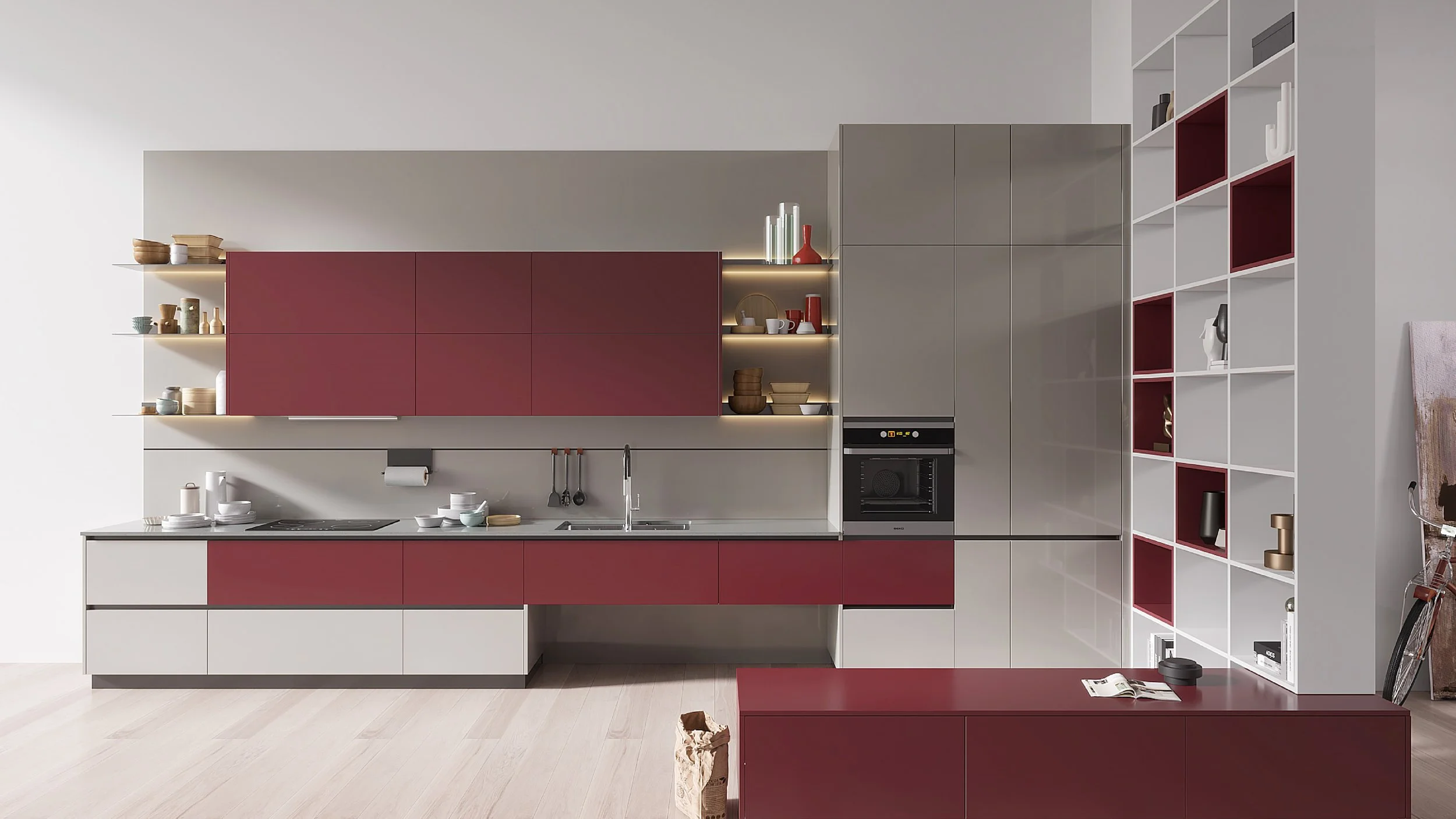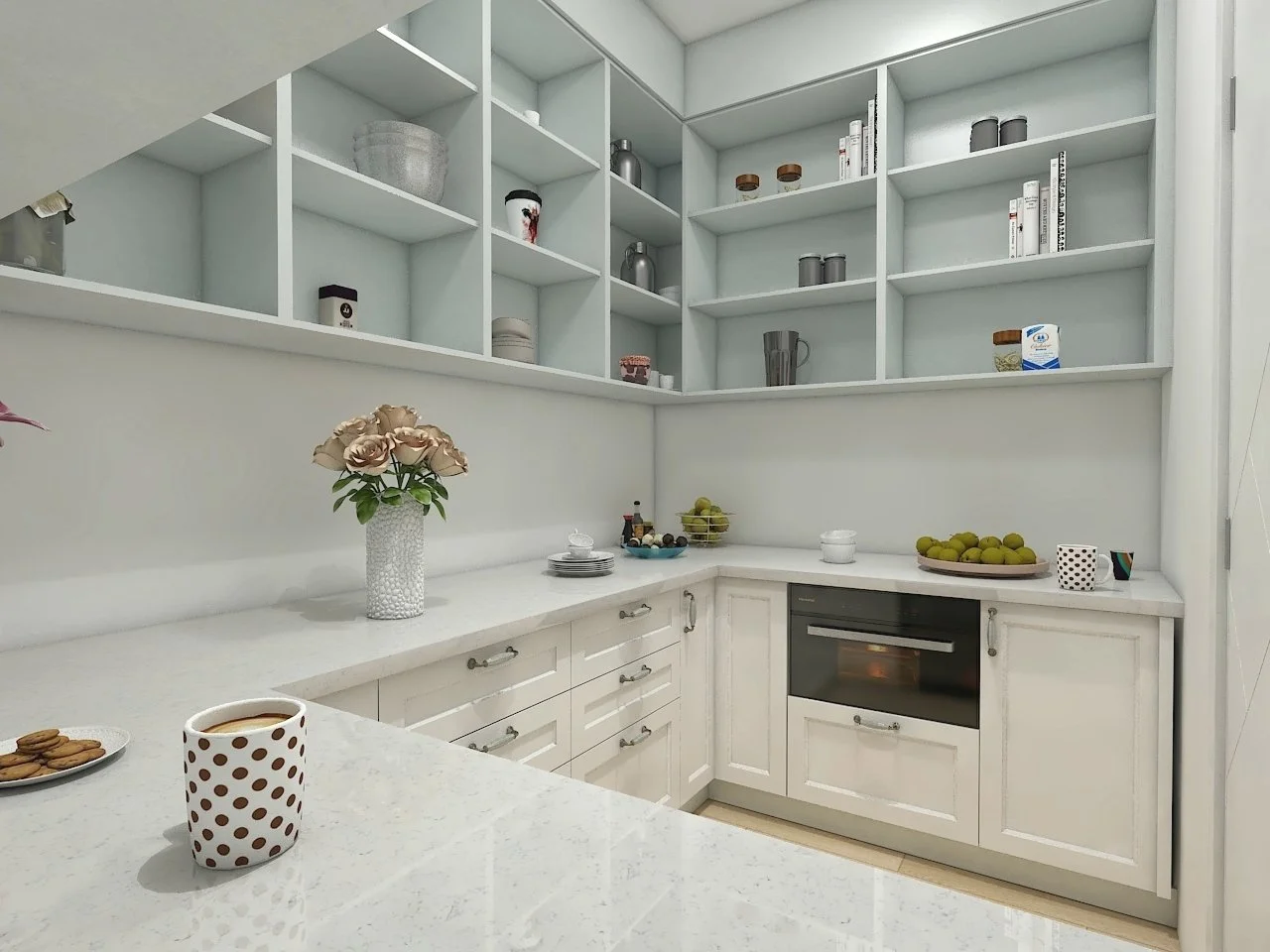
If you are planning new cabinetry in the Sutherland Shire, the door finish is the decision you will look at every single day, and it is usually the one people make fastest. A sample gets held up against a tile in a showroom, it looks lovely under the lights, and it goes on the order. Then it meets a south-facing kitchen in Cronulla, a toddler with a toy truck, and twelve summers of salt air.
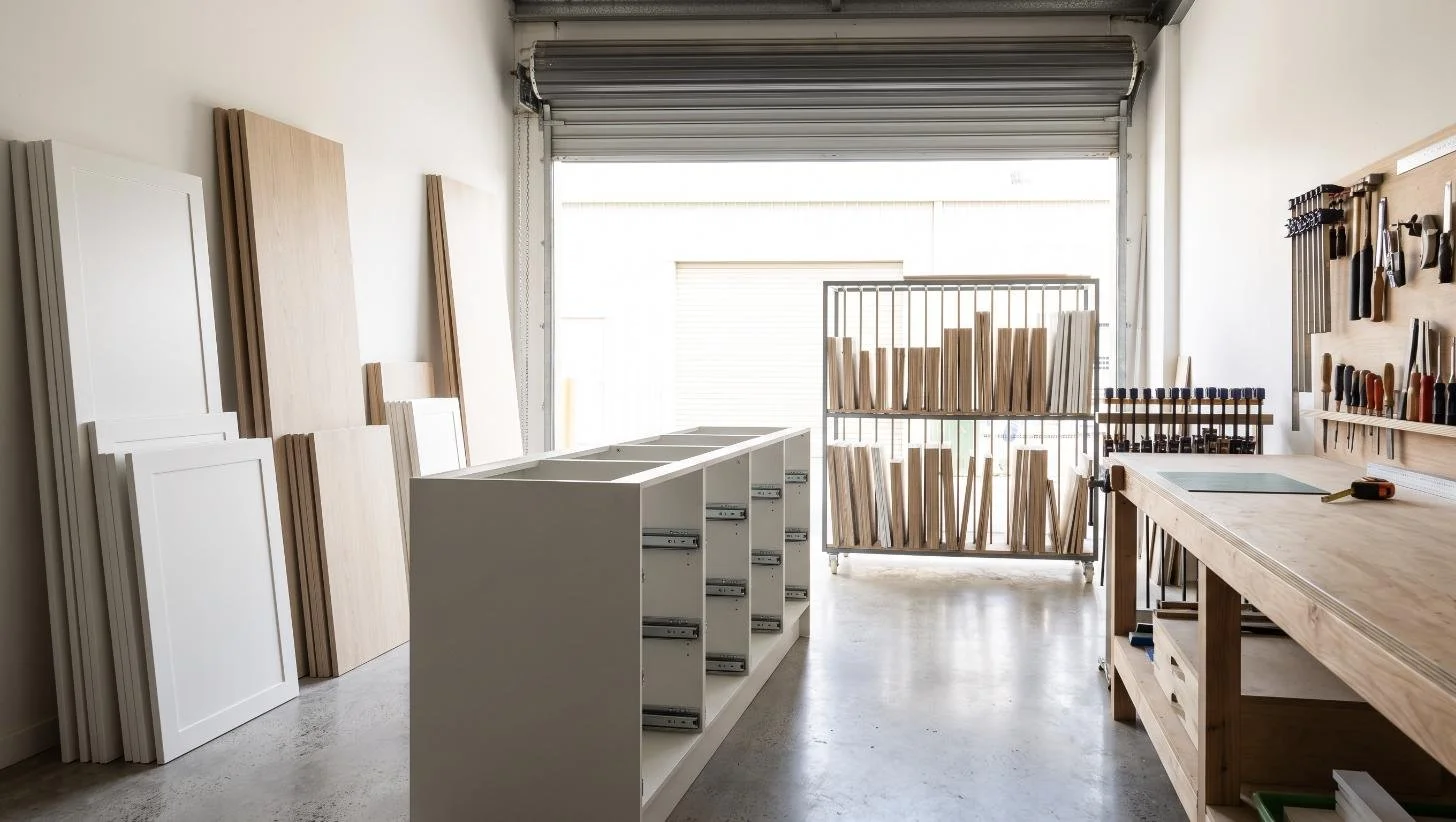
At Eco2, we design, manufacture and install custom European styled kitchens, wardrobes and whole-home joinery from our workshop in Caringbah, and we specify every one of these finishes regularly. None of them is the best. Each one is the best answer to a particular room, budget and household, and the wrong one in the wrong place is the most common regret we hear about in renovations we are asked to replace.
This guide sets out what each finish actually is, what it costs, how it wears, which ones suit coastal Shire homes, and a simple way to decide. If you would rather have a real number for your room before you read any further, a free Smart Quote takes a two-minute video and no home visit.
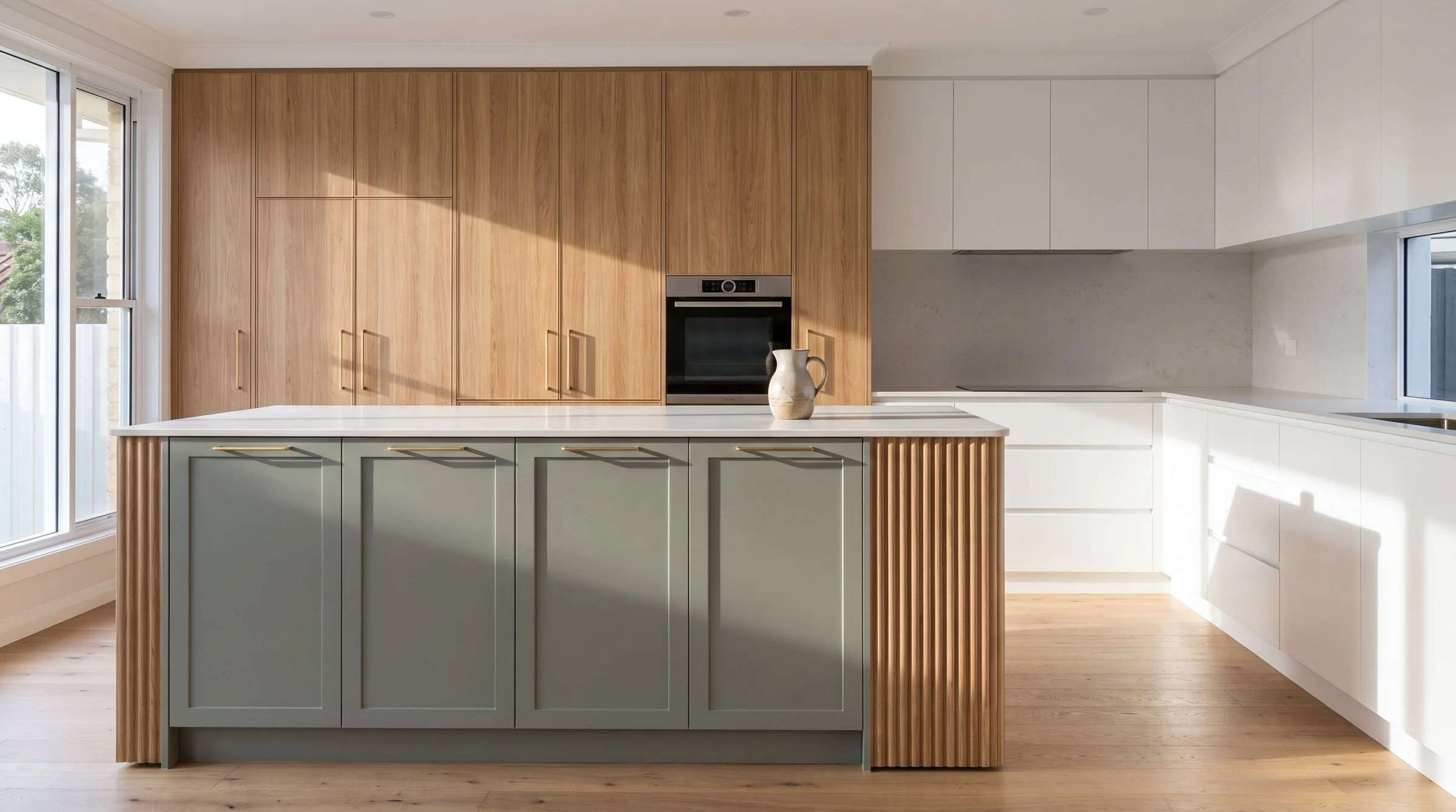
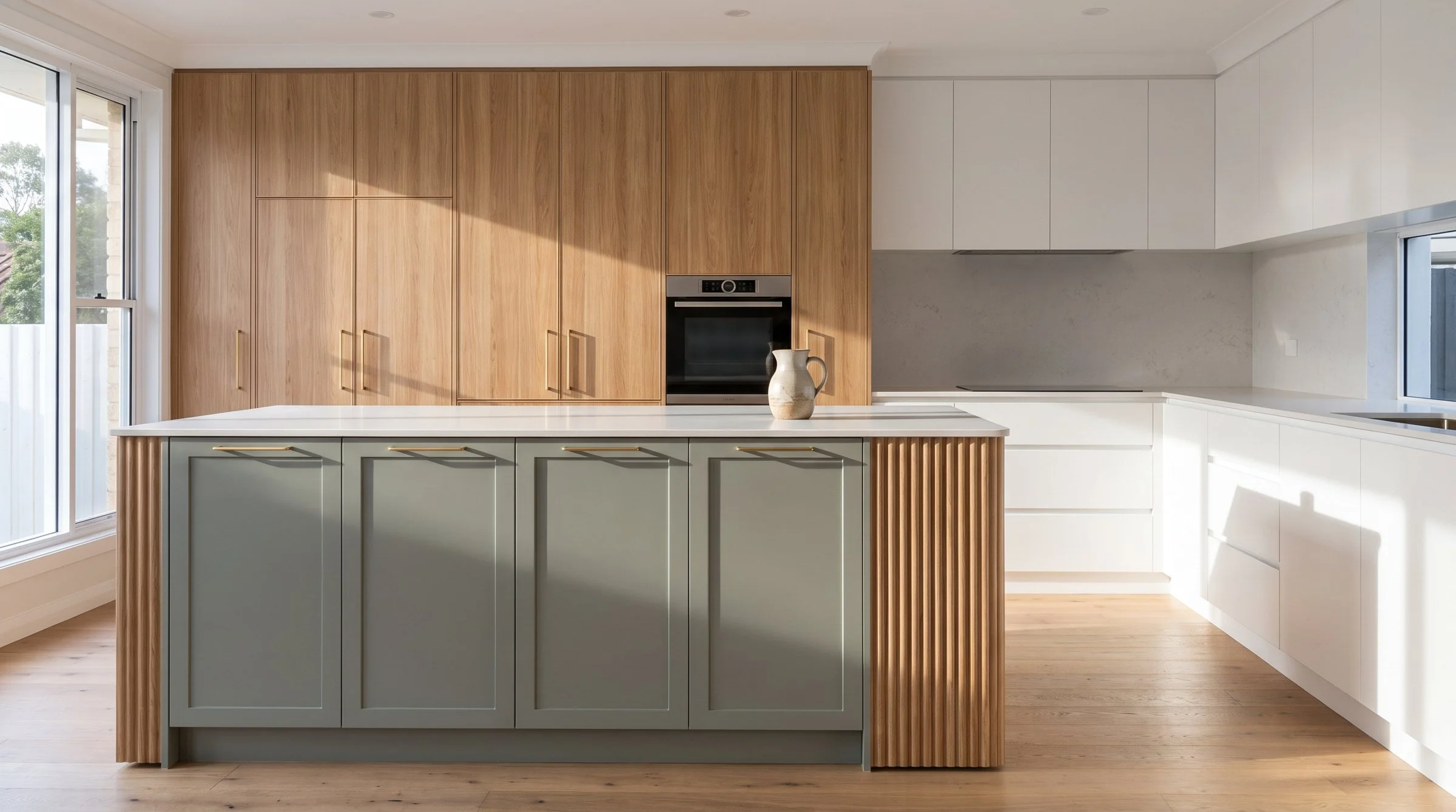
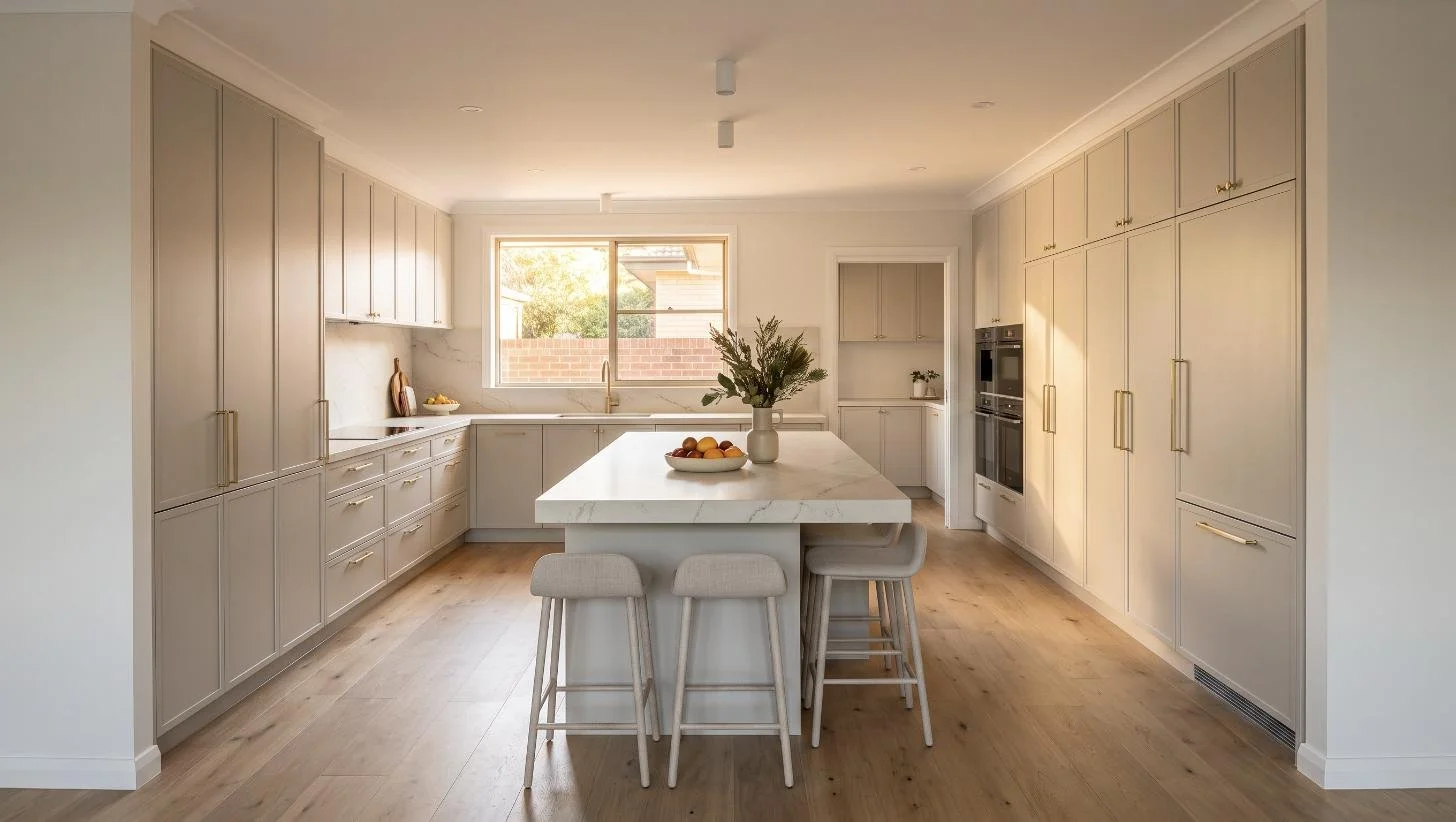
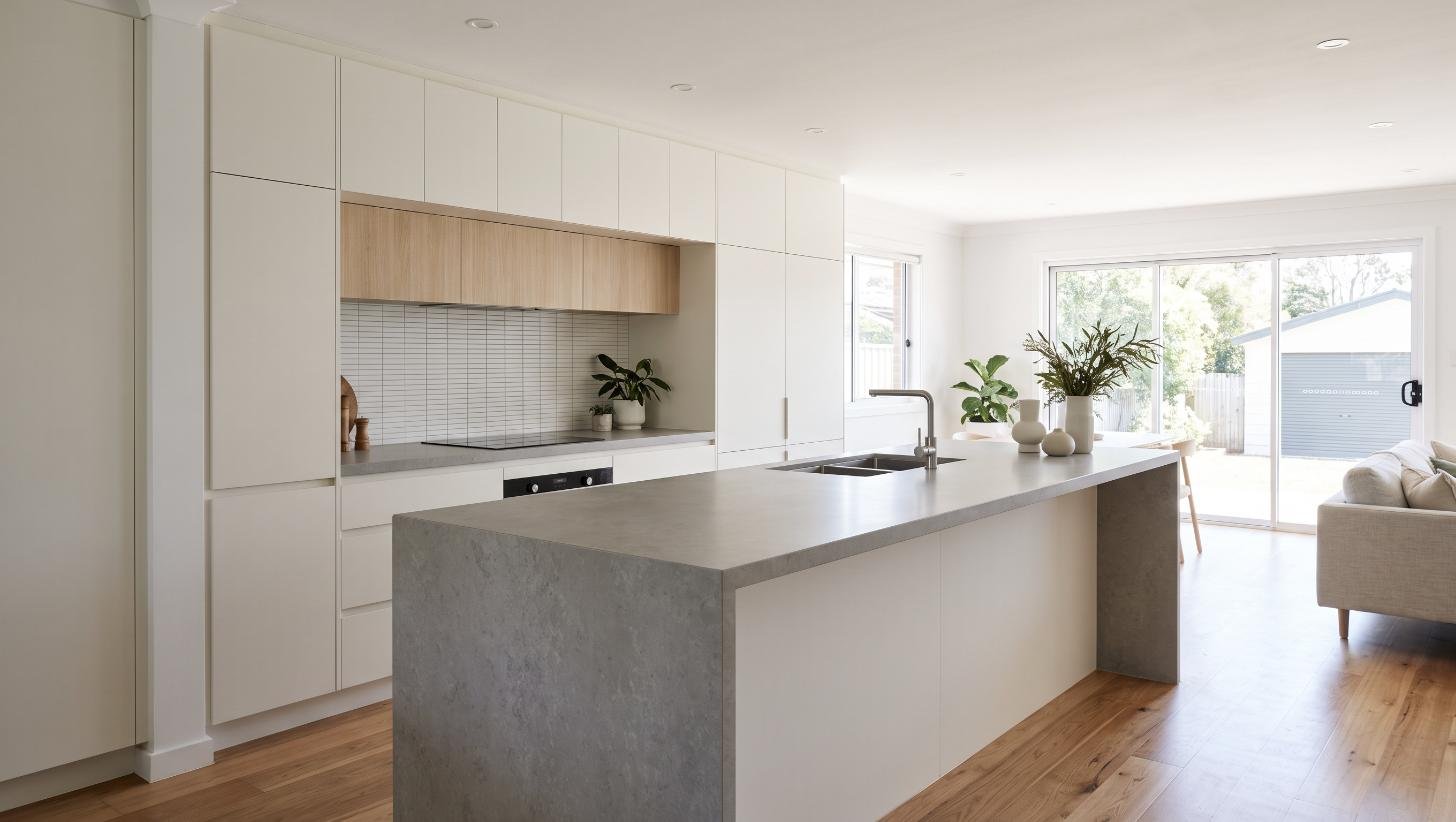
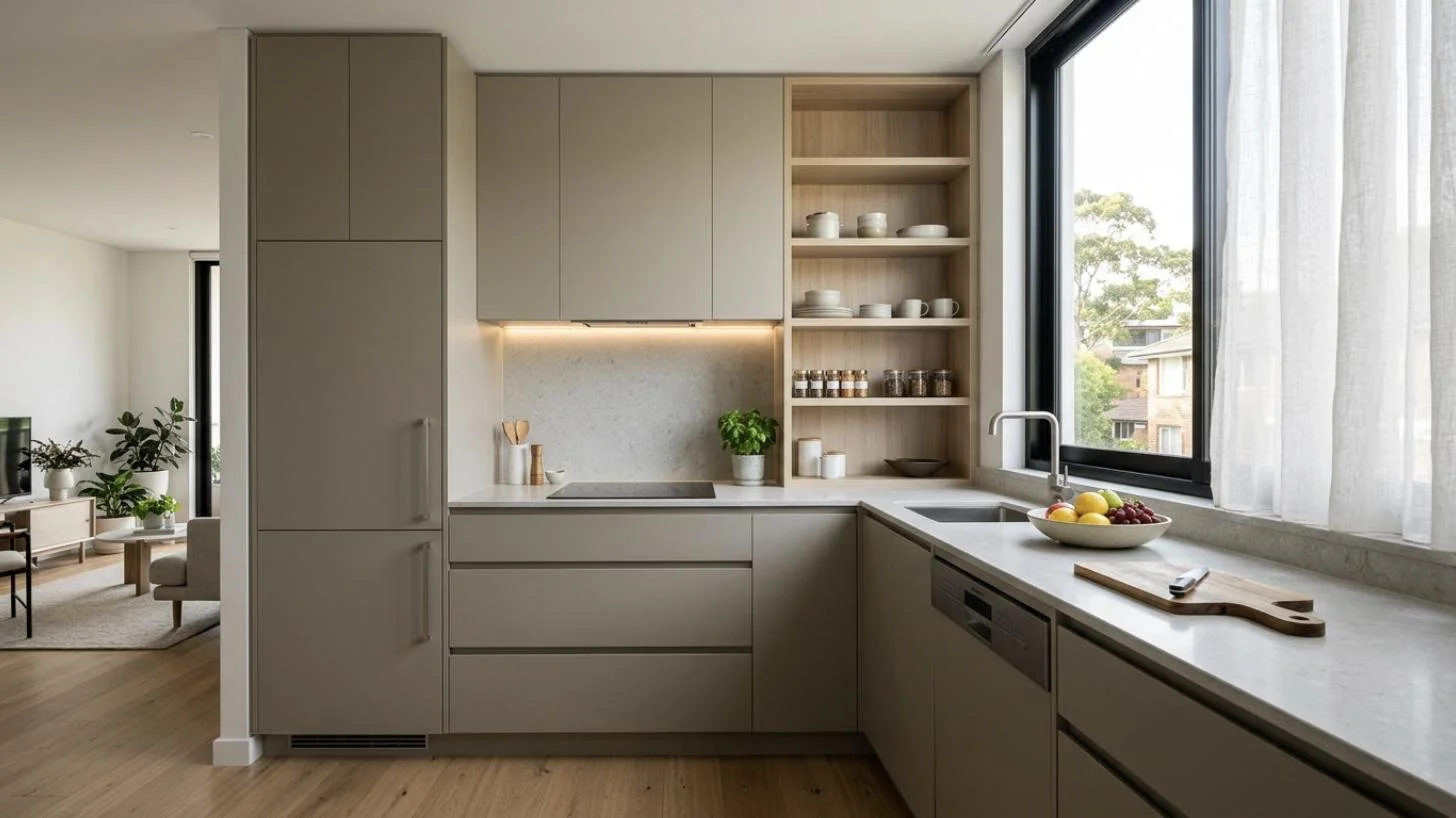
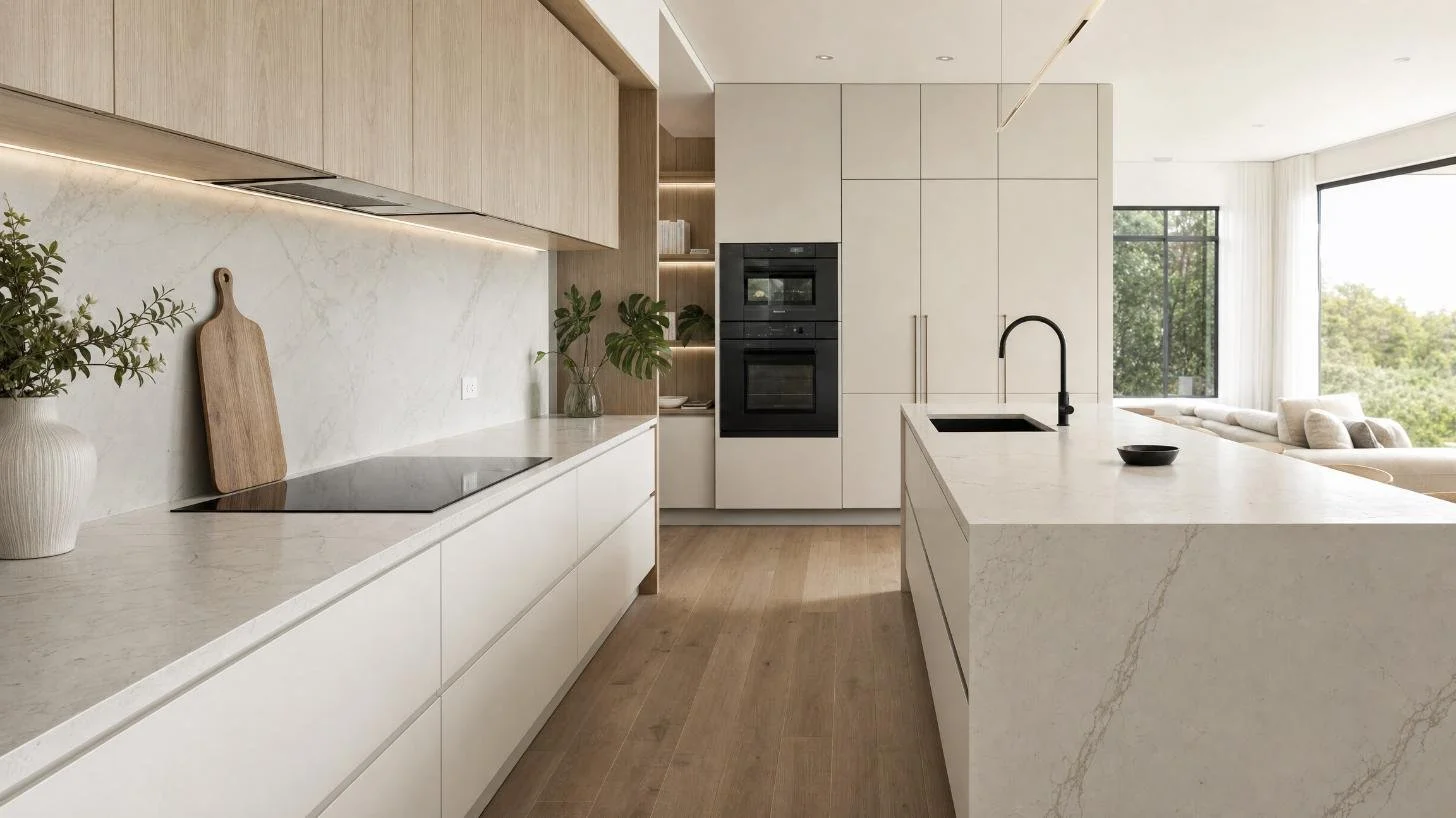
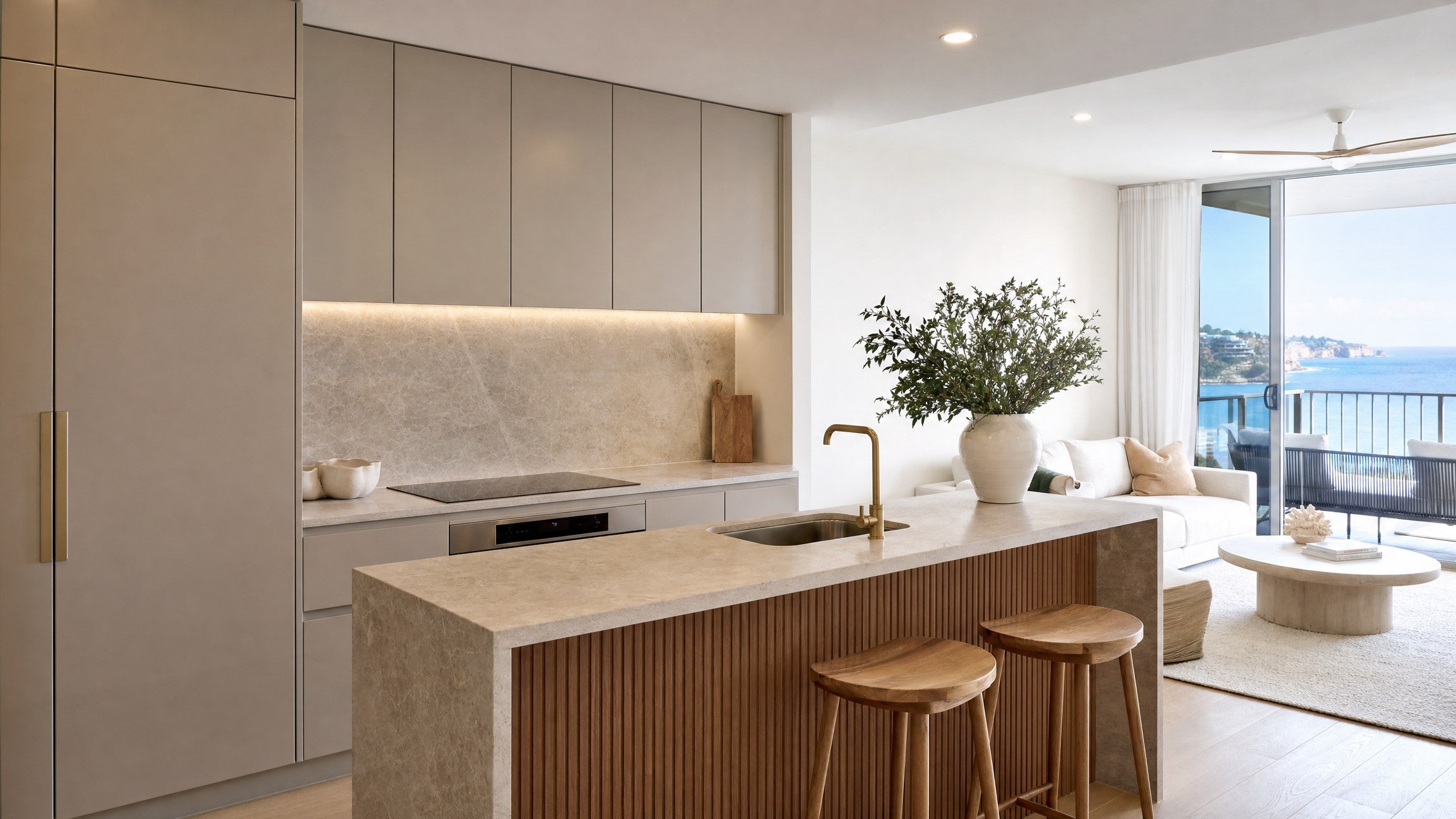
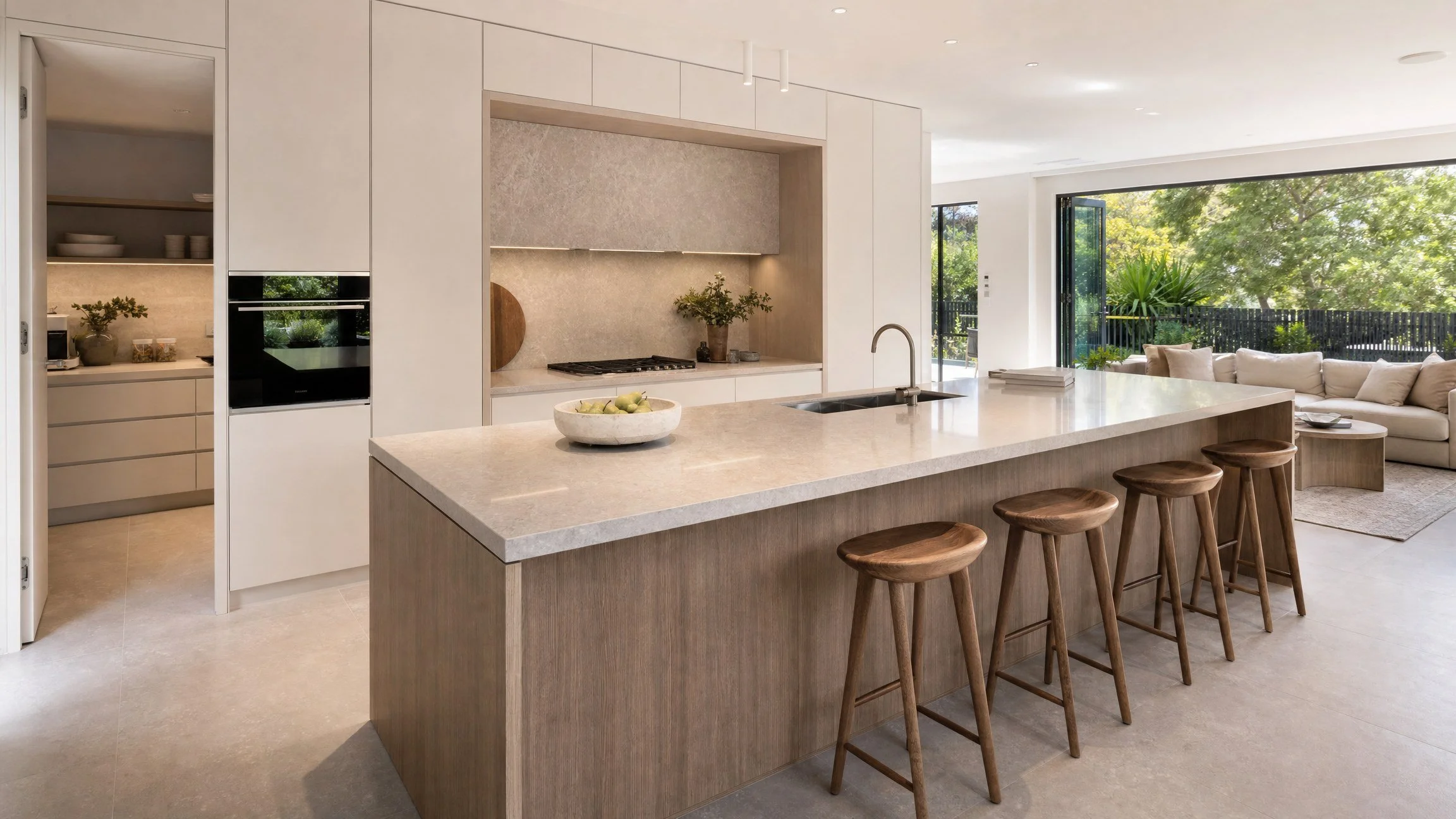
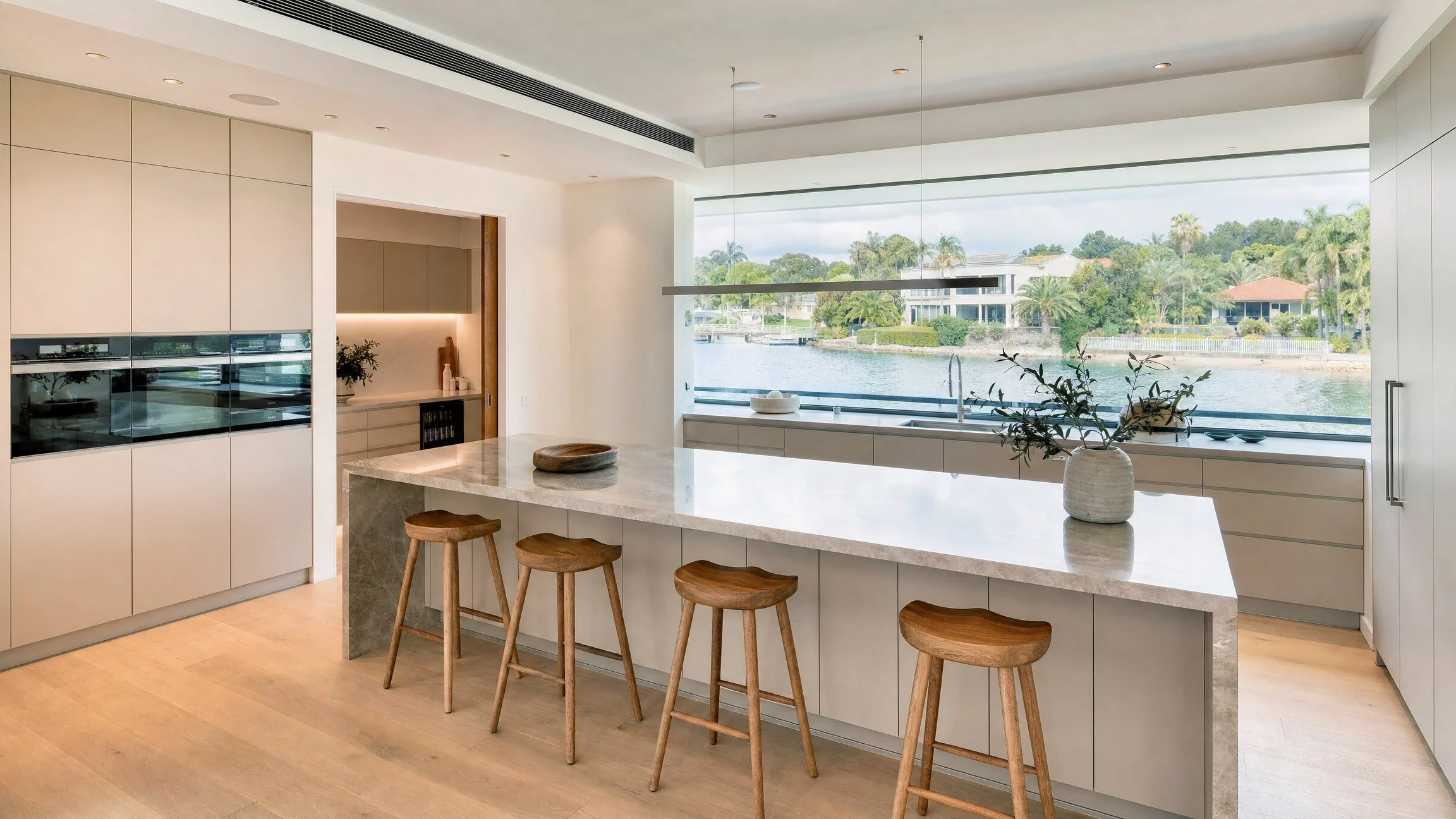
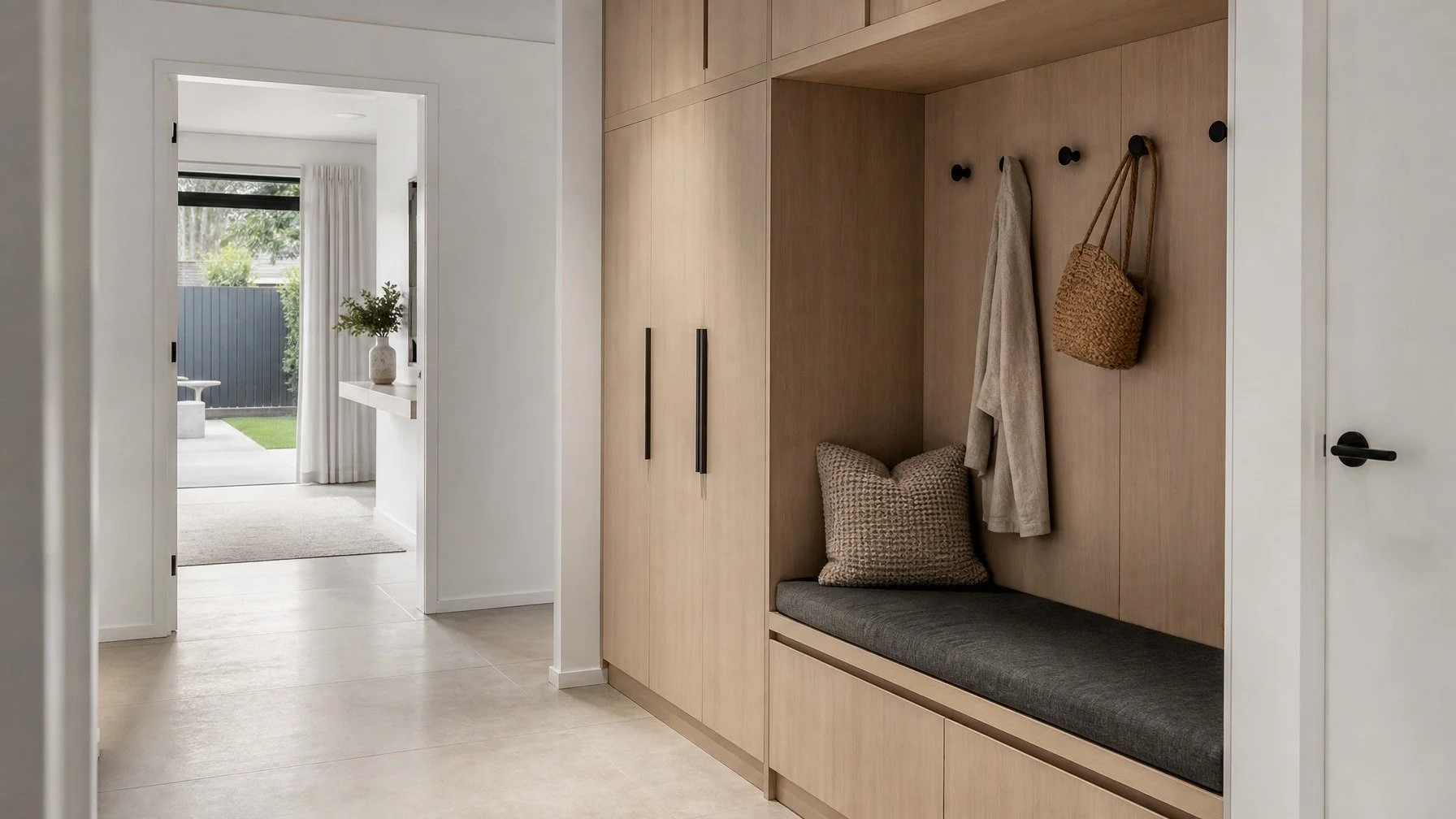
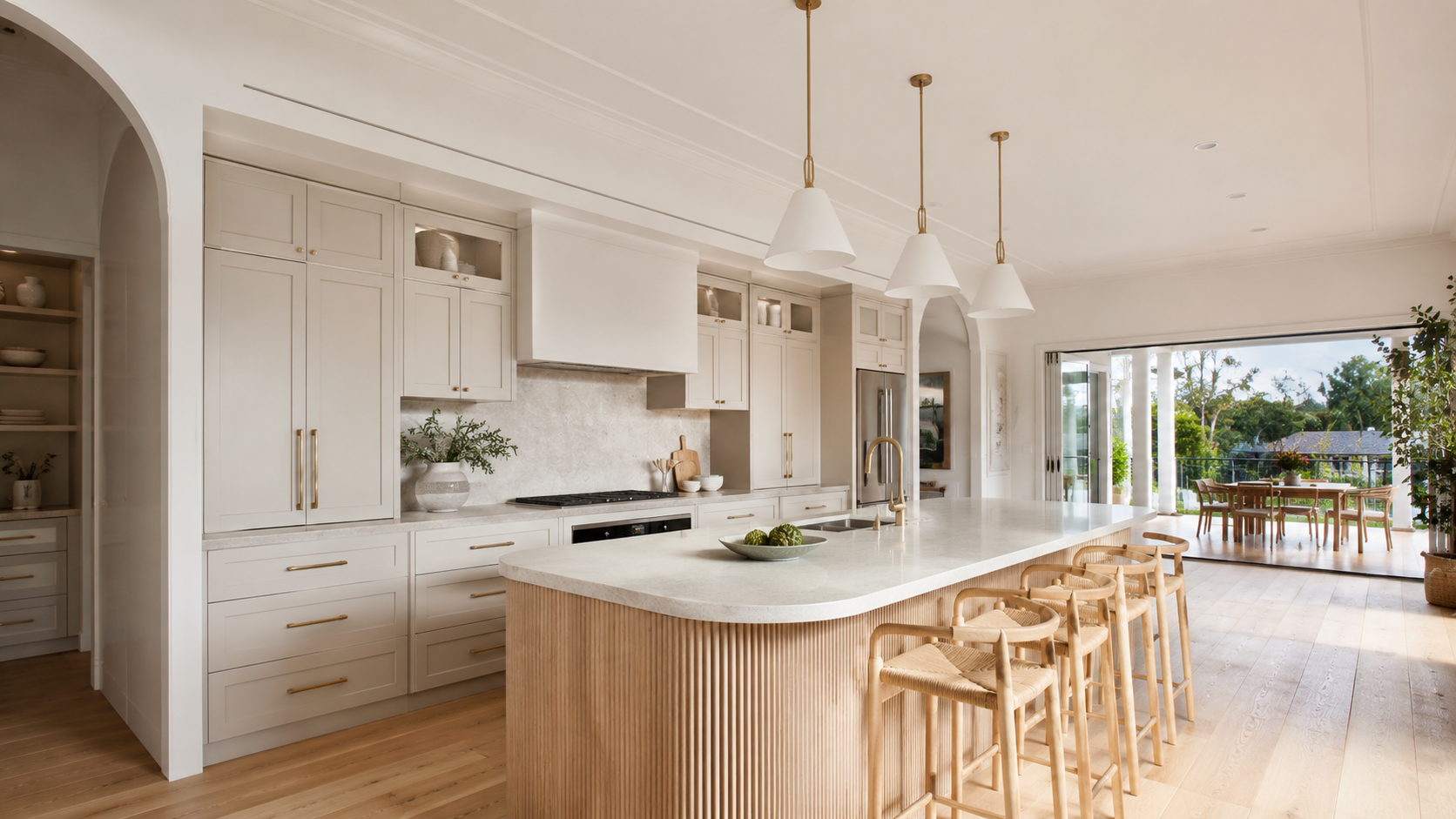
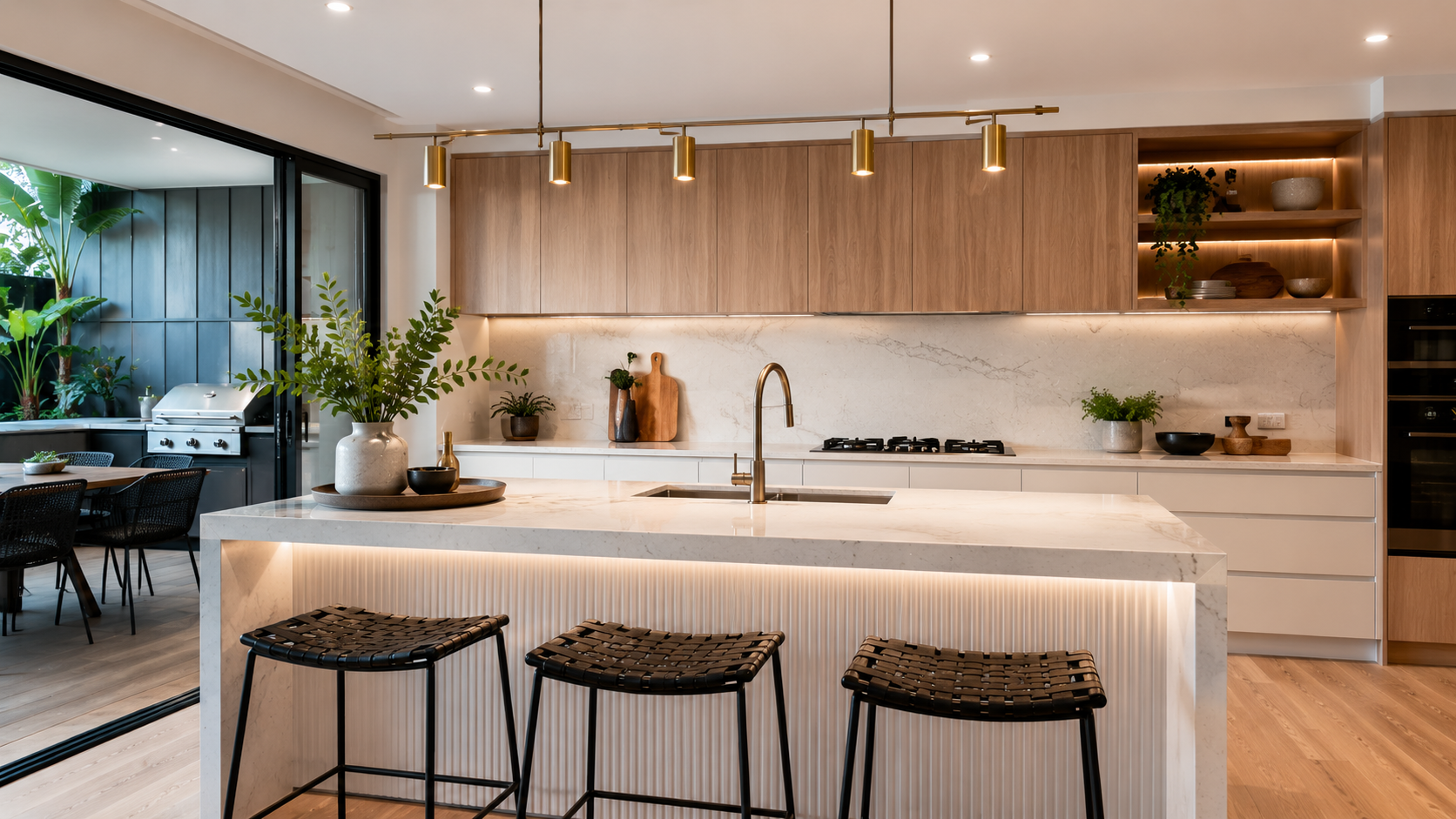
Kitchen combining sage two-pack shaker island, oak veneer pantry wall and white flat-panel cabinetry in a Sutherland Shire home
Short answer: which kitchen cabinet finish is best?
As an indicative 2026 guide for made-to-measure cabinetry in Sydney, priced per linear metre of base and wall cabinets combined:
Laminate, roughly $1,100 to $1,700 per linear metre. The most durable everyday finish for the money. Excellent for busy family kitchens, laundries, kids' rooms and the insides of everything. Limited to flat doors.
Thermolaminate (vinyl wrap), roughly $1,250 to $2,000 per linear metre. Gives a routed or shaker profile at a laminate-like price, but can lift near heat. Needs care beside ovens and dishwashers.
Two-pack polyurethane, roughly $1,800 to $3,200 per linear metre, and $2,000 to $3,500 for a painted shaker profile. Any colour, any sheen, seamless edges. Can chip on impact, but can be repaired and resprayed.
Timber veneer, roughly $2,400 to $3,800 per linear metre. Real timber on a stable core. Warm, natural and consistent, with gentle colour change over time.
Solid timber, roughly $2,800 to $4,500 per linear metre. The most traditional and the most demanding. Moves with humidity, which matters on the coast.
These ranges are drawn from published 2026 NSW cabinetry pricing by The Quote Yard and are consistent with the figures we see across Shire projects. On a typical seven linear metre kitchen, the step from laminate to two-pack is roughly $5,000 to $10,000 in doors alone. Benchtops, appliances, installation and trades are separate.
The honest rule of thumb: put the most durable finish where the hardest wear happens, and spend on the expensive finish where it is seen most. Most of the best kitchens we build use two finishes, not one.
Figures are indicative and current at November 2026, and vary with door profile, colour, hardware and site conditions.
What each finish actually is
The words get used loosely in showrooms, so it is worth being precise. Every finish below sits on a board core. What changes is the surface.
Laminate
A decorative paper layer sealed in resin and pressed onto a board, either as a thin low-pressure melamine face or as a thicker high-pressure laminate sheet bonded to the panel. The edges are finished with a matching edge band.
Very hard surface, resists scratches, stains and heat well.
Huge range of solid colours and realistic timbergrains.
Newer super-matte laminates resist fingerprints and can be cleaned with a damp cloth.
Flat doors only. The edge band is the visible weak point, so its quality matters.
Thermolaminate (vinyl wrap)
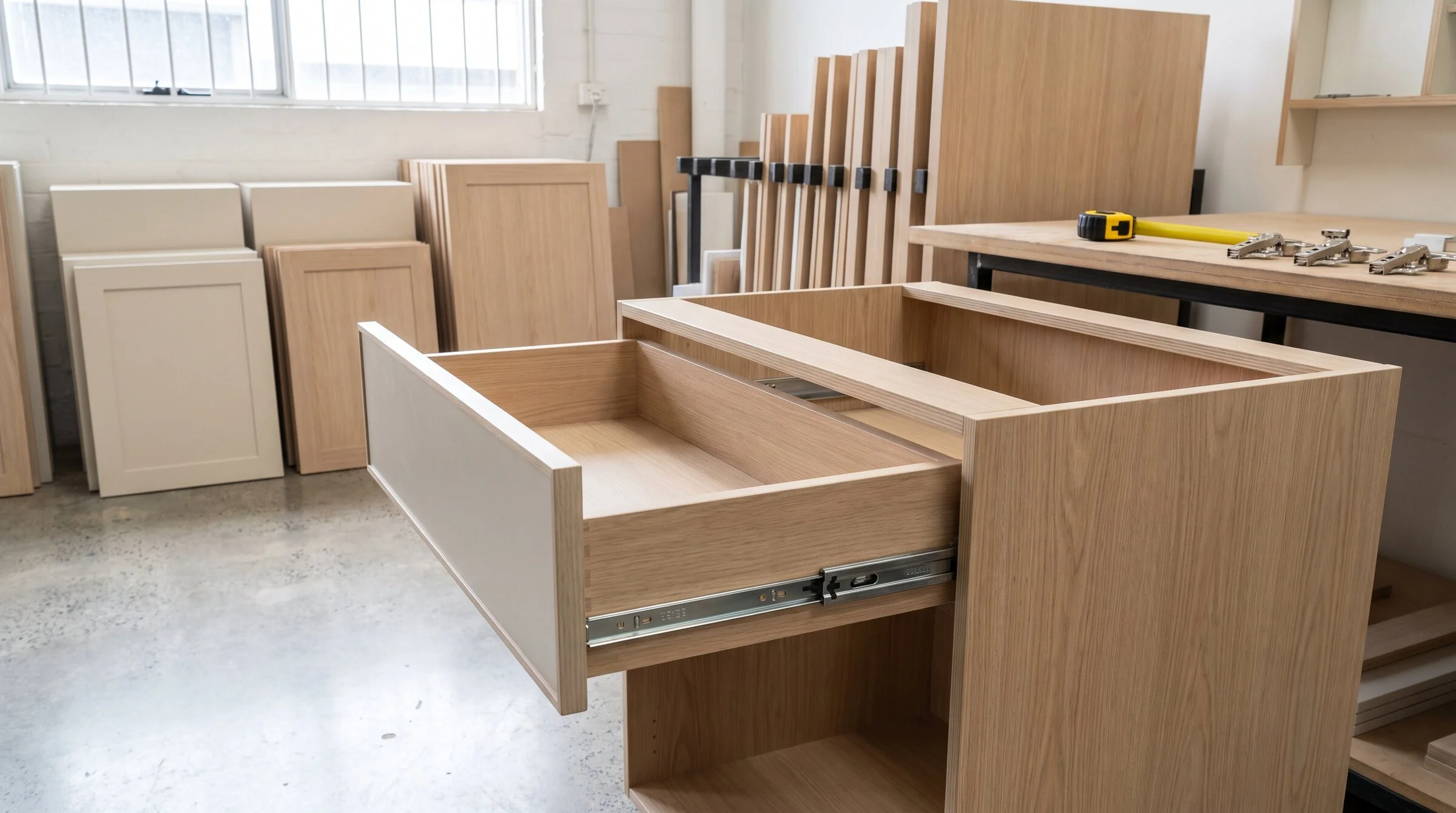
A thin PVC film heated and vacuum-formed over a routed MDF door. Because the film wraps the face and edges, it can follow a shaker groove or a curved profile that laminate cannot.
Shaker and routed looks at a lower price than two-pack.
Seamless face, easy to wipe.
The film is bonded with adhesive, so sustained heat can soften it and the edges can lift. Ovens, dishwashers and kettles are the usual culprits.
Damage is difficult to repair invisibly. A lifted door is usually replaced.
Two-pack polyurethane
A two-part paint system, sprayed in several coats over MDF and cured, then sanded and finished in matt, satin or gloss. It is what most people picture when they think of a premium European kitchen.
Any colour you can match, any sheen, and a completely seamless edge.
Works on flat, shaker, fluted and curved doors equally well.
Hard and easy to clean, but it is paint, so a sharp knock can chip an edge.
Chips and scuffs can be touched up, and a whole door can be resprayed years later, which is a real long-term advantage.
Timber veneer
A thin slice of real timber, commonly oak, walnut or ash, bonded to a stable board and sealed with a clear lacquer. Reconstituted veneers offer very consistent grain and colour.
Genuine timber character without the movement of solid timber.
Ages gently. Most species change colour in sunlight over the first few years.
The lacquer protects it, but wet cloths left on edges and constant sun on one door will show eventually.
Pairs beautifully with a two-pack colour for a warm, layered look.
Solid timber
Doors made from solid boards, usually in a frame and panel construction.
The most traditional and the most characterful finish.
Timber expands and contracts with humidity, so doors need to be designed to allow for it.
Highest cost, highest maintenance, and the most sensitive to a coastal climate.
Usually reserved for a feature piece rather than a whole kitchen.
How the finishes compare where it matters
Durability in a busy family kitchen
Ranked for resistance to everyday knocks, scratches and cleaning:
High-pressure laminate: the toughest surface in this list for daily abuse. A school bag swung into a drawer front barely registers.
Two-pack: hard and very cleanable, but an edge can chip under a sharp impact. Repairable.
Timber veneer: good, with the lacquer doing the work. Scratches can be lightly refinished.
Thermolaminate: fine for knocks, but vulnerable to heat and steam at the edges.
Solid timber: dents more easily than any of the others, which some owners love and others do not.
Heat and steam
The places that test a finish are predictable: beside a wall oven, above a dishwasher, under a kettle or coffee machine, and next to a cooktop.
Thermolaminate needs the most care here. Heat deflector strips beside the oven and a moisture barrier above the dishwasher reduce the risk, but the honest advice is to avoid wrap on the doors closest to heat altogether.
Two-pack and laminate both cope well, provided the edge band or the paint is properly sealed.
Veneer and solid timber dislike repeated steam on the same spot, so open the dishwasher after the cycle has cooled rather than mid-steam.
Coastal Shire homes
Cronulla, Woolooware, Kurnell, Burraneer and the bayside pockets of Sylvania Waters and Taren Point all sit in salt air and higher humidity. That changes the specification more than it changes the look.
Board core: specify a moisture-resistant core in sink and dishwasher zones regardless of finish.
Two-pack and laminate are the most stable choices near the water.
Solid timber is the least forgiving, because humidity swings make it move.
Hardware matters as much as the finish. Stainless or properly coated hinges and runners last far longer than cheap plated ones in salt air.
Sun: large west-facing glass will gradually change the colour of veneer and some lighter laminates. Two-pack holds its colour best.
Our luxury kitchens in Cronulla guide goes further into specifying for waterfront and beachside homes.
Cleaning and upkeep
Laminate: damp microfibre cloth and a mild detergent. Nothing else needed.
Two-pack: the same, but avoid abrasive pads and harsh solvents, which can dull the sheen. Gloss shows fingerprints, matt hides them.
Thermolaminate: mild detergent only. Never use solvent cleaners on the film.
Veneer: dry or barely damp cloth, wipe spills promptly, and avoid leaving wet tea towels over a door.
Solid timber: as for veneer, with occasional re-oiling or refinishing depending on the coating.
Repairability over twenty years
This is the comparison people forget to make.
Two-pack can be touched up, and a whole door can be resprayed in a new colour. A two-pack kitchen can genuinely be refreshed rather than replaced.
Veneer and solid timber can be lightly sanded and relacquered.
Laminate rarely needs repair, but when it does, the usual answer is a replacement door.
Thermolaminate that has lifted almost always means a replacement door, and matching an older film colour exactly can be difficult.
Health and indoor air: the core matters more than the face
Whichever finish you choose, most of it sits on a board core, and the core is where the conversation about formaldehyde emissions belongs. Australian boards are graded by emission class, and lower-emission options are widely available for kitchens and wardrobes.
At Eco2, we specify low-emission and formaldehyde-free boards as standard, and two-pack systems that are fully cured before installation so there is no lingering smell in a new kitchen. If indoor air quality is a priority in your household, our guide to formaldehyde-free cabinets explains the options and what to ask any supplier.
Matching finishes to rooms around the house
The finish that is right for a kitchen is not automatically right for every other room.
Kitchens
Islands and feature runs: two-pack or veneer, where the finish is seen from the living area.
Back runs and tall pantry walls: two-pack or laminate.
Doors beside the oven and dishwasher: two-pack or laminate, not thermolaminate.
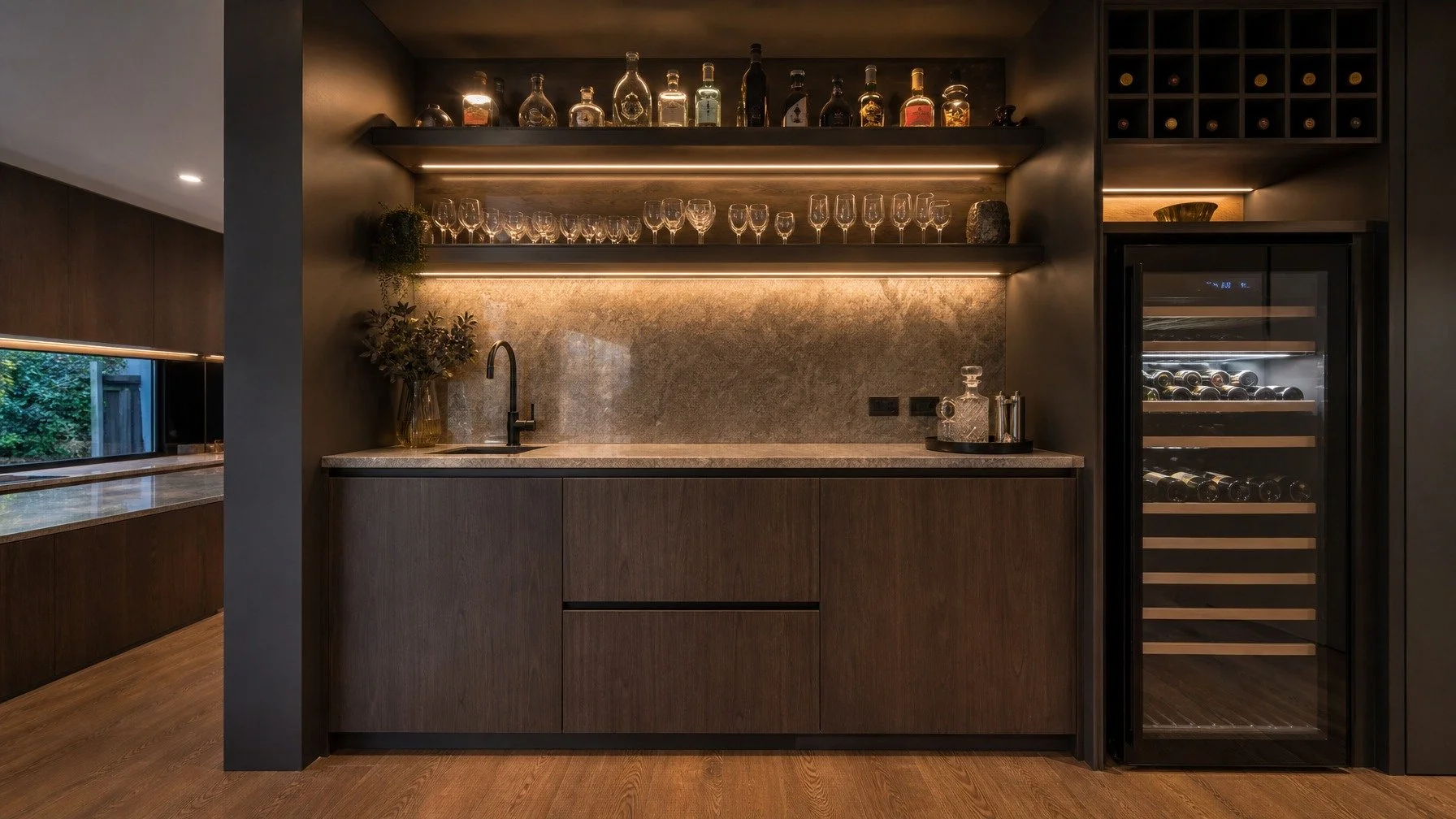
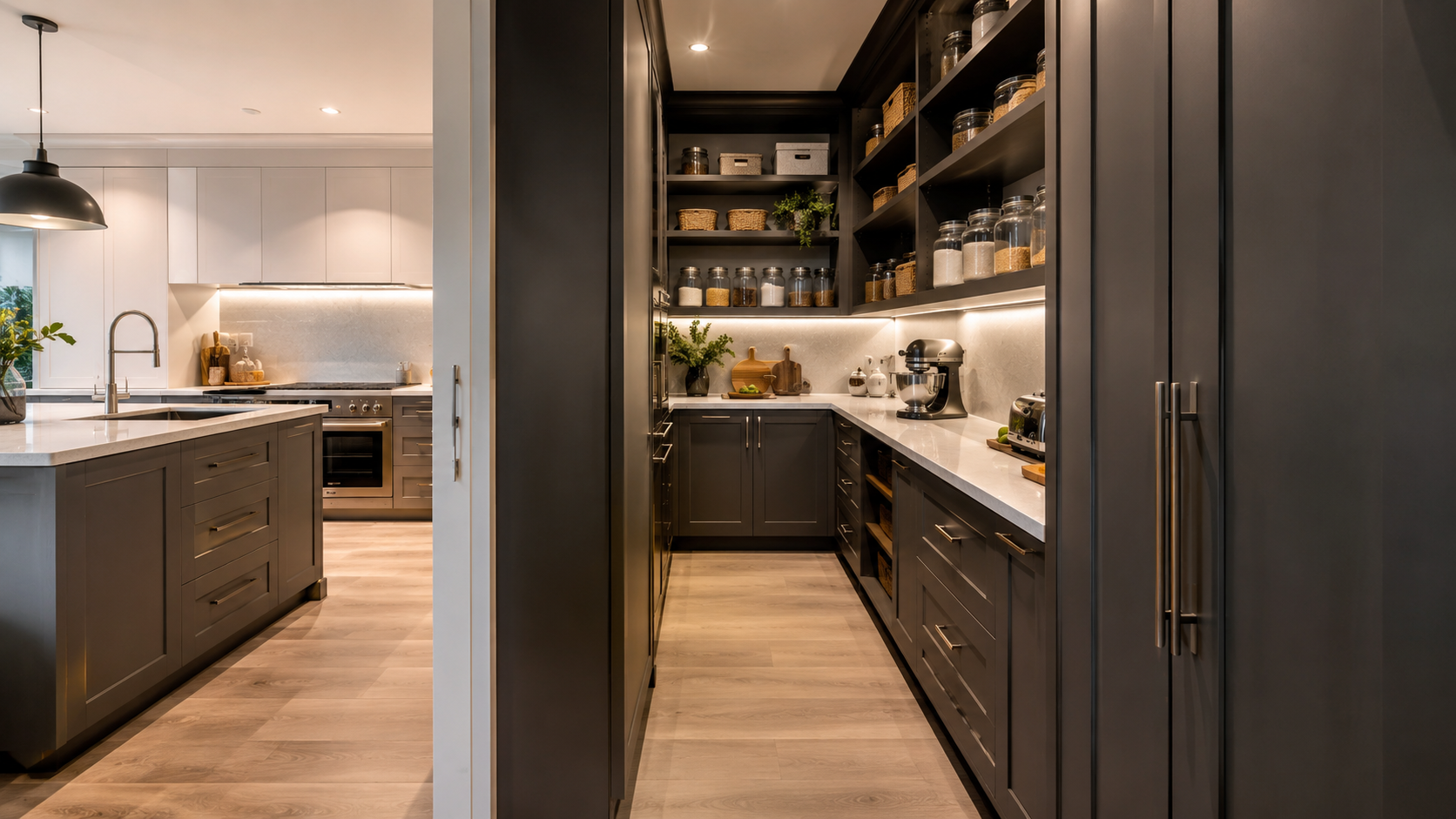
Butler's pantries: laminate is often the smart choice. Hard-working, out of sight, and the saving can go into the main kitchen.
Wardrobes
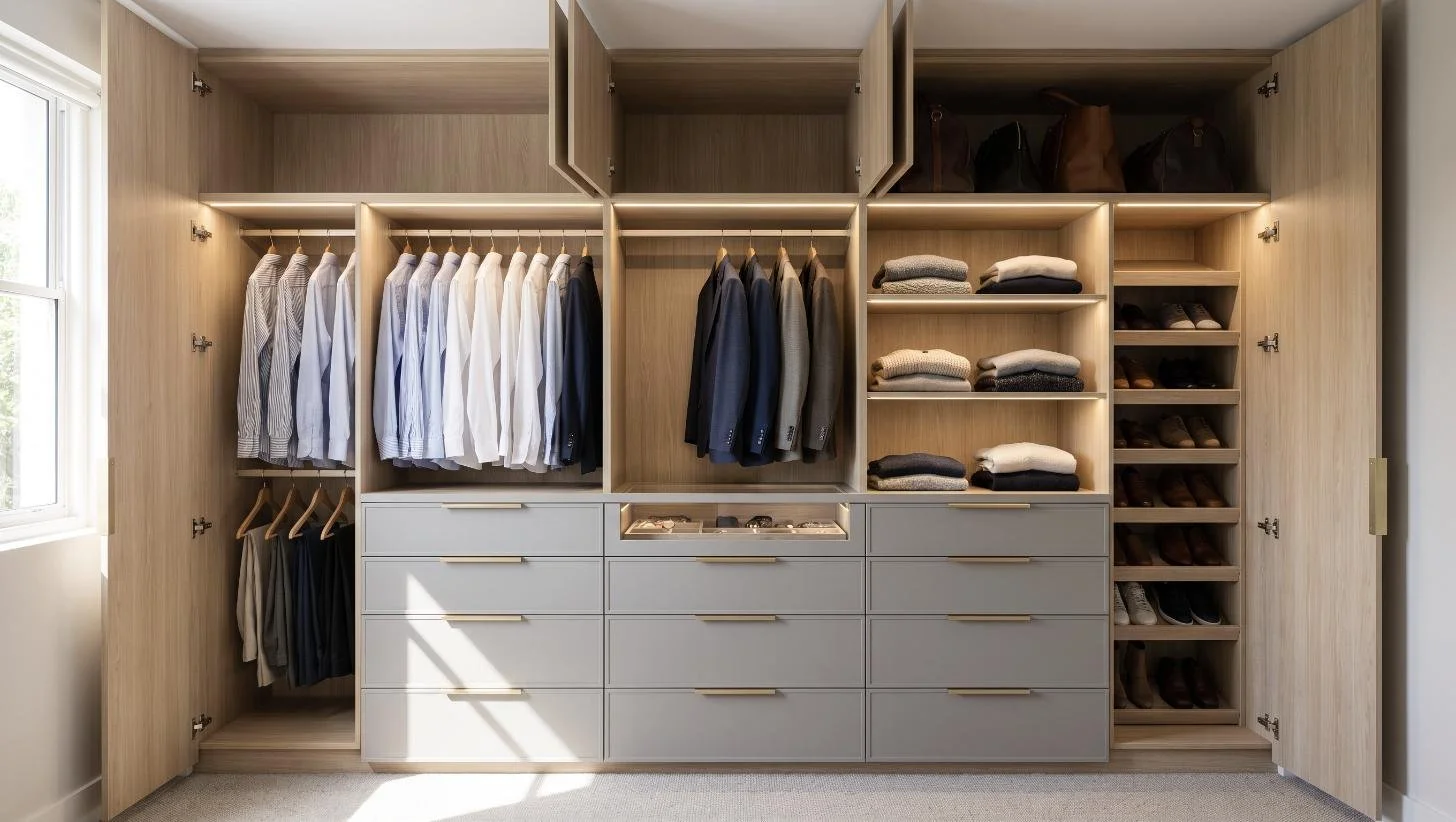
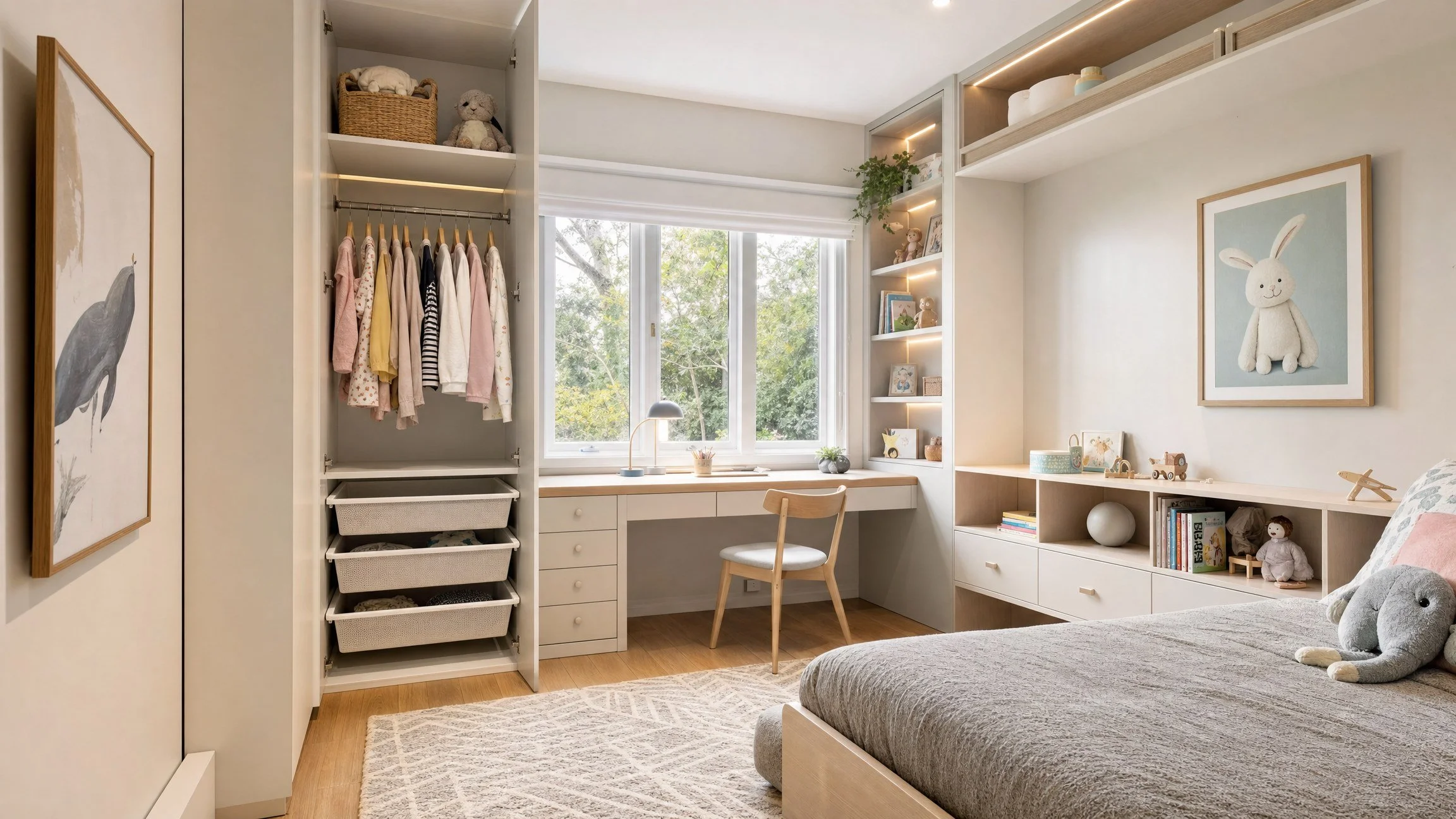
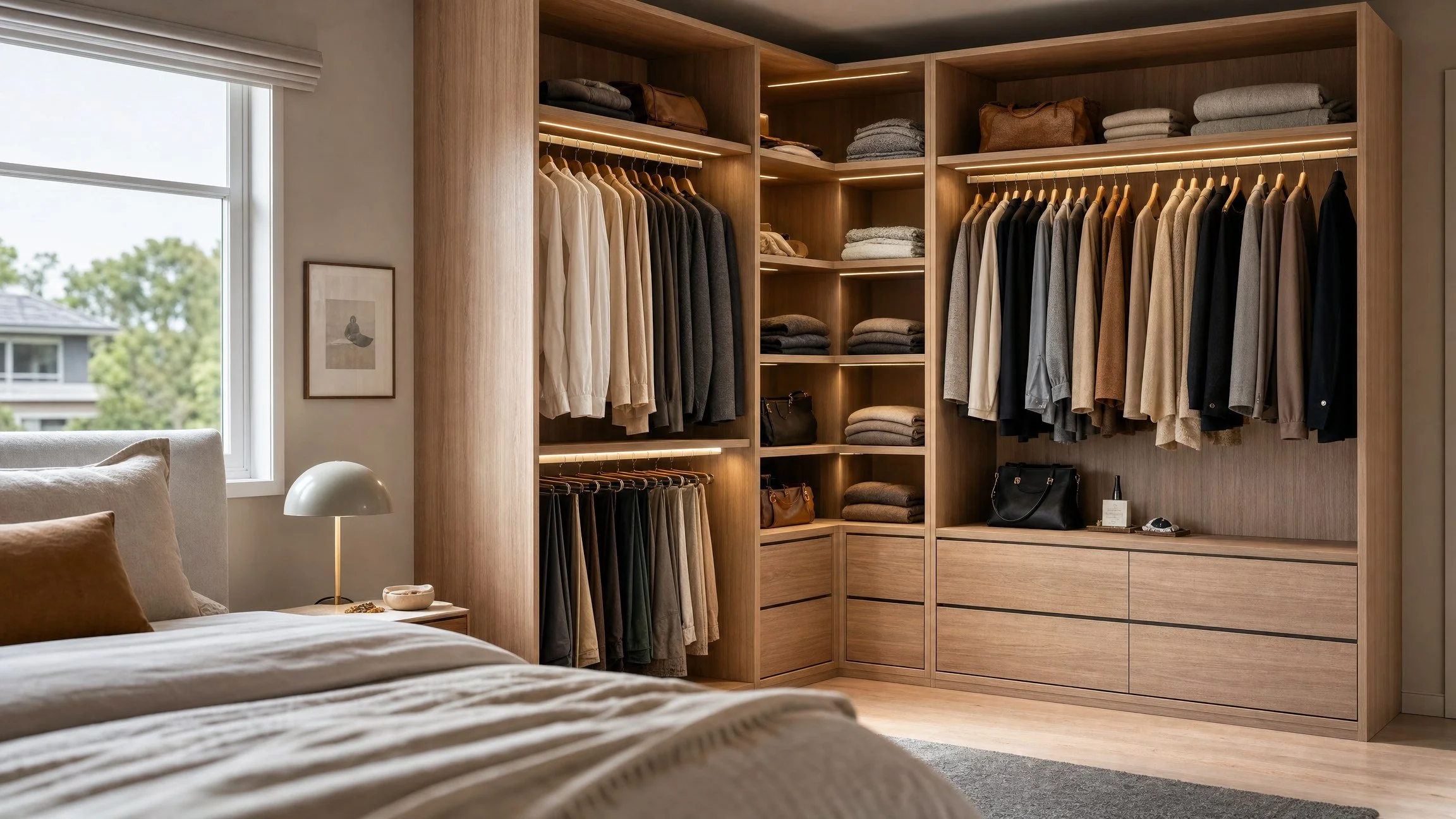
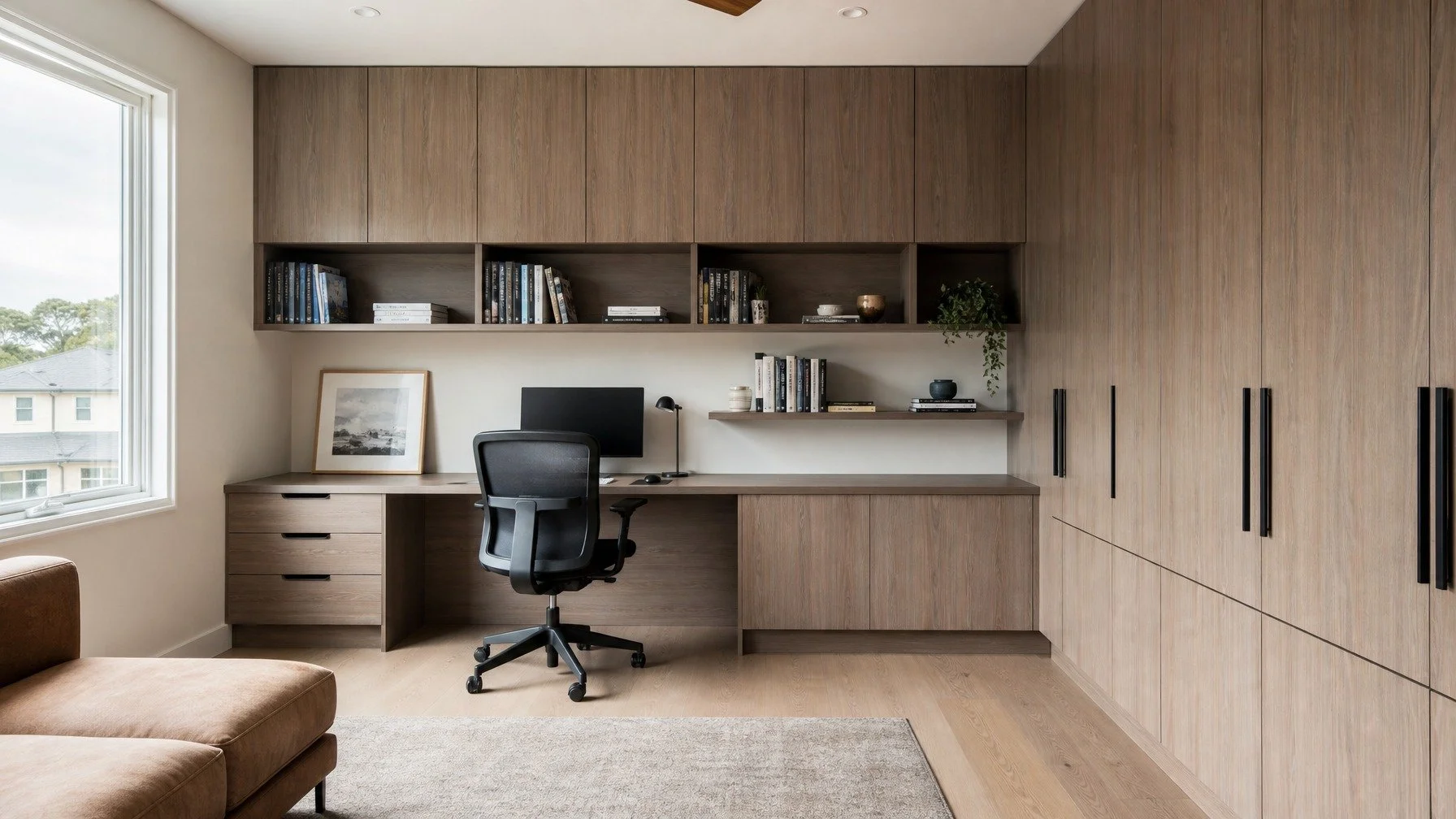
Doors: two-pack for a seamless painted look, veneer for warmth, laminate for robust kids' and guest rooms.
Internals: almost always laminate or melamine. It is the right material for shelves and drawers, and there is no reason to pay for two-pack inside a wardrobe.
Our wardrobe internals guide covers the dimensions and layouts that matter behind the doors, and the custom wardrobes page shows how we approach door styles.
Laundries and bathrooms
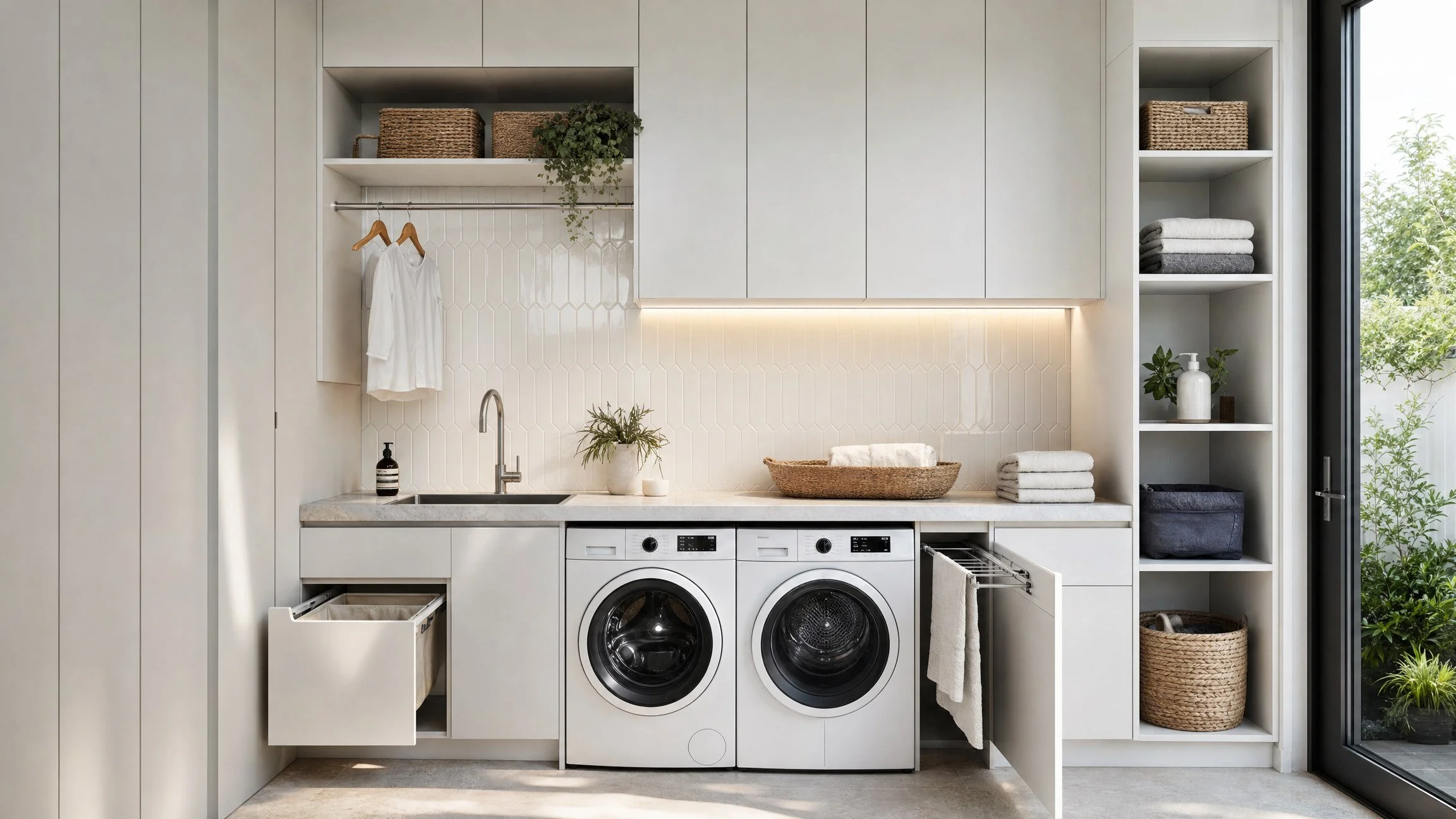
Laundries: laminate on a moisture-resistant core is the workhorse answer. Our laundry renovation guide covers layouts and costs.
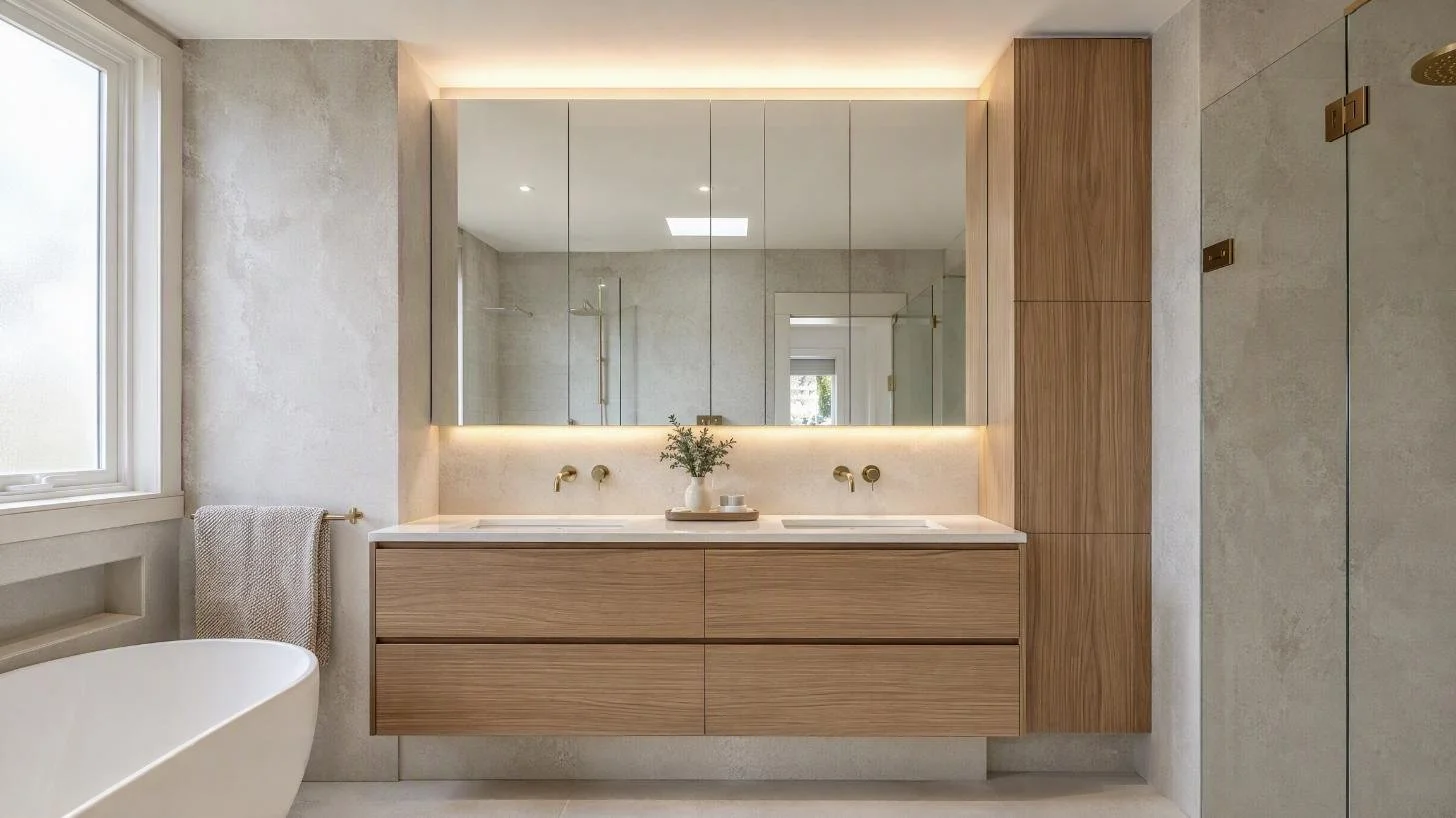
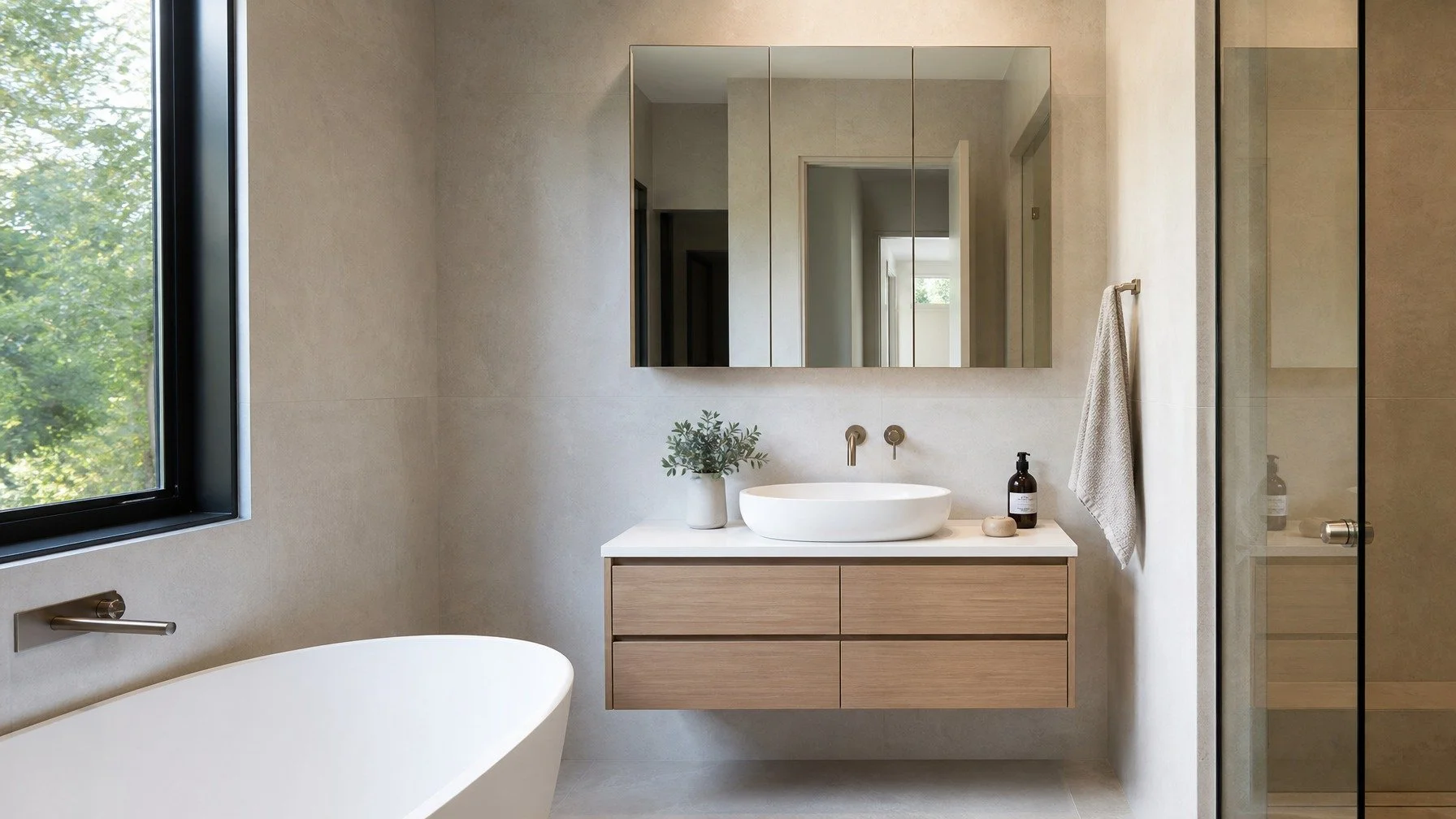
Bathrooms: two-pack or laminate on moisture-resistant board, with sealed edges. Thermolaminate and solid timber are poor choices in a wet area. Our bathroom cabinetry guide covers the wet-area rules.
The two-finish kitchen: where most budgets land best
The single most useful piece of advice in this guide is that you do not have to pick one finish.
A pattern we design often in Shire homes:
Two-pack on the island and the run you see from the living room, in a colour chosen to last.
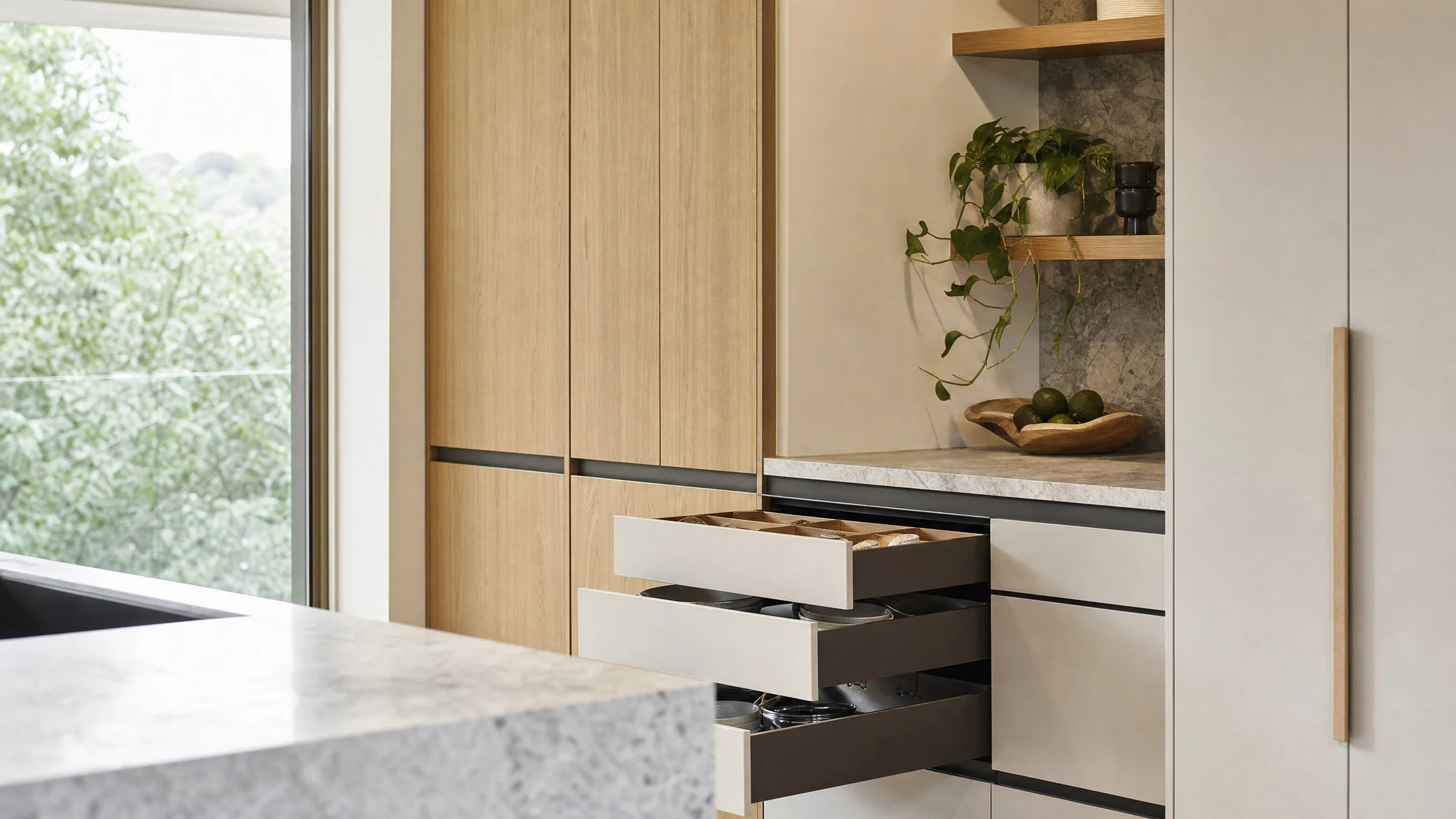
Timber veneer on one feature element, such as open shelves, a tall pantry door or the island end panel.
Laminate on the back run, the laundry, the butler's pantry and all internals.
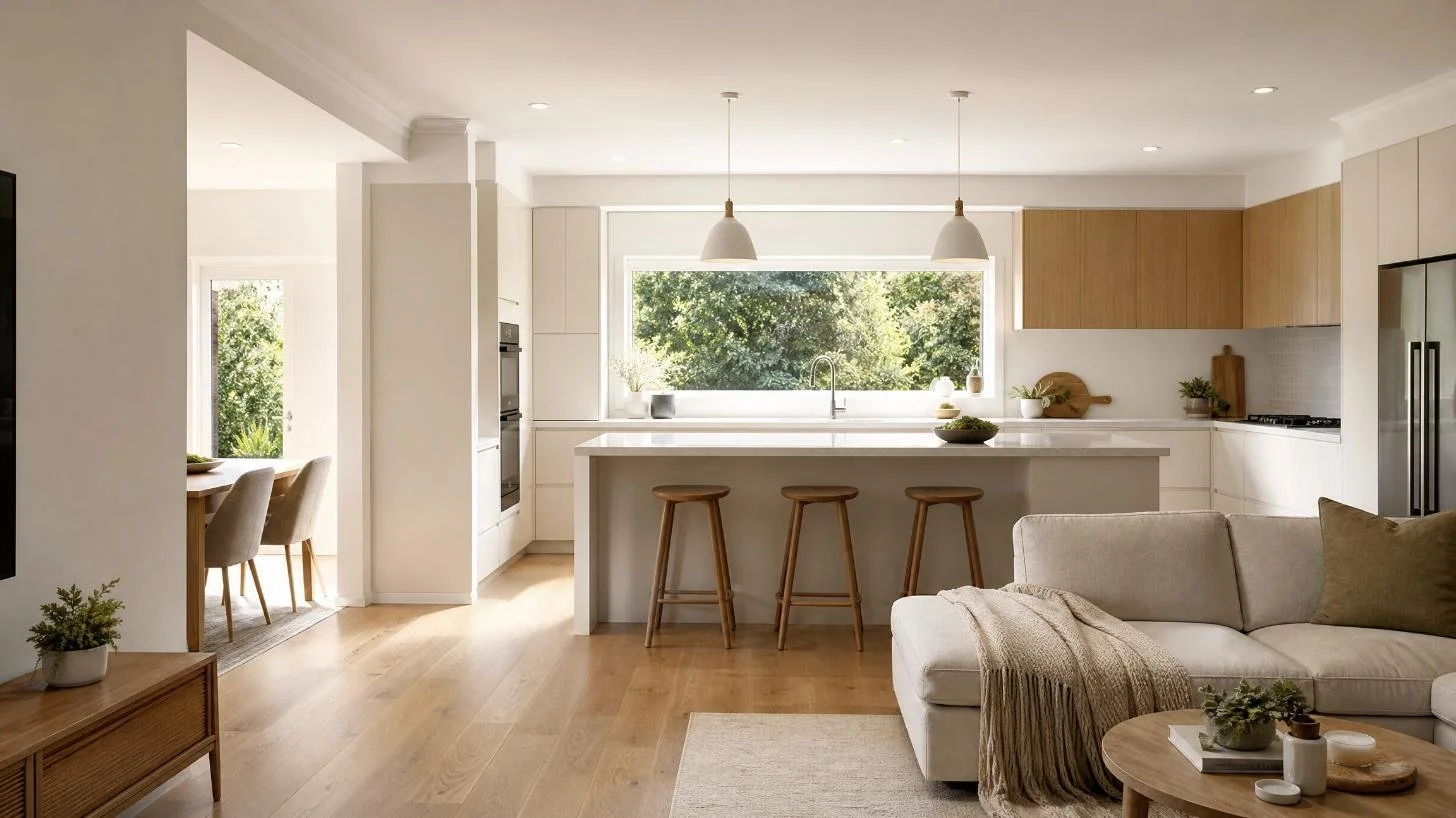
The result looks like a fully premium kitchen from the sofa, wears like a laminate kitchen where the knocks happen, and typically costs several thousand dollars less than doing every door in two-pack. Our kitchen colour trends guide can help pair the colours.
Five questions that settle the choice
How hard is the wear? Young children, pets and a kitchen used three times a day point towards laminate or two-pack.
Do you want a profile? If you want shaker or fluted doors, the choice is two-pack, thermolaminate or timber. Laminate is flat only.
How close is the heat? If the doors sit beside a wall oven or above a dishwasher, rule out thermolaminate for those doors.
How close is the water? Within a few streets of the ocean or the bay, favour two-pack or laminate on moisture-resistant board, with quality hardware.
How long are you staying? If it is your long-term home, the ability to respray two-pack in ten years is worth more than it looks today.
Why the Smart Quote is the best first step
Finish choices are where kitchen quotes become hardest to compare. One supplier quotes "two-pack" and means a single colour on flat doors with a basic edge. Another quotes "two-pack" and means a two-tone shaker with sealed edges and soft-close hardware rated for twenty years. Both are telling the truth, and the numbers are not comparable.
The Smart Quote puts a real, itemised number on your room. You text or WhatsApp us a quick 360 degree video of the space. We assess the layout, the light, the heat zones and the wear points, and we come back with an estimate that shows the finish by area, so you can see exactly what a two-finish approach saves against doing every door in two-pack. Our guide to choosing a cabinet maker explains how to compare quotes line by line, and the custom kitchens page shows the styles we build.
Transform Your Space with Eco Squared
Embrace the elegance and functionality of European design with Eco Squared. Our Oppolia partnership provides access to premium materials and cutting-edge manufacturing, tailored for the way Sydney lives.
Get a Free SMART QUOTE
Film a quick 360° video and Text/WhatsApp 0466 119 712 (no home visit required).
Prefer email? info@eco2.com.au
FAQs
What is the most durable kitchen cabinet finish?
High-pressure laminate is the most durable everyday finish for knocks, scratches and cleaning. Two-pack is also very hard wearing and has the advantage of being repairable and resprayable, but a sharp impact can chip an edge. For a busy family kitchen, either is a sound choice.
Is two-pack better than laminate?
Neither is better in every situation. Two-pack offers any colour, any sheen, seamless edges and profiled doors, and costs roughly $1,800 to $3,200 per linear metre against $1,100 to $1,700 for laminate. Laminate is tougher for the money but is limited to flat doors with a visible edge band. Many of the best kitchens use both.
What is the difference between two-pack and thermolaminate?
Two-pack is a sprayed paint finish cured onto MDF, while thermolaminate is a PVC film heat-formed over a routed MDF door. Both can achieve a shaker look. Two-pack is more heat resistant and can be repaired, while thermolaminate is cheaper but can lift near ovens and dishwashers and usually has to be replaced if damaged.
Does thermolaminate peel?
It can, mainly where it is exposed to sustained heat or steam, such as beside a wall oven or above a dishwasher. Heat deflector strips and moisture barriers reduce the risk, and the safest approach is to use a different finish on the doors closest to heat. Away from heat, a good quality wrap performs well.
Which cabinet finish is best for a coastal home?
Two-pack and laminate on a moisture-resistant board core are the most stable choices near the ocean or the bay. Solid timber is the least forgiving because humidity makes it move. Hardware is just as important, so specify stainless or properly coated hinges and runners for homes close to the water.
Does timber veneer change colour?
Yes, most species change colour gradually in sunlight, particularly over the first few years. Oak tends to warm and deepen, while walnut can lighten. It is a natural characteristic rather than a fault, but it is worth considering for doors that sit in direct afternoon sun.
How much does it cost to upgrade from laminate to two-pack?
As an indicative 2026 guide, the difference is roughly $700 to $1,500 per linear metre, which on a typical seven linear metre kitchen is around $5,000 to $10,000 in doors alone. Using two-pack only on the island and visible runs, with laminate elsewhere, can capture most of the look for a fraction of that.
Can I change the colour of my kitchen cabinets later?
With two-pack, yes. Doors can be removed, prepared and resprayed in a new colour, which is a genuine way to refresh a kitchen without replacing it. Laminate and thermolaminate cannot be recoloured in the same way, so a colour change usually means new doors.
What is a Smart Quote and does it cost anything?
It is free and there is no obligation. You send a quick 360 degree video of your space by text or WhatsApp to 0466 119 712, we assess it, and we return an itemised estimate that shows finishes by area. No home visit and no sales appointment required.
Written by Eco2. We design, manufacture and install custom European styled kitchens, wardrobes and whole-home joinery from our Caringbah workshop, across the Sutherland Shire and surrounds. Cost figures in this guide are indicative, current at November 2026, and drawn in part from published 2026 NSW cabinetry pricing. They vary with door profile, colour, hardware and site conditions.