Kitchen Benchtops Sutherland Shire: Caesarstone Alternatives & 2026 Costs
If you are planning a kitchen in the Sutherland Shire and someone has told you that you can no longer get the benchtop you had your heart set on, they are partly right. The rules changed, the product range changed with them, and the advice floating around online has not entirely caught up. The good news is that the replacements are excellent, the look you want is still very much available, and the decision is easier than it sounds once you know what the three real questions are.
At Eco2, we design and install custom European styled cabinetry for homes across Caringbah, Miranda, Kirrawee, Cronulla, Gymea, Sylvania and the wider Shire, and the benchtop is the single decision clients ask us about most. It is the surface you touch every day, it carries a meaningful share of the budget, and it is the one element that is genuinely difficult to change later. The easiest place to start is a Smart Quote: send us a quick 360 degree video of your kitchen and we will come back with an itemised, no-obligation estimate, no home visit required.
This guide covers what is banned and what is not, the five material families worth considering in 2026, indicative Sutherland Shire price bands, and the practical questions that decide which one belongs in your home.
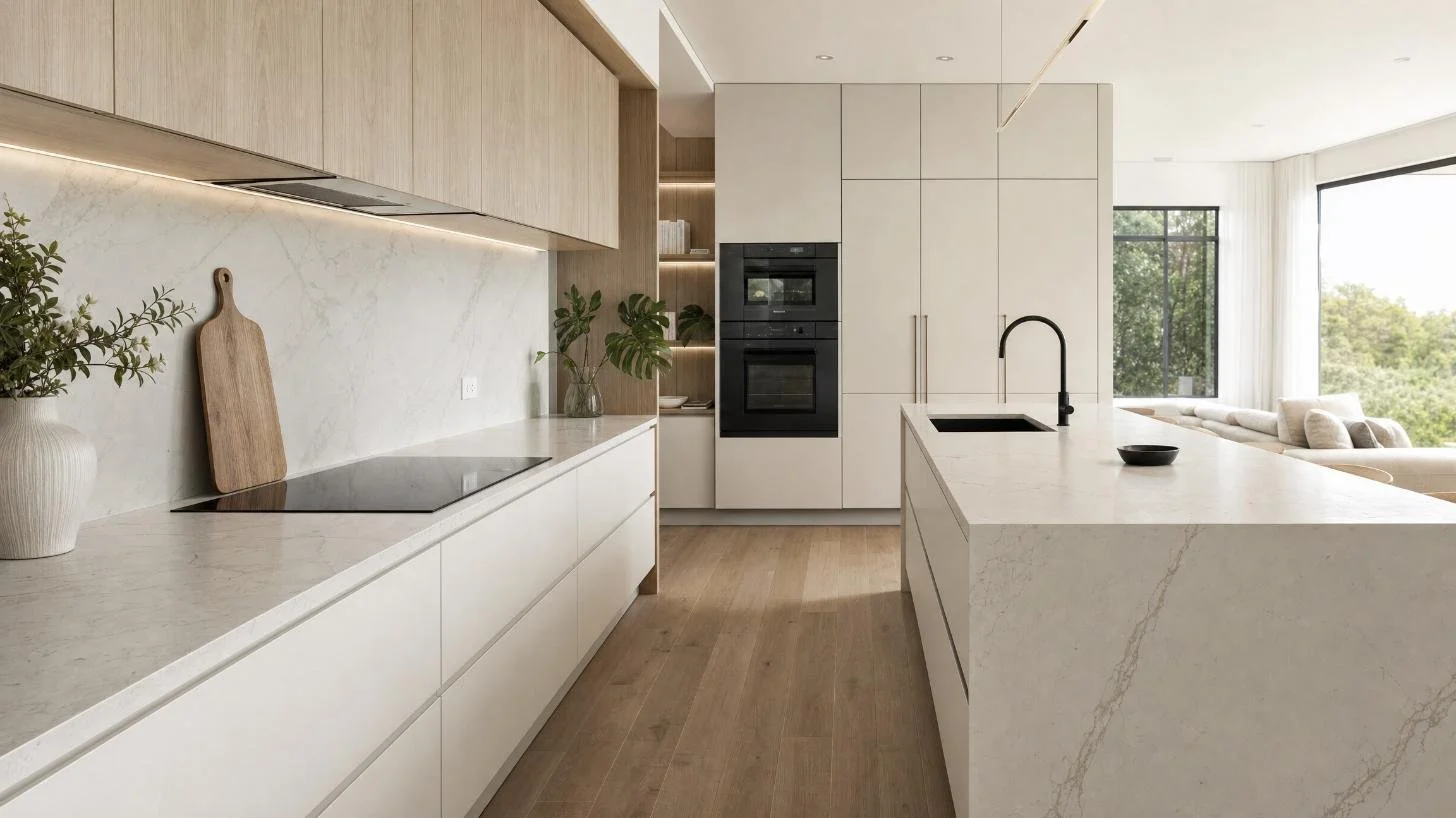
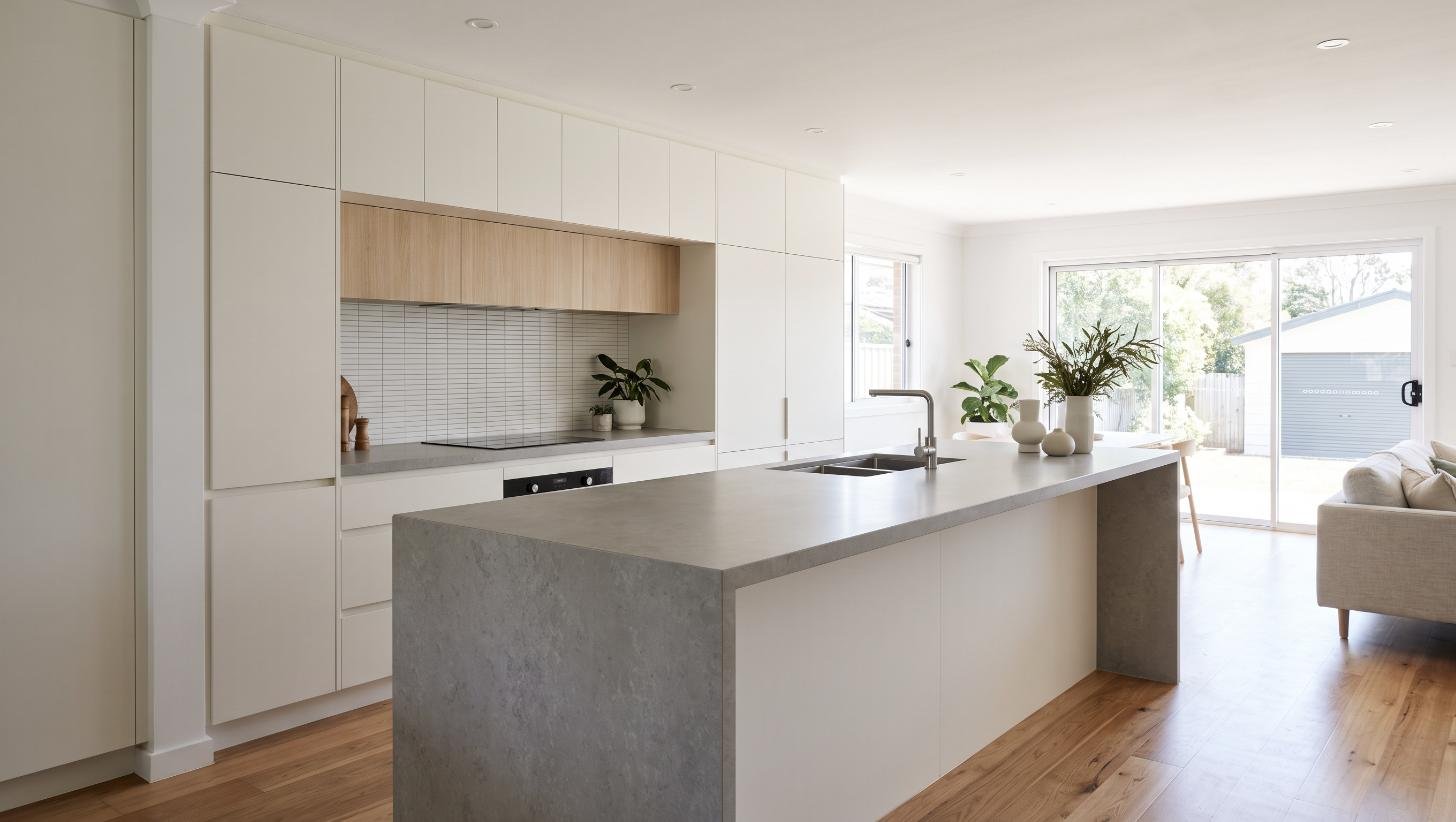
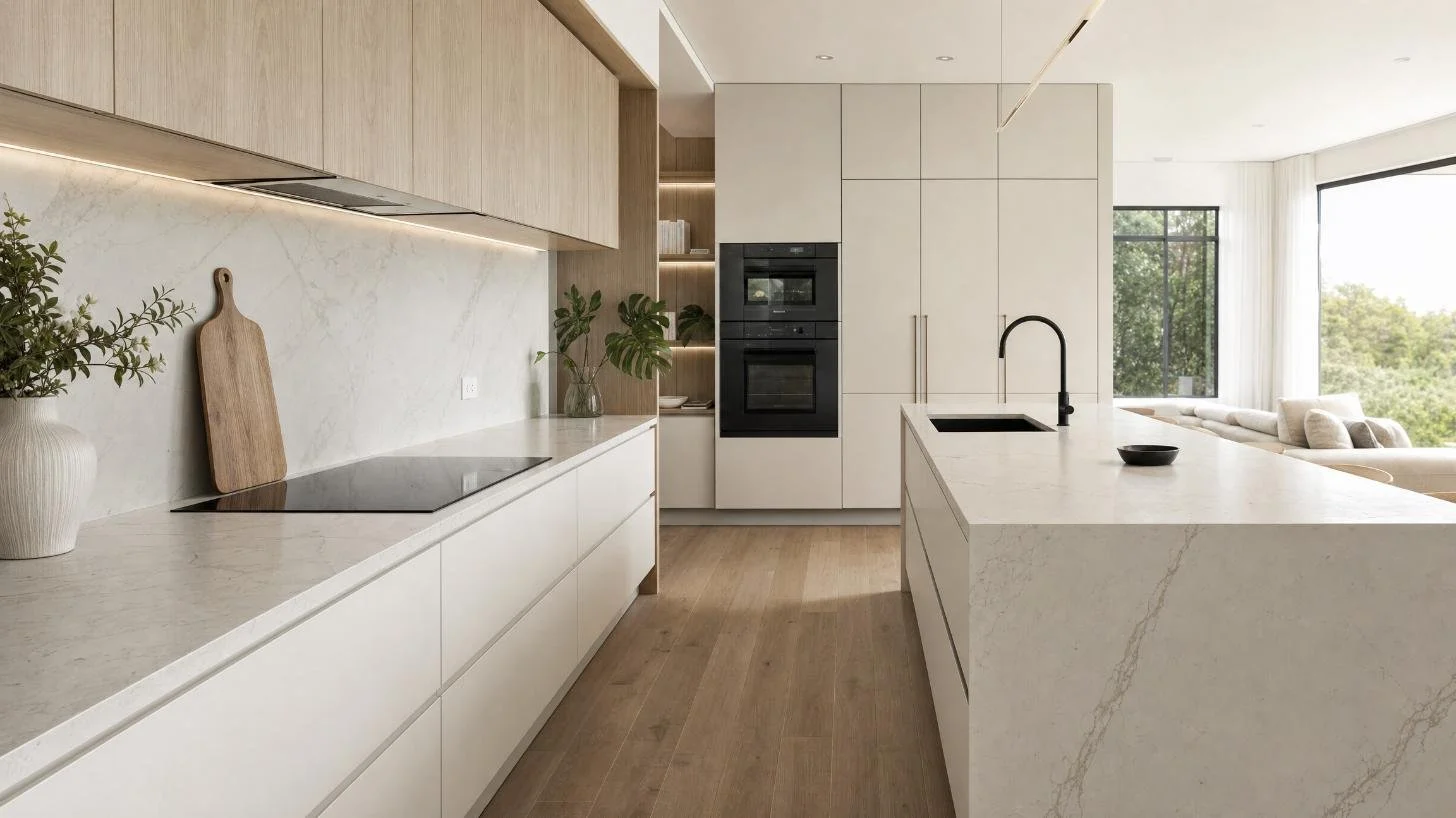
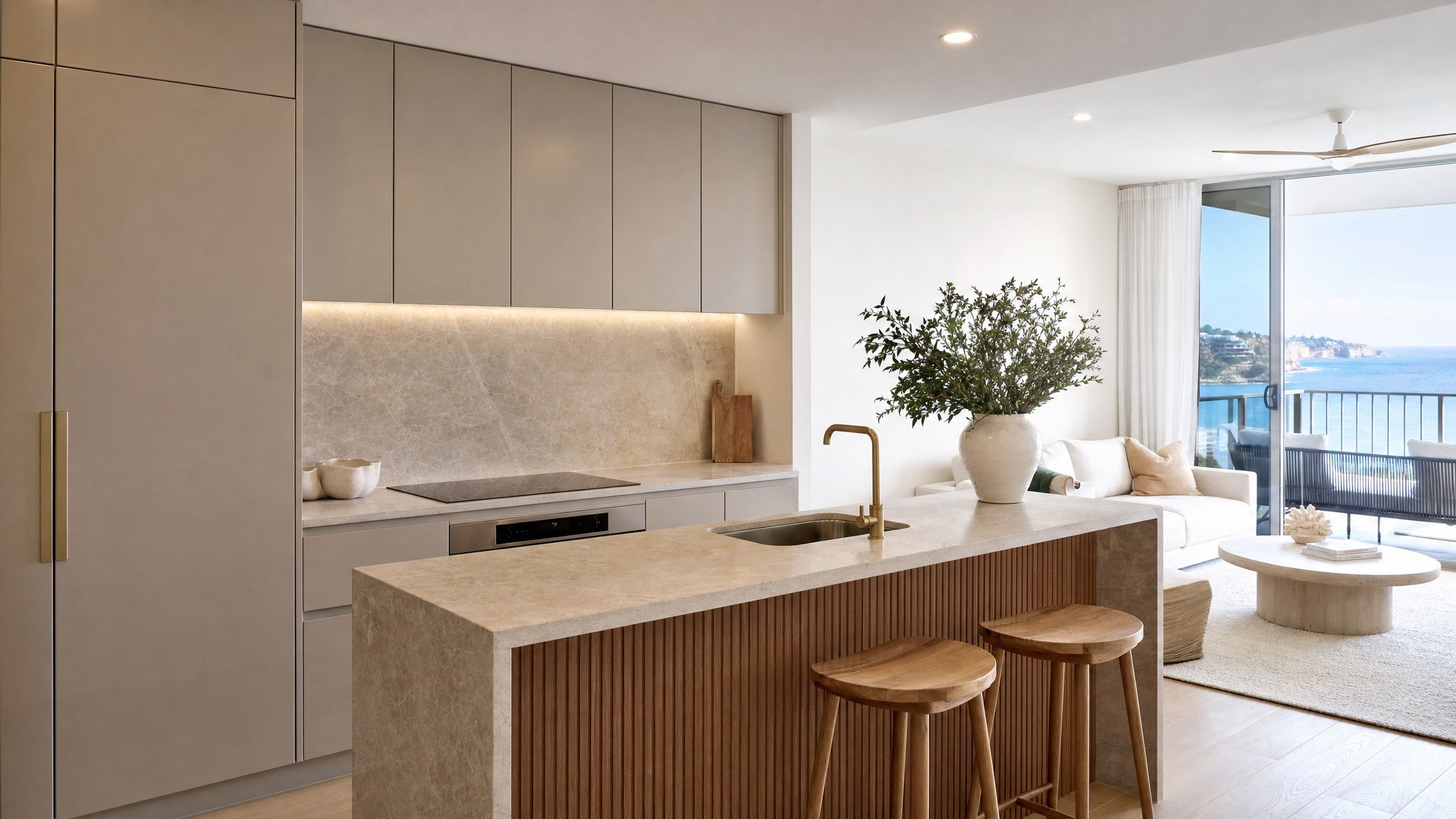
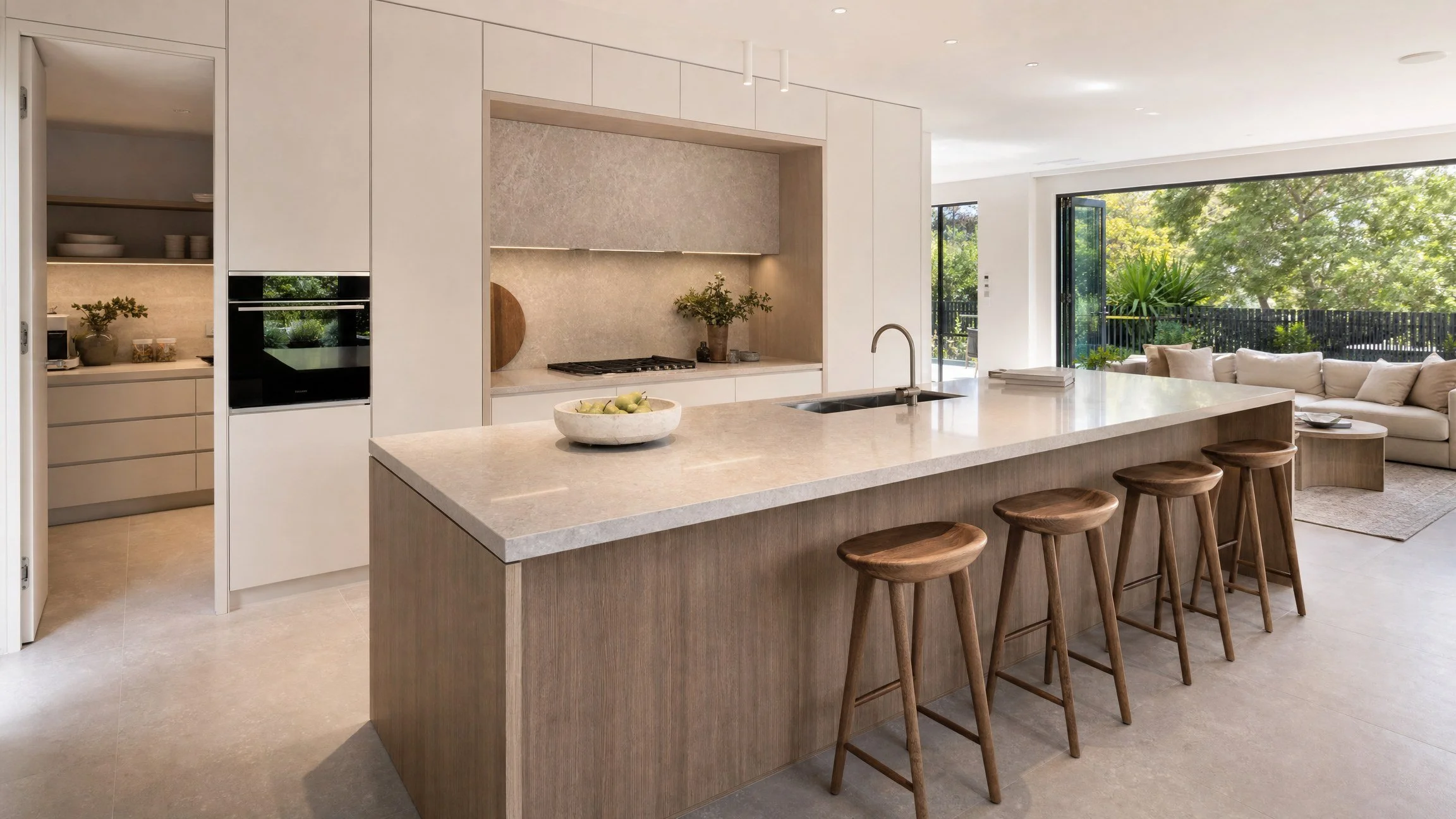
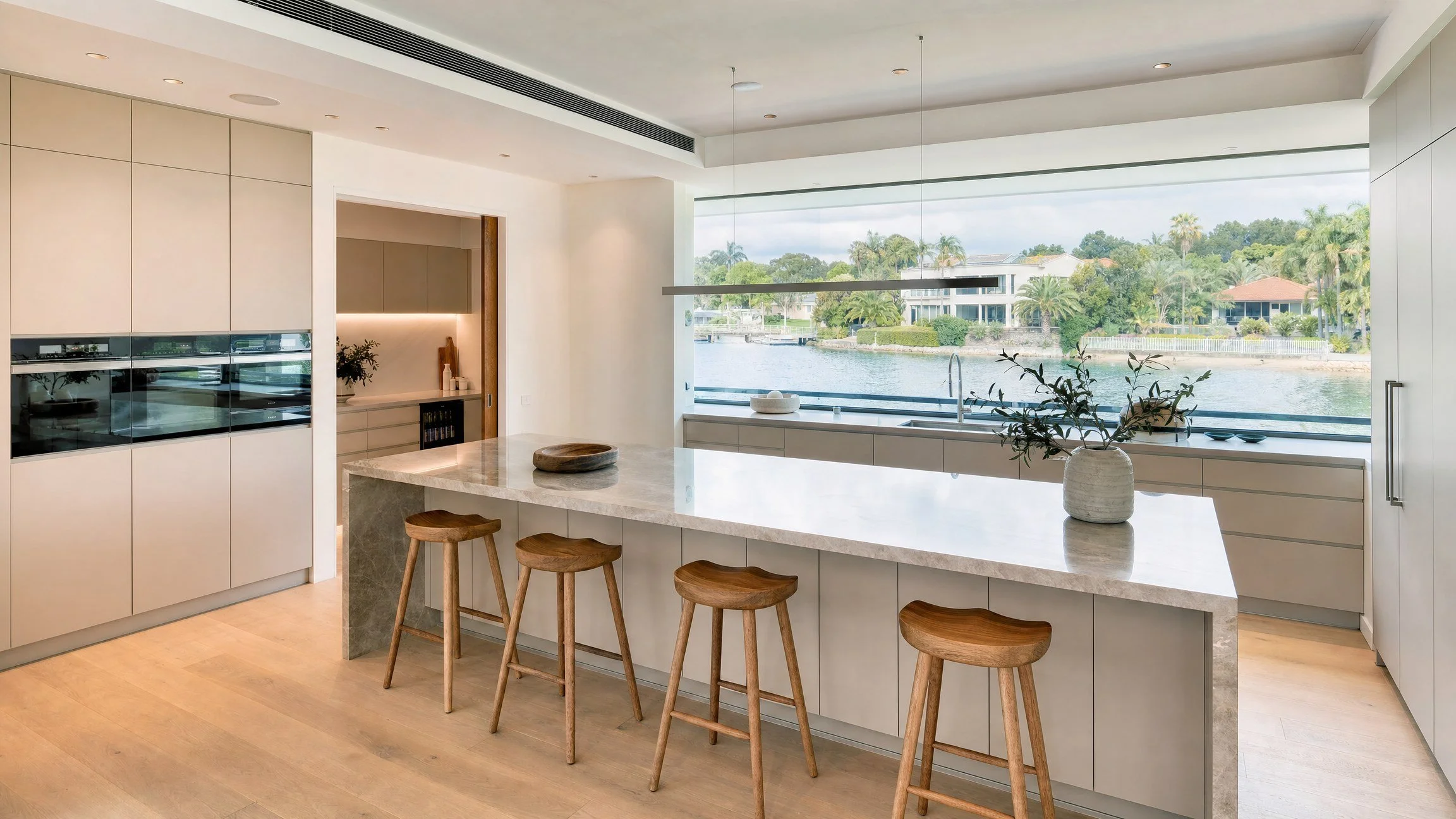
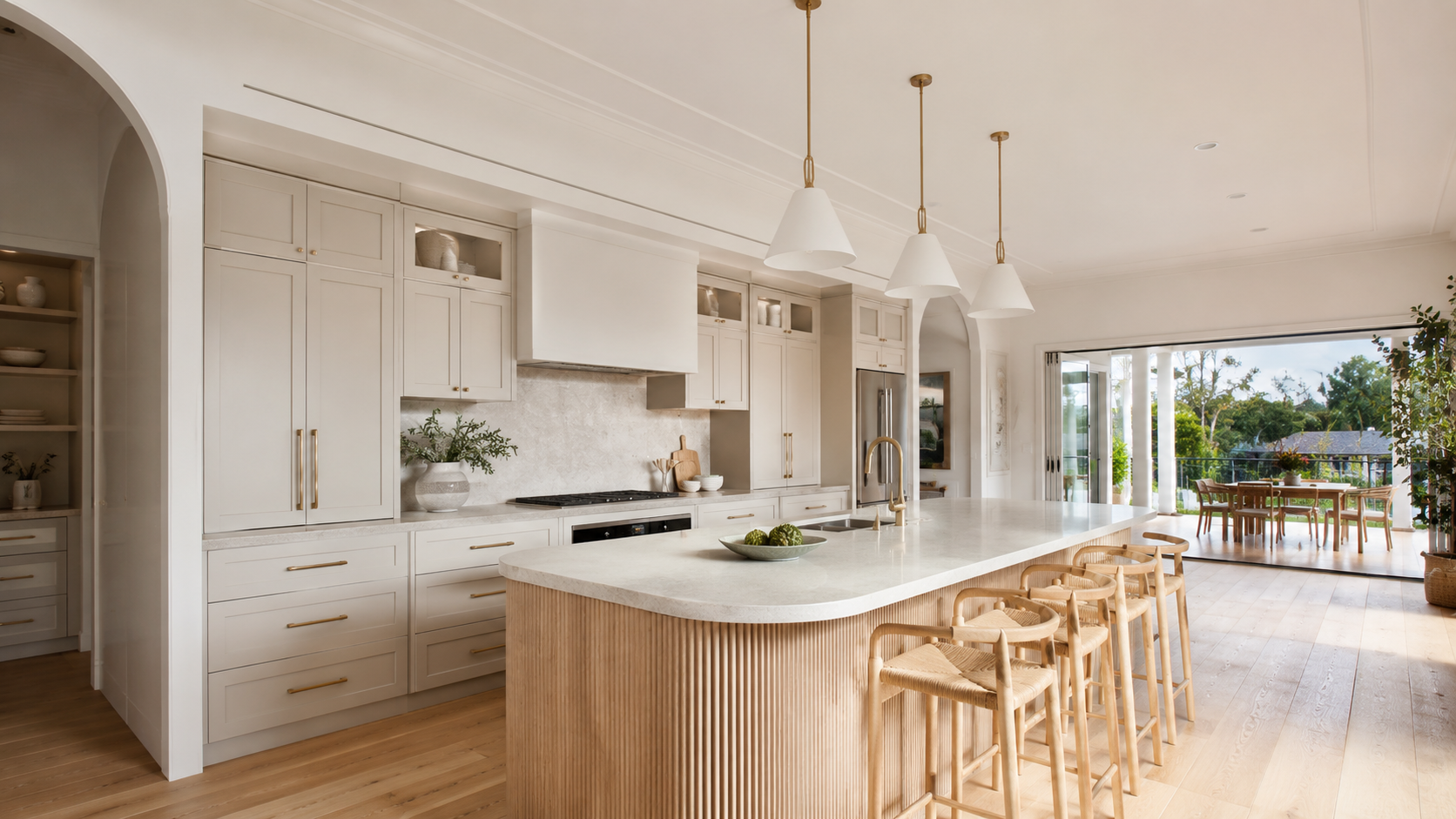
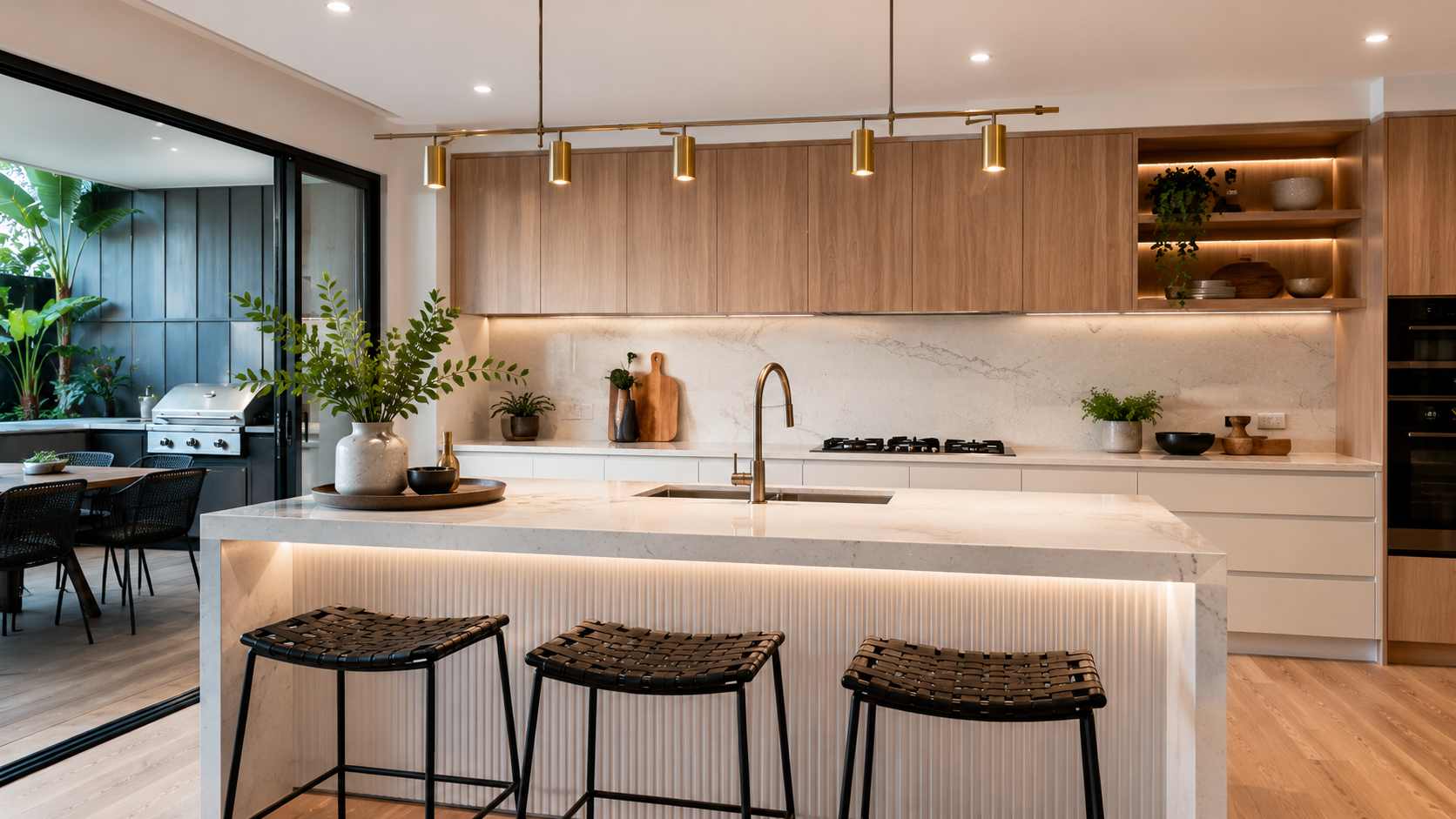
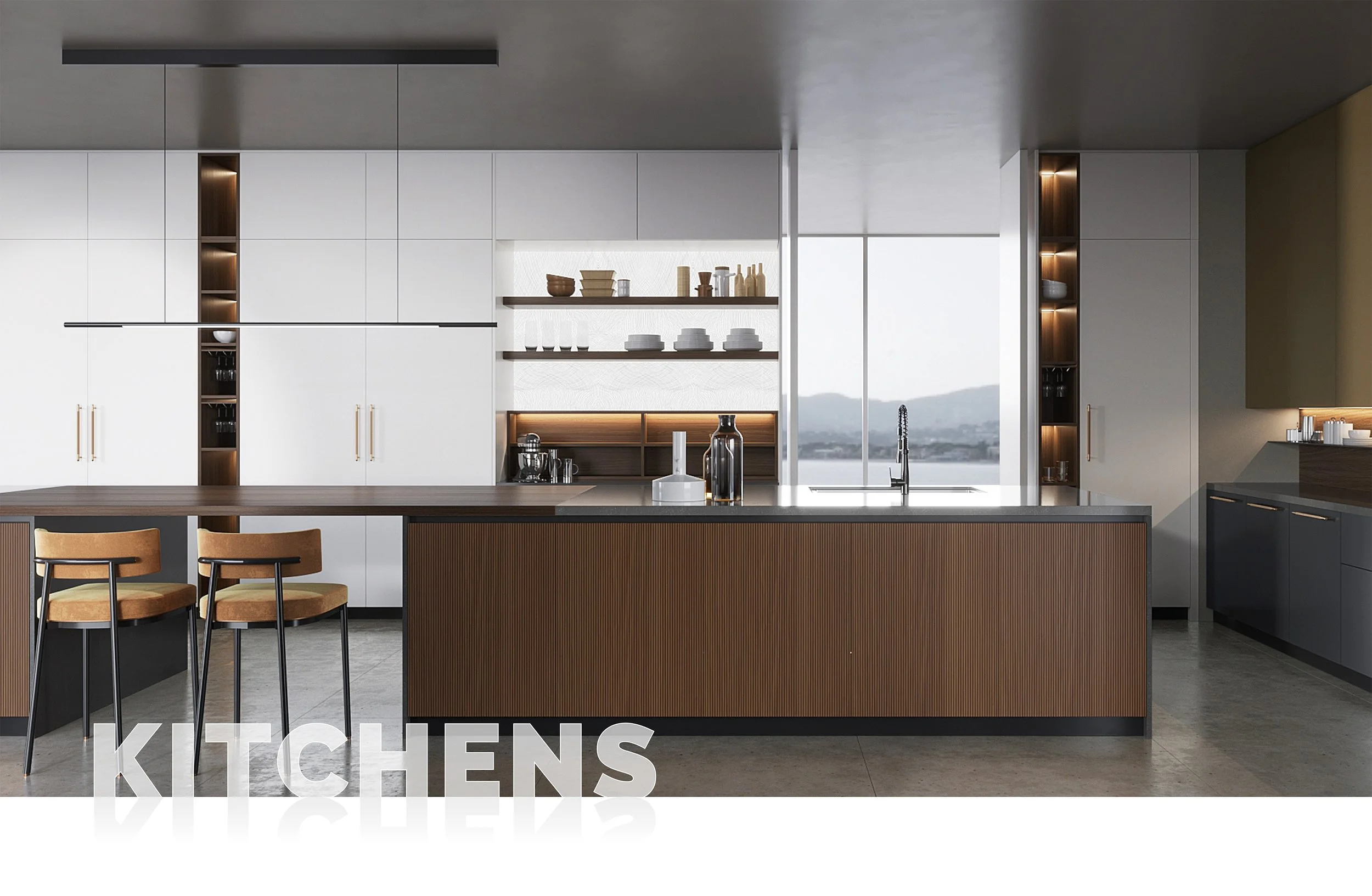
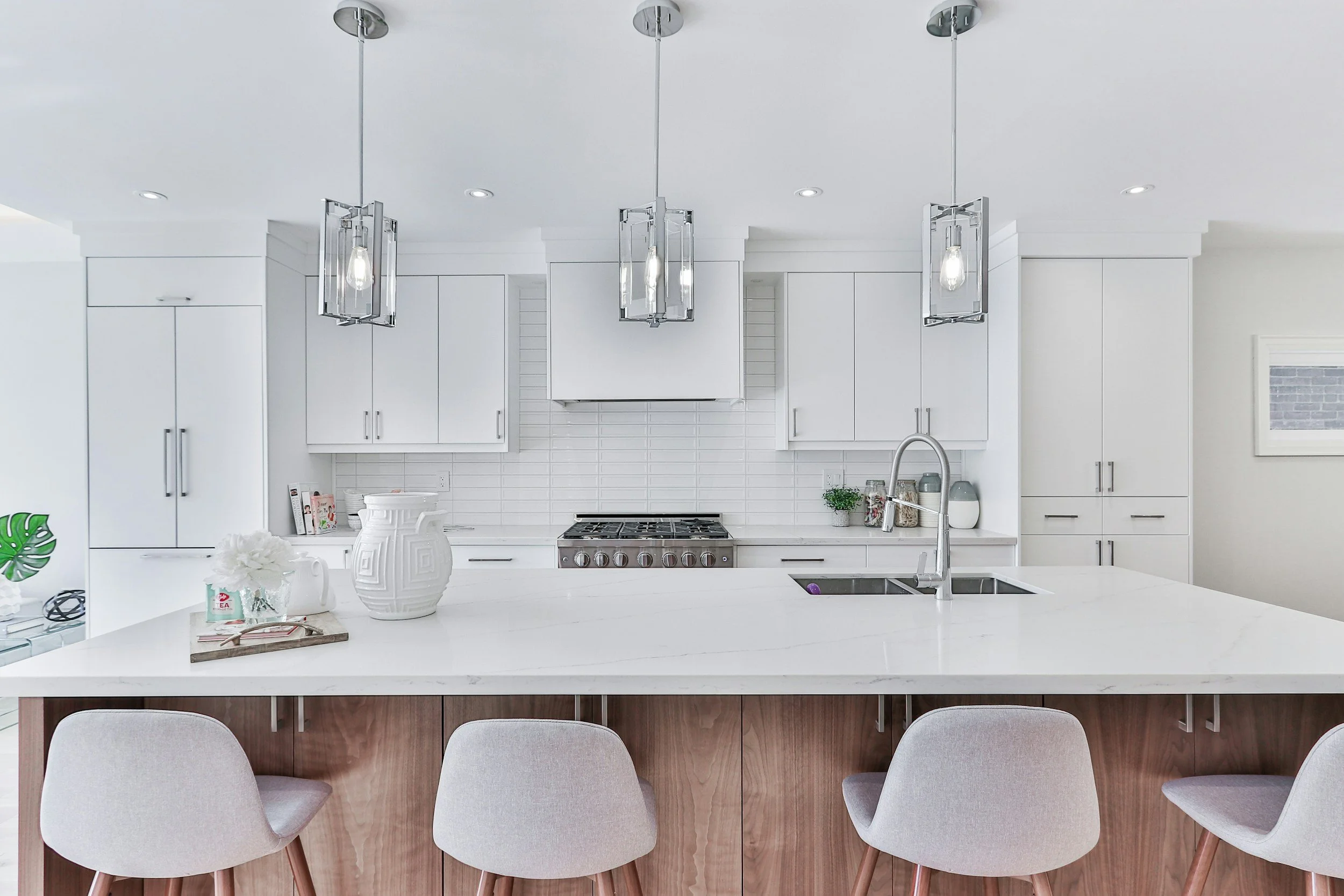
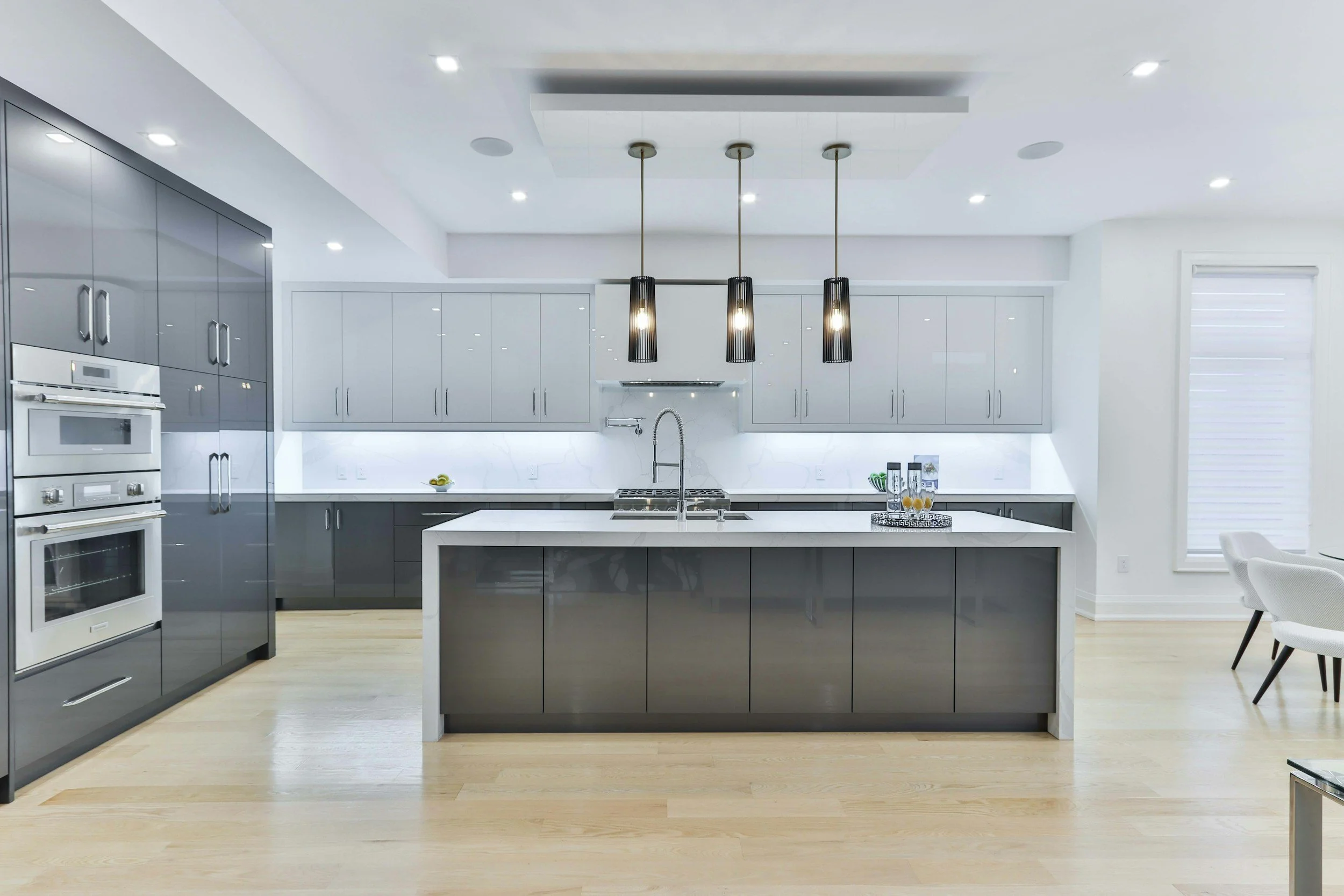
Sintered stone kitchen benchtop with waterfall island in a modern Sutherland Shire kitchen
Short answer: what can you use instead of Caesarstone in 2026, and what does it cost?
Engineered stone benchtops, panels and slabs cannot legally be manufactured, supplied, processed or installed anywhere in Australia. The prohibition took effect on 1 July 2024 under the model Work Health and Safety Regulations, and engineered stone benchtops, panels and slabs became prohibited imports from 1 January 2025. This is a silicosis protection measure for the workers who cut and polish the material, and it applies regardless of the brand name on the slab.
What you can still specify, and what most Shire kitchens now use:
- Porcelain and sintered stone. Expressly outside the ban, and the closest like-for-like replacement.
- Low-silica engineered stone, meaning products manufactured to sit below the 1% crystalline silica threshold. These fall outside the prohibition definition and are widely offered in showrooms.
- Natural granite, indicatively $650 to $2,000 per square metre installed.
- Natural marble, indicatively $800 to $2,500 per square metre installed, with Carrara at the lower end and Calacatta at the top.
- Solid timber, indicatively $600 to $1,200 per square metre for hardwood, plus installation.
- High-pressure laminate, from around $120 per square metre for the material.
From our own Sutherland Shire projects, the benchtop for a standard kitchen usually lands somewhere between $3,000 and $9,000 supplied and installed. Figures are indicative and move with slab availability, edge profile, cut-outs and the number of joins your layout needs.
Sources: Safe Work Australia, SafeWork NSW, Three Birds Renovations 2026 benchtop cost guide. Where a figure is not attributed, it is our own project-experience range.
What the engineered stone ban actually covers
There is a lot of confusion here, and it costs people money when they act on the wrong version of it. The rule is narrower and more specific than most people assume.
What is prohibited
- Manufacturing, supplying, processing and installing engineered stone benchtops, panels and slabs.
- The definition captures artificial products containing 1% or more crystalline silica, made by combining natural stone materials with binders such as resins and pigments.
- Since 1 January 2025, importing engineered stone benchtops, panels and slabs into Australia.
What is not prohibited
- Porcelain and sintered stone products, including benchtops, slabs and panels, are expressly excluded from the ban.
- Engineered products manufactured to sit below the 1% crystalline silica threshold, commonly sold as low-silica or ultra-low-silica ranges, fall outside the definition.
- Natural stone such as granite, marble and limestone.
- Finished engineered stone products that do not need to be cut or modified on site, such as sinks, garden ornaments and jewellery.
- Your existing engineered stone benchtop. If it is already installed in your home, you are not required to remove it.
The bit that catches people out in a renovation
Working on an engineered stone top that is already installed, known as legacy engineered stone, is permitted, but it is tightly controlled. Removal, repair, minor modification and disposal are allowed only where the contractor has notified the WHS regulator beforehand and uses controlled processing such as wet cutting, dust suppression and respiratory protection.
In practice that means two things for renovation planning. First, expect a legitimate premium and a notification lead time on any job that touches an existing engineered stone top. Second, once you factor that in, replacing the benchtop is usually the more sensible option than modifying it, so if your layout is changing, budget for a new top from day one rather than discovering it at template stage. If you are unsure how your existing top is affected, ask about it when you send through your Smart Quote video and we will flag it in the estimate.
The five benchtop families worth considering
Porcelain and sintered stone
This is where most of the Caesarstone market has moved, and for good reason. Porcelain and sintered surfaces are manufactured under heat and pressure, and the better ranges are convincing reproductions of marble veining, concrete and honed stone. They are non-porous, so no sealing. They are highly heat resistant, which matters if you are the kind of cook who puts a pan straight down. They are excellent for outdoor kitchens because they are UV stable and will not yellow on a north-facing alfresco.
- Best for: busy family kitchens, marble looks without marble maintenance, alfresco and outdoor benchtops.
- Watch for: thinner formats need careful handling and a good fabricator, and complex mitred waterfall ends add labour cost.
- Indicative: confirm at specification stage. Porcelain and sintered pricing moves with format, thickness and fabricator, and generally sits above granite and below marble.
Natural granite
Granite fell out of fashion during the engineered stone decade and is quietly returning. Modern granites include restrained, low-movement stones that look nothing like the busy speckled slabs of the early 2000s. It is very hard, very heat tolerant and forgiving in a working kitchen.
- Best for: durability-first households, families with teenagers, anyone who wants a genuine natural stone at a sensible price.
- Watch for: it is porous and needs periodic sealing. Slabs vary, so choose your actual slab rather than a sample chip.
- Indicative: $650 to $2,000 per square metre installed, depending on the stone.
Natural marble and limestone
Nothing replicates real marble, and if you love it you will not be talked out of it. It is soft, it is porous, it etches when it meets lemon juice or red wine, and a great many people accept all of that because the material ages into something with character.
- Best for: a butler's pantry or island where you want one genuinely beautiful surface, or homeowners who like a lived-in patina.
- Watch for: sealing, etching and staining. A common Shire compromise is marble on the island and porcelain on the working runs.
- Indicative: $800 to $2,500 per square metre installed.
Low-silica engineered stone
If you have been to a showroom recently, this is the product you will have been offered. Manufacturers reformulated their ranges to sit below the 1% crystalline silica threshold, which places them outside the prohibition definition, and the look and feel is close to what the old engineered stone delivered.
- Best for: homeowners who specifically want the engineered stone aesthetic and consistency.
- Watch for: check the actual declared silica content on the product specification rather than relying on the brand or the salesperson. Fabricators still apply dust controls as a matter of course.
- Indicative: broadly comparable to porcelain, and confirm current pricing at specification stage.
Timber and laminate
Solid timber brings warmth that stone cannot, and it works beautifully as a contrast on an island, a breakfast bar or a home office return. It needs oiling and it will not thank you for a wet dish rack. Laminate has improved dramatically, and modern high-pressure laminate with a matching square edge is a legitimate choice for a rental, a granny flat, a laundry or a first-stage renovation you plan to upgrade later.
- Best for: warmth and contrast (timber), budget-conscious stages and secondary spaces (laminate).
- Watch for: timber near sinks, and laminate around undermount sinks, which generally is not possible.
- Indicative: hardwood timber $600 to $1,200 per square metre plus installation, laminate from around $120 per square metre for material.
How to choose, in the order that actually matters
Most people start with the look. We suggest starting with the three practical questions and letting them narrow the field, because the aesthetic decision is much easier once only two or three materials are left standing.
1. How do you actually use the kitchen?
- Hot pans straight onto the surface, most nights: porcelain, sintered or granite.
- Small children, spills, homework at the island: non-porous surfaces only.
- Serious baking: a cool stone surface earns its keep.
- Entertaining with red wine and citrus: avoid marble on the primary runs.
2. How much maintenance are you genuinely willing to do?
- None: porcelain or sintered stone.
- A seal every year or two: granite.
- Ongoing care and acceptance of patina: marble, limestone, timber.
3. What does your layout demand?
- A long island with a waterfall end needs slab size and vein matching considered early.
- An L-shape or U-shape with corners means joins, and join placement is a design decision, not an afterthought. Our guides to L-shaped kitchens and U-shaped kitchens cover how corners drive both cost and function.
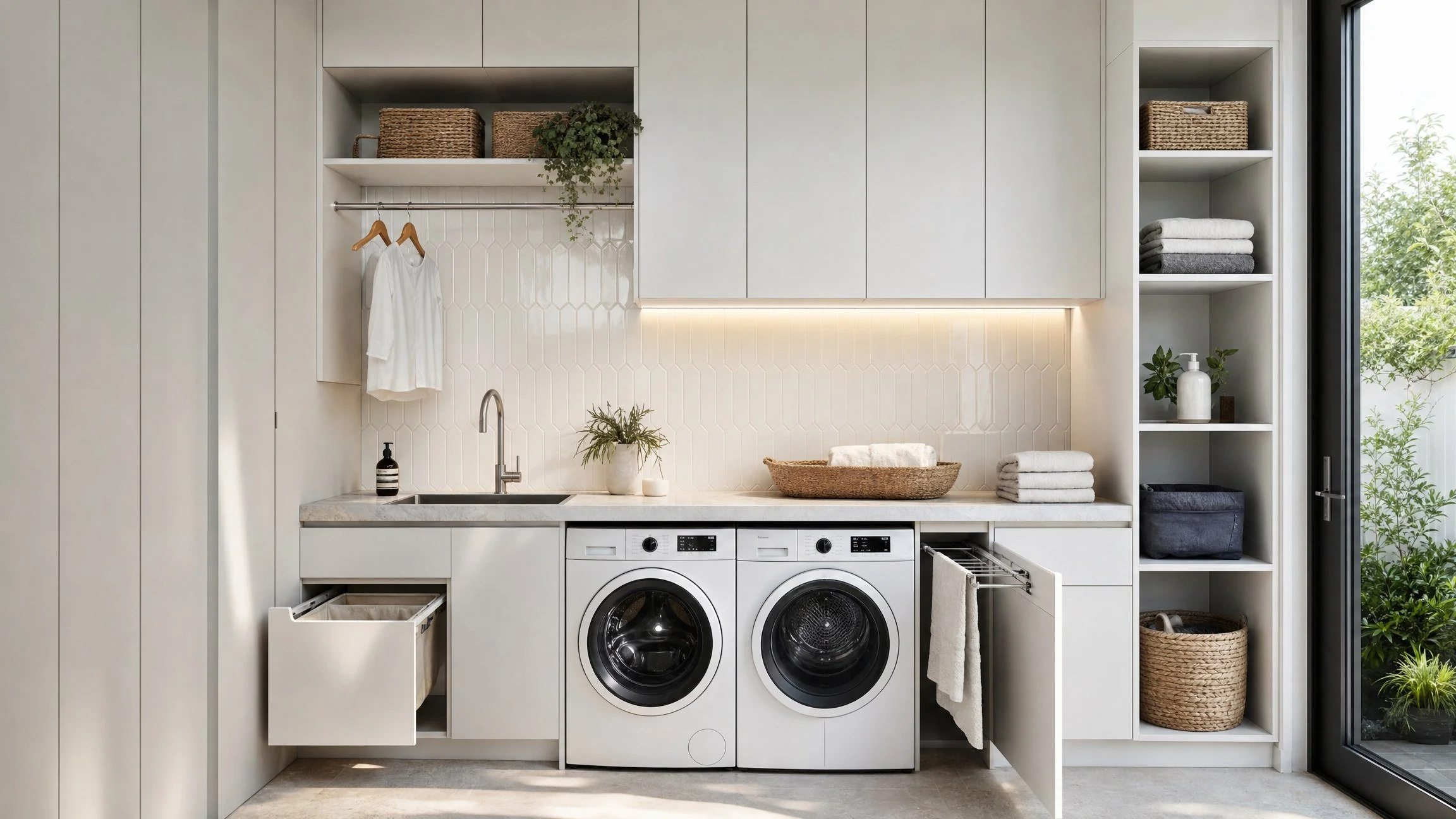
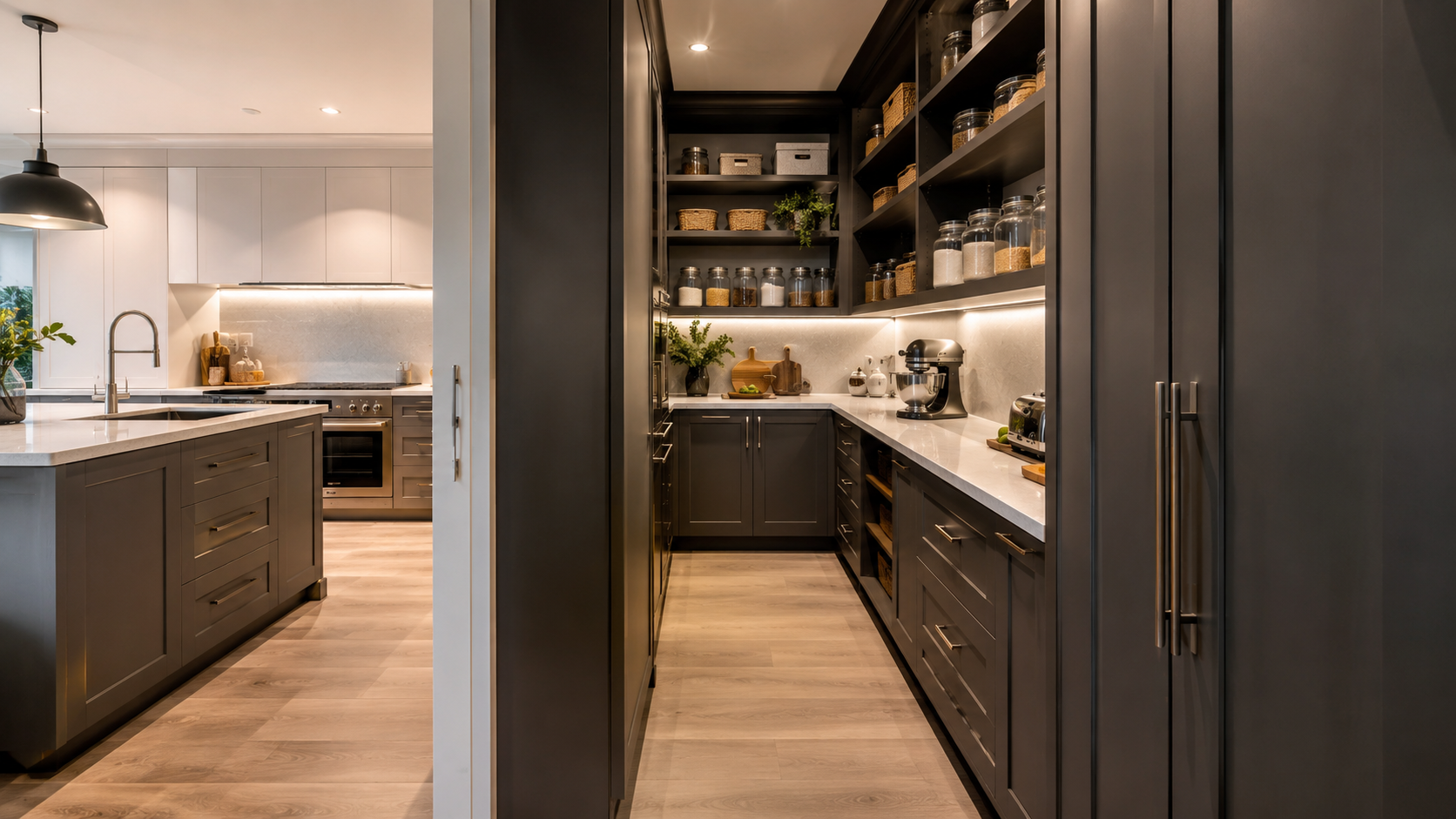
- A butler's pantry is the right place to save. Nobody sees it, so laminate or a plainer stone here frees budget for the main run.
What drives the price up, and where to save
Benchtop quotes vary far more than the per-square-metre figure suggests, because the fabrication work is where the labour sits.
Costs that add up:
- Waterfall ends, which effectively add another part-slab plus mitring labour.
- Thick edge build-ups. A 40mm or 60mm mitred edge looks superb and costs meaningfully more than a 20mm.
- Undermount sinks and drainer grooves.
- Splashback in the same material running to the underside of the overheads.
- Cut-outs for cooktops, taps and soap dispensers.
- Book-matched veining across an island and its waterfall, which requires slab selection and careful planning.
Where the savings are:
- Keep the primary run generous and specify a plainer material in the butler's pantry and laundry.
- Choose a standard 20mm edge on secondary runs and reserve the chunky mitred edge for the island.
- Design the layout so the benchtop works within standard slab sizes, which avoids an extra slab for the sake of 200mm.
- Decide on the splashback material early. A tiled or glass splashback is usually cheaper than running stone up the wall, and our custom kitchens page shows how the two treatments sit together.
For the full picture of where a benchtop sits inside a whole project, see our Kitchen Renovation Cost Sydney 2026 price guide.
Why the Smart Quote is the best first step
Benchtop pricing is the part of a kitchen quote where hidden assumptions do the most damage. Two quotes at similar headline numbers can assume completely different edge profiles, splashback treatments and slab counts, and you will not find out until template stage.
Our Smart Quote is designed to make that visible early. You send a quick 360 degree video of your kitchen, we assess the space, and we return an itemised estimate that names the benchtop material, thickness, edge detail and splashback treatment as separate lines. No home visit, no sales appointment, no obligation. If the number is not right, we can move the specification around before anyone has committed to anything.
It is also worth knowing where you stand contractually. In NSW, residential building work over $5,000 requires a written contract, and work over $20,000 requires a full home building contract plus Home Building Compensation cover. Most Shire kitchen renovations sit above both thresholds, so an itemised written quote is not just good practice, it is the basis for the contract you are legally entitled to. See Service NSW on managing residential building contracts.
Transform Your Space with Eco Squared
Embrace the elegance and functionality of European design with Eco Squared. Our Oppolia partnership provides access to premium materials and cutting-edge manufacturing, tailored for the way Sydney lives.
Get a Free SMART QUOTE
Film a quick 360° video and Text/WhatsApp 0466 119 712 (no home visit required).
Prefer email? info@eco2.com.au
Is Caesarstone banned in Australia?
Engineered stone benchtops, panels and slabs cannot be manufactured, supplied, processed or installed in Australia from 1 July 2024, and cannot be imported from 1 January 2025. Several manufacturers now sell compliant porcelain, sintered and low-silica ranges under the same brand names, so check the declared crystalline silica content on the product specification rather than going by the brand.
What is the best alternative to engineered stone?
Porcelain and sintered stone are the closest like-for-like replacement. They are non-porous, highly heat resistant, available in convincing marble and concrete looks, and expressly excluded from the ban. Low-silica engineered stone is the other common option, and natural granite is the value choice if you are happy to seal it periodically.
Do I have to remove my existing engineered stone benchtop?
No. The prohibition covers new manufacture, supply, processing and installation, not benchtops already installed in homes. You can leave an existing top in place indefinitely. Cutting or modifying it is permitted but tightly controlled: the contractor must notify the WHS regulator beforehand and use wet cutting and dust controls, which is why most renovators replace rather than modify.
How much does a kitchen benchtop cost in the Sutherland Shire?
From our own projects, expect roughly $3,000 to $9,000 for the benchtop supplied and installed in a typical Shire kitchen, depending on material, run length, edge profile and cut-outs. Published 2026 material rates put granite at around $650 to $2,000 per square metre and marble at $800 to $2,500, with porcelain and sintered stone between the two. All figures are indicative.
Is porcelain heat resistant enough for a real kitchen?
Yes. Porcelain and sintered surfaces are manufactured at very high temperatures and handle hot cookware far better than most alternatives. We still recommend a trivet as a matter of habit, mainly to protect against thermal shock on very thin formats and near join lines.
Does porcelain scratch or chip?
Porcelain is extremely scratch resistant on the face. The vulnerable points are edges and cut-outs, particularly on thin slabs, which is why fabrication quality and careful installation matter more with porcelain than with granite. Use a board rather than cutting directly on the surface.
Can I use marble in a family kitchen?
You can, with realistic expectations. Marble etches when it meets acids such as lemon juice, wine and vinegar, and it stains if spills sit. Many Shire families run porcelain on the working benches and marble on the island or in a butler's pantry, which keeps the look without the daily anxiety.
How long does a benchtop take once the cabinetry is in?
As a general rule, templating happens after the cabinets are installed and levelled, and fabrication then takes around one to two weeks depending on the material and the fabricator's queue. Stone and porcelain cannot be templated from drawings alone, so this stage sits on the critical path. We build it into the schedule when we quote.