Bathroom Cabinetry Costs and Wet-Area Rules in the Sutherland Shire
If you are planning a bathroom in the Sutherland Shire, there are two questions worth answering before you fall in love with a tile: what will the cabinetry actually cost, and who is legally responsible for making sure the room does not leak into the rest of your house. Get those right and the rest is genuinely enjoyable. Get them wrong and you find out about it eighteen months later, in the ceiling below.
At Eco2, we design and install custom bathroom vanities, mirror cabinets, shaving cabinets and moisture-smart storage for homes across Caringbah, Miranda, Kirrawee, Cronulla, Gymea, Sylvania and the wider Shire. We are cabinetmakers rather than a general bathroom company, which means we are direct about where the cabinetry line sits in the budget and where it does not. You can start with a Smart Quote: send a quick 360 degree video of your bathroom and we will return an itemised, no-obligation estimate, no home visit required.
This guide covers indicative 2026 costs for custom bathroom cabinetry in the Shire, the wet-area rules that govern the room, the materials that survive a family bathroom, and how to plan storage that actually holds what you own.
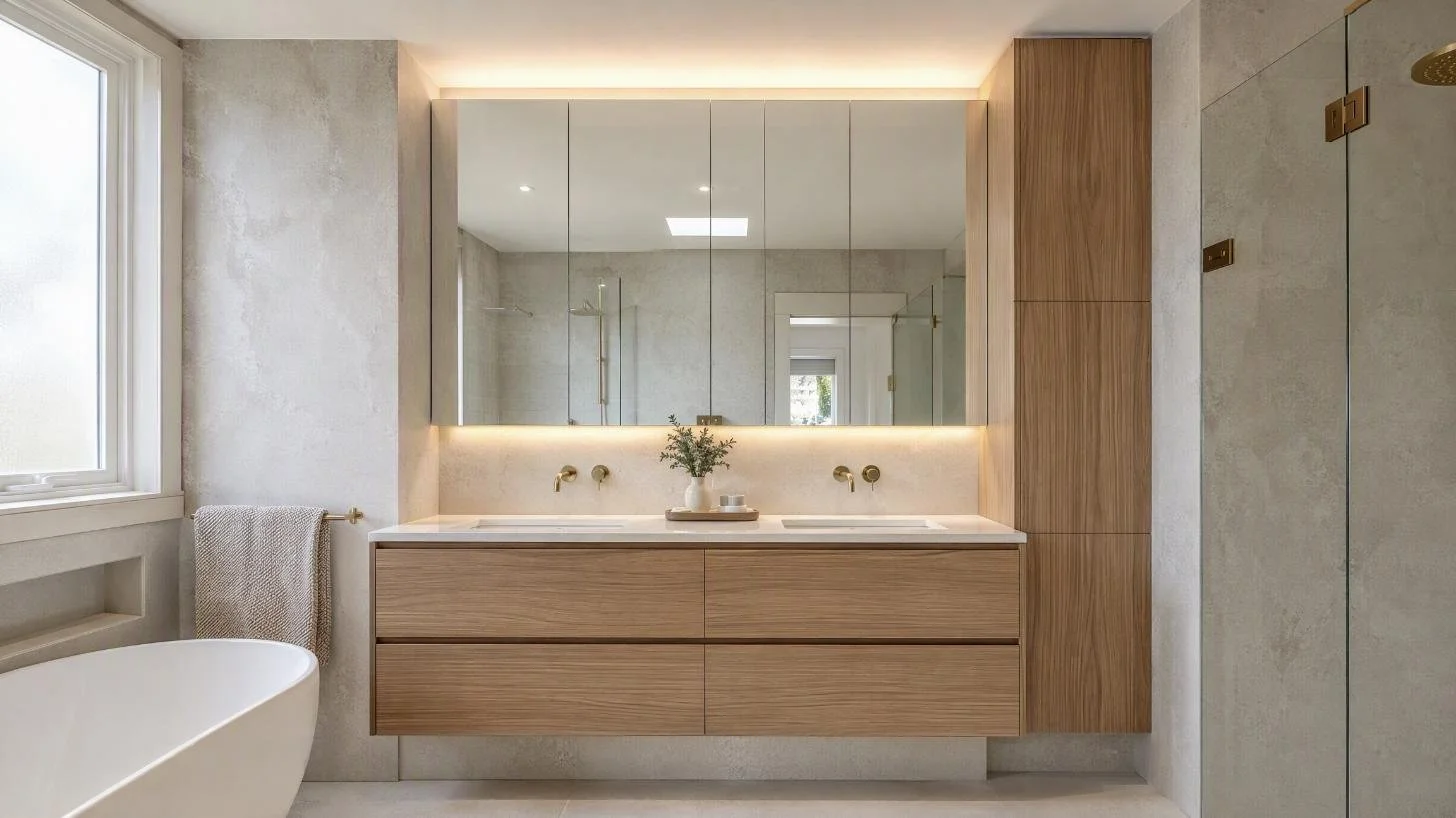
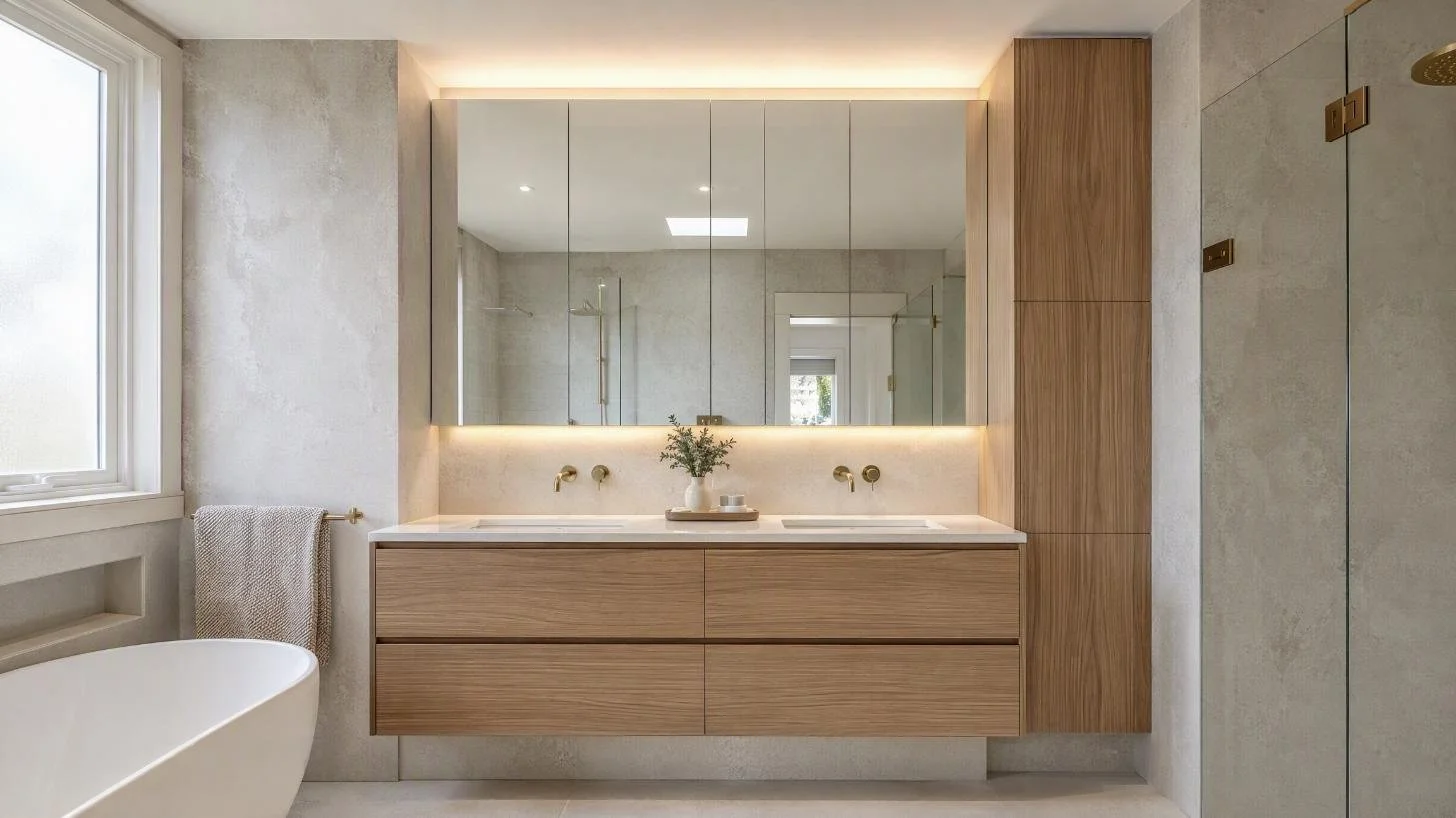
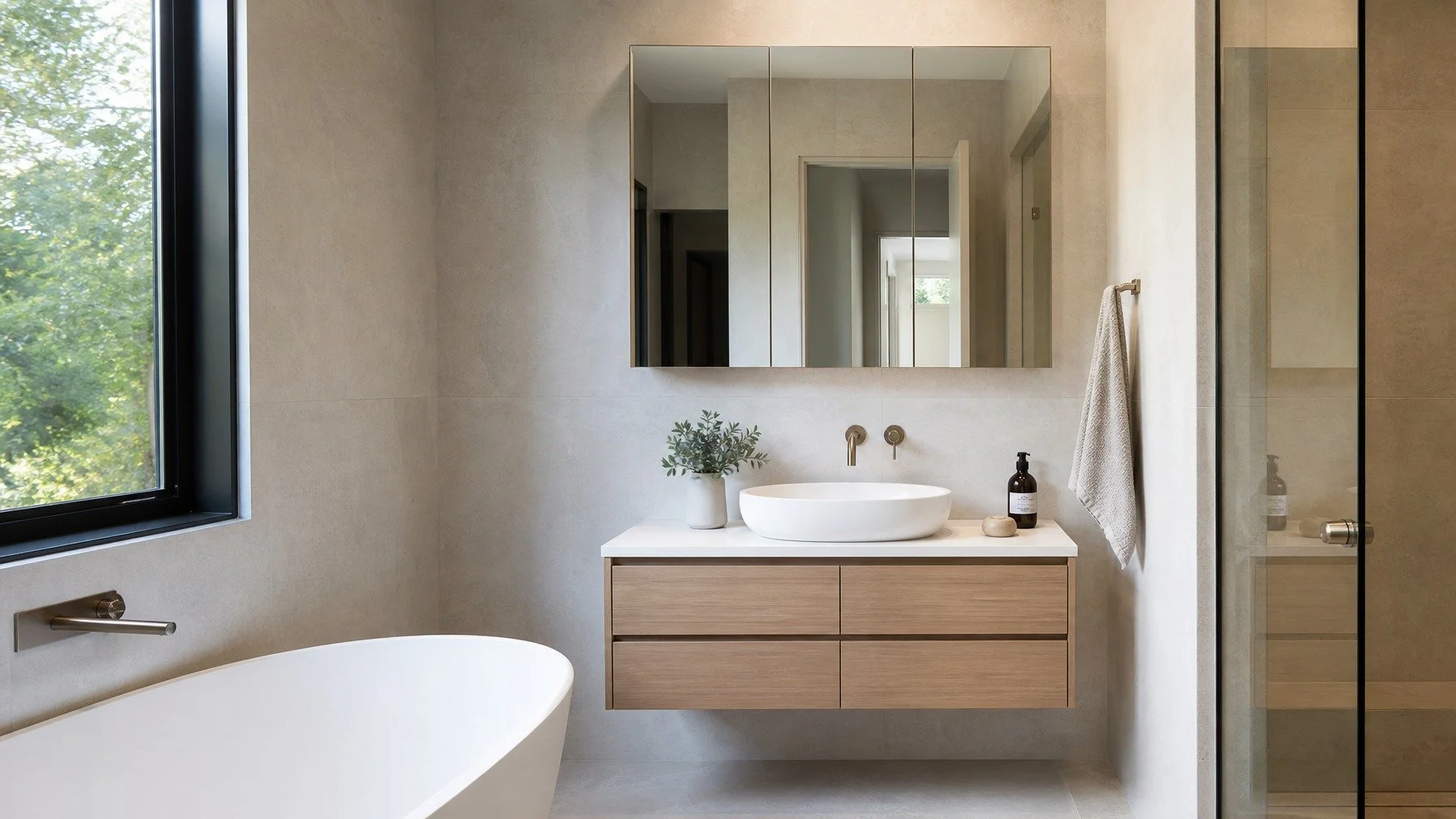
Custom wall-hung double vanity with sintered stone benchtop in a Sutherland Shire bathroom
Short answer: what does custom bathroom cabinetry cost, and what are the rules?
Cabinetry costs. The figures below are our own project-experience ranges from Sutherland Shire homes, supplied and installed, rather than published survey data:
- Custom floor-standing or wall-hung vanity, 900mm to 1,200mm: roughly $2,200 to $5,500 depending on carcass material, door finish, drawer count and hardware.
- Double vanity, 1,500mm to 1,800mm: roughly $4,000 to $9,000.
- Mirror or shaving cabinet, recessed or surface: roughly $900 to $2,800.
- Full-height linen or storage tower: roughly $1,500 to $4,000.
- Benchtop on top: priced separately by material. Published 2026 rates put granite at around $650 to $2,000 per square metre installed and marble at $800 to $2,500, with porcelain and sintered stone between the two.
In our experience, cabinetry accounts for roughly 15 to 25 per cent of a full bathroom renovation. The balance goes to waterproofing, tiling, plumbing, electrical, fixtures and, if the room is being reconfigured, demolition and structural work.
The rules, in one paragraph. Waterproofing of domestic wet areas is governed by AS 3740:2021, which is referenced by the National Construction Code and therefore applies to new and substantially renovated wet areas. In NSW, waterproofing is licensed trade work: anyone contracting for waterproofing valued over $5,000 must hold a contractor licence endorsed for waterproofing, and the person applying the membrane must hold that licence or work under a qualified supervisor. On completion you should receive a waterproofing certificate. Separately, residential building work over $5,000 requires a written contract in NSW, and work over $20,000 requires a full home building contract plus Home Building Compensation cover.
Sources: NSW Government on waterproofing work licences, Service NSW on residential building contracts, Three Birds Renovations 2026 benchtop costs.
The wet-area rules explained, without the jargon
Bathrooms are the one room in a house where a small workmanship failure becomes an expensive structural problem. That is why the regulation is tighter here than almost anywhere else in a renovation.
AS 3740 and the National Construction Code
AS 3740:2021, Waterproofing of domestic wet areas, sets the minimum acceptable requirements for the materials, design and installation of waterproofing in bathrooms, showers, laundries and toilets. It is not a guideline. It is referenced by the National Construction Code, so where a wet area is newly built or substantially renovated, the waterproofing must comply. That obligation does not depend on whether a certifier happens to be involved.
In practice, the standard governs things like which surfaces must be waterproofed and to what height, how the membrane must be turned up at junctions, how the floor must fall to the waste, and how penetrations must be treated.
Licensing
In NSW, waterproofing is licensed trade work. Anyone contracting for waterproofing valued over $5,000 must hold a contractor licence endorsed for waterproofing, and the person applying the membrane must hold that licence or work under a qualified supervisor. This is one of the trades where "my builder's mate does it" is genuinely a problem rather than a preference. Ask to see the licence, and check it on the NSW licence register.
The certificate
On completion, you should be issued a waterproofing certificate confirming the work meets AS 3740. Keep it. It matters at resale, it matters for any future insurance claim, and it is the document that establishes who is accountable if something goes wrong.
Where cabinetry fits in
Here is the part people miss. The waterproofing membrane goes down first, and it must not be punctured. That has direct consequences for cabinetry:
- Wall-hung vanities are fixed to noggings or a batten in the wall above the membrane turn-up, which is generally the cleanest solution.
- Floor-standing vanities should not be mechanically fixed through a waterproofed floor. They are typically silicone-bedded or fixed to the wall instead.
- Kickboards in a wet room should be removable, sealed and ideally set back, so a slow leak is visible rather than hidden.
- Penetrations for plumbing need to be sealed properly, and the cabinetry needs to be designed around them rather than cut to suit on the day.
We set this out at design stage so the cabinetmaker, waterproofer and plumber are not solving it in the doorway on installation day.
Materials that survive a Sutherland Shire bathroom
Bathrooms are humid, they get splashed, and in the Shire a good number of them are also getting salt air through an open window. Material choice is where cheap bathroom cabinetry falls apart, usually within three to five years, and usually at the same three points.
Carcass
- Moisture-resistant board (MR MDF or MR particleboard) is the practical standard for a family bathroom. Look for a full edge seal, including the hidden back edges.
- Marine-grade or compact laminate carcasses cost more and are worth considering for a wet-room shower zone or a coastal home.
- Full-height end panels down to the floor trap water at the base. A recessed kickboard performs better.
Doors and drawer fronts
- Two-pack polyurethane gives a seamless, easy-clean finish and holds up well in bathrooms when the edges are properly sealed.
- High-pressure laminate is extremely durable and forgiving, and modern finishes look far better than their reputation.
- Natural timber veneer is beautiful but needs a good ventilation strategy and is best kept away from the shower zone.
Hardware
- Specify stainless steel or marine-grade hinges and runners. Standard hardware corrodes in a bathroom, and in a home near Cronulla, Burraneer or Woolooware it corrodes faster.
- Soft-close everything. Bathroom cabinetry gets slammed shut more often than kitchen cabinetry.
The three failure points to watch: unsealed bottom edges of doors, the underside of the vanity where water tracks off the basin, and the join between benchtop and wall where the silicone perishes.
Storage that fits how a bathroom is actually used
Most bathrooms fail on storage rather than looks, and it is almost always the same problem: one cupboard under a basin, obstructed by the trap, holding a jumble of things.
The three decisions that carry the most cost and the most benefit are:
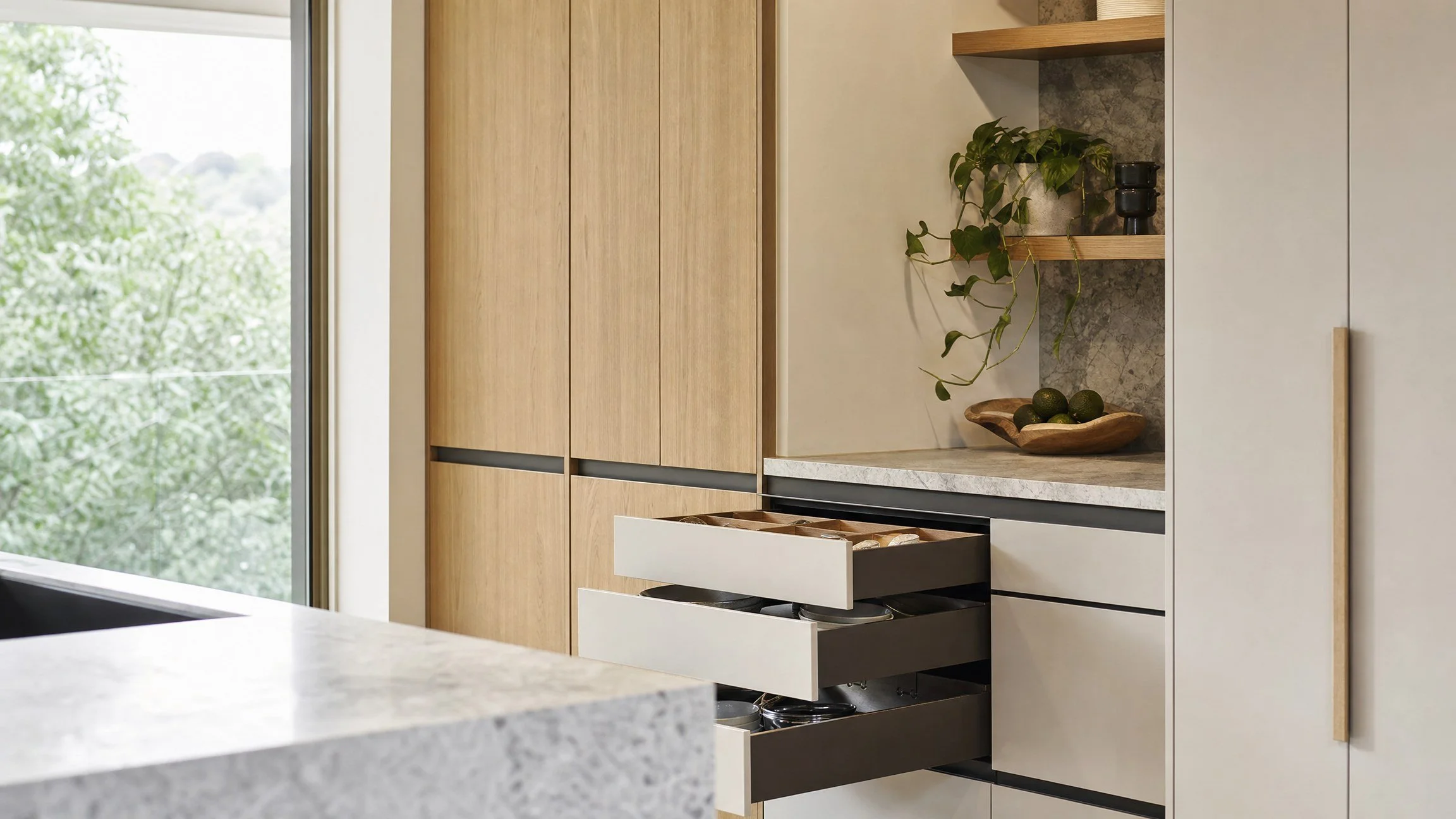
- Drawers rather than doors, with a U-shaped cut-out routed around the trap. This costs more in labour than a cupboard with a shelf and returns far more usable volume.
- Wall-hung rather than floor-standing, which keeps the cabinetry out of standing water, avoids fixing through the membrane and makes the floor easier to clean.
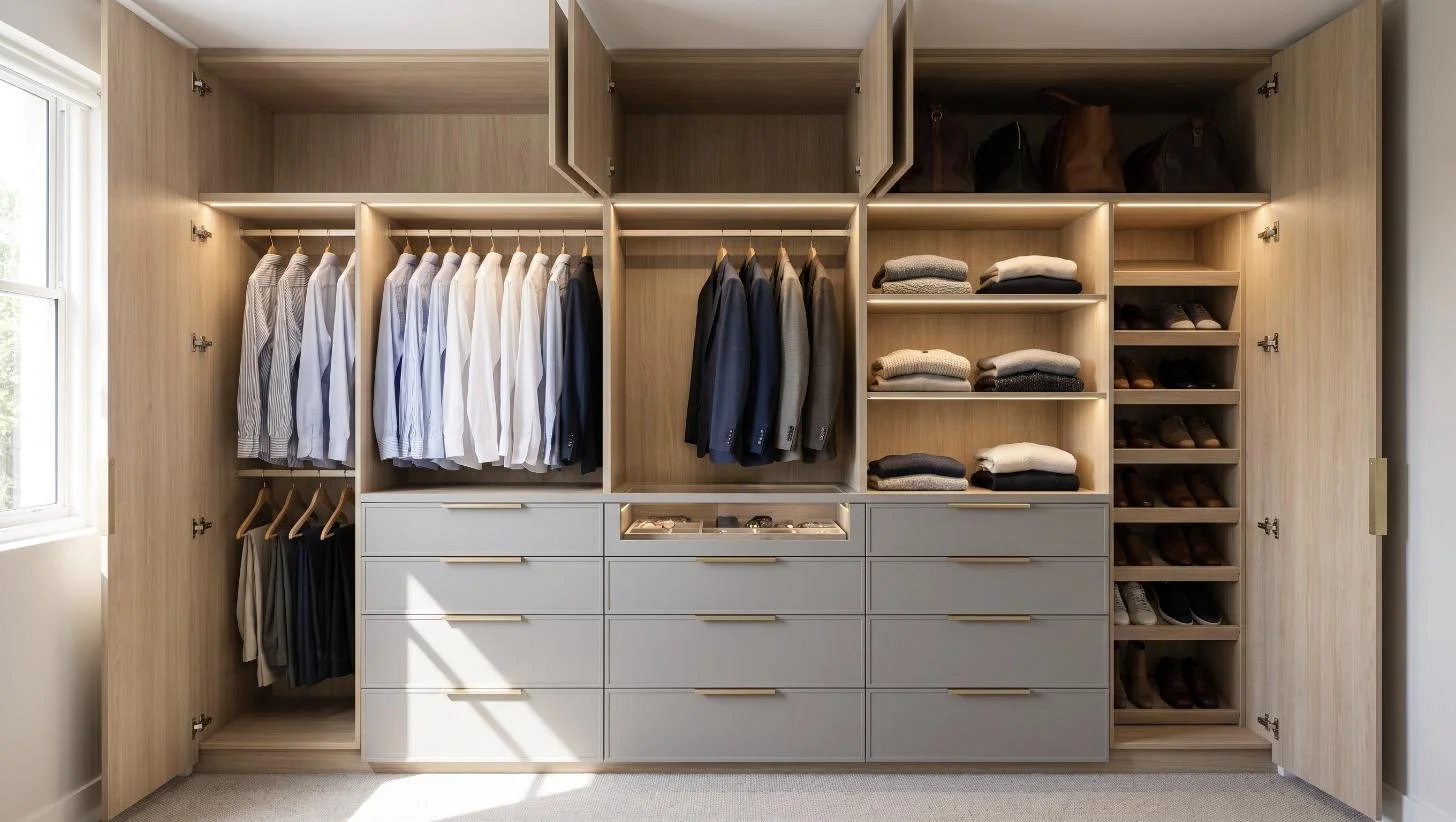
- A slim full-height tower beside the vanity, which is usually a better use of 300mm to 400mm than a wider vanity, and stops towels ending up on the floor.
We have covered the design side of this in detail already. For layouts, mirror cabinets, shelf spacing and internal fit-out, see our guide to bathroom vanity and storage ideas. This guide is the money and rules companion to it.
Doing the kitchen and bathroom together
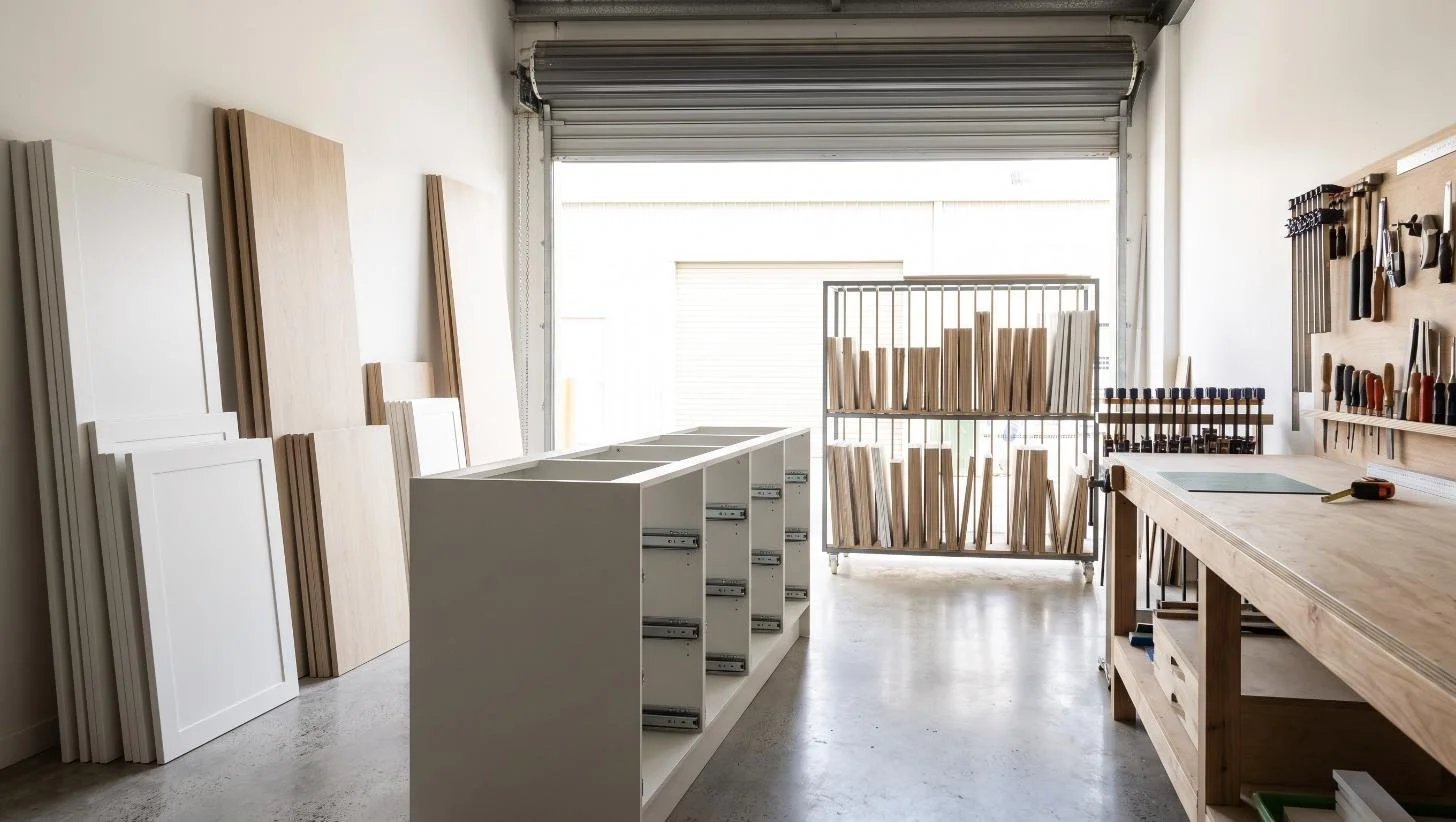
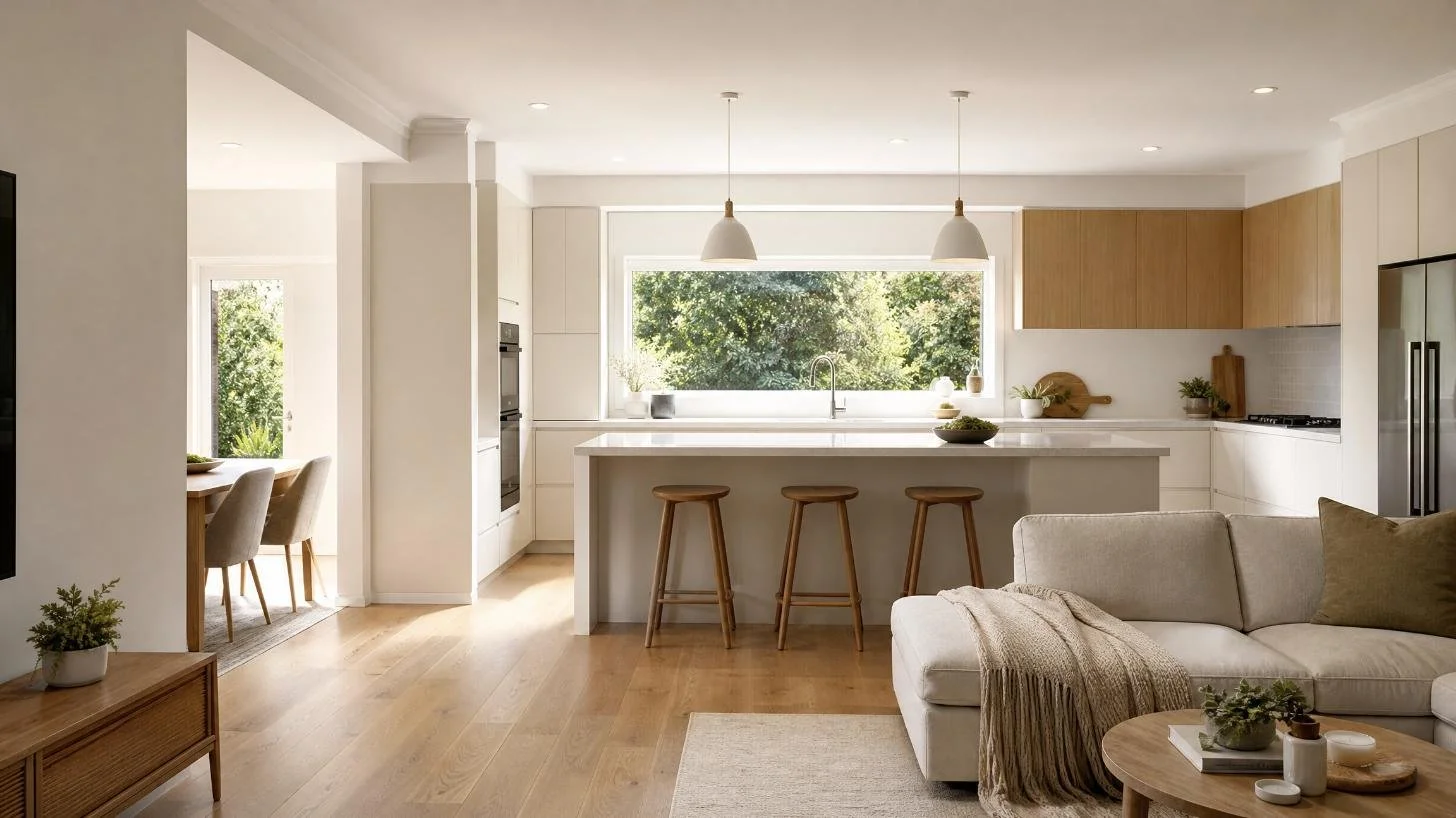
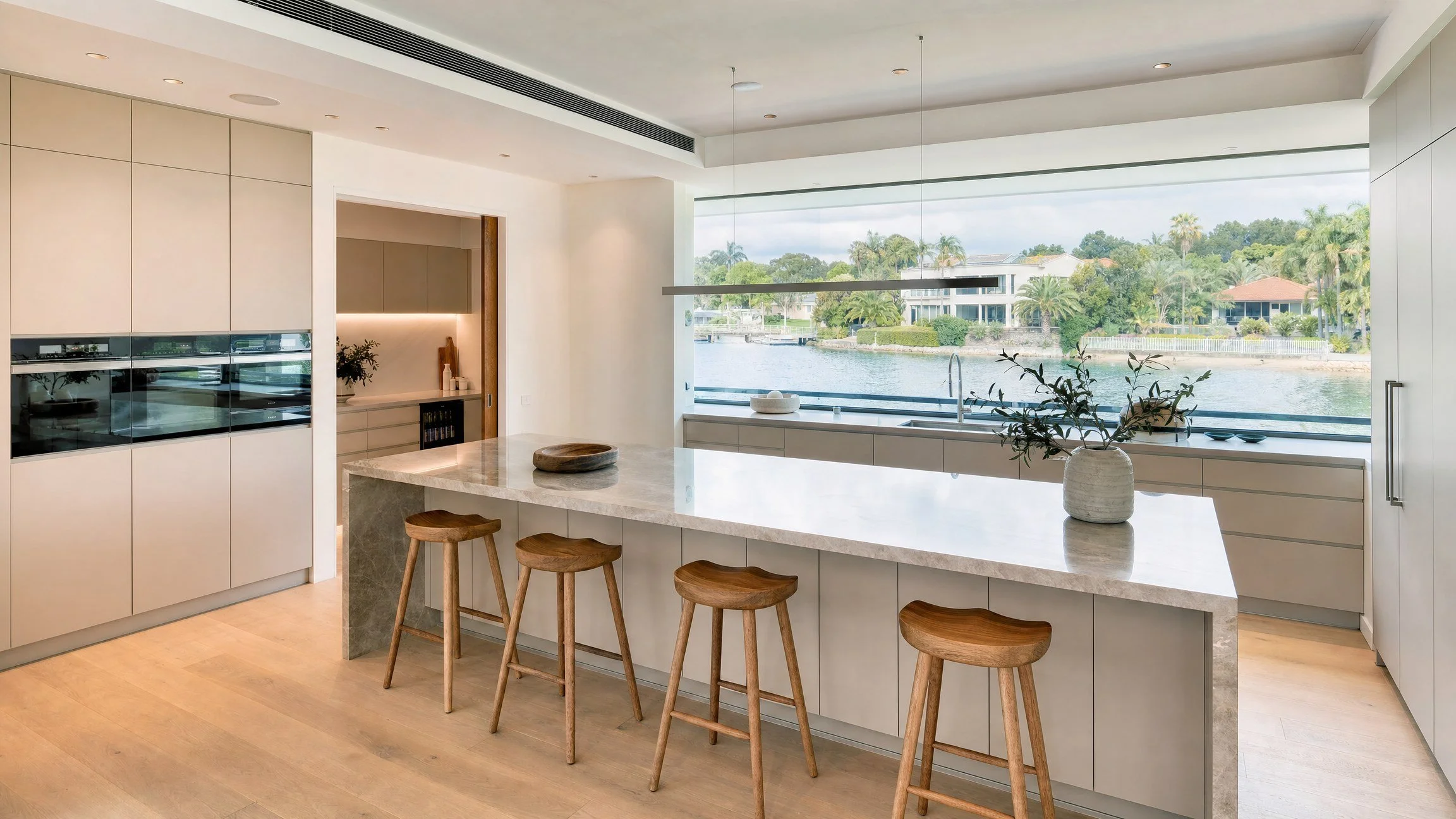
A meaningful share of Shire homeowners plan a kitchen and a bathroom as one project. To be clear about our role: Eco2 designs, manufactures and installs the cabinetry and joinery. We do not carry out waterproofing, tiling, plumbing or general building work, and we work alongside your builder or trades on those elements.
Practical notes if you are coordinating both:
- Sequence matters. The bathroom generally goes first, because you can live with a temporary kitchen far more easily than with no bathroom.
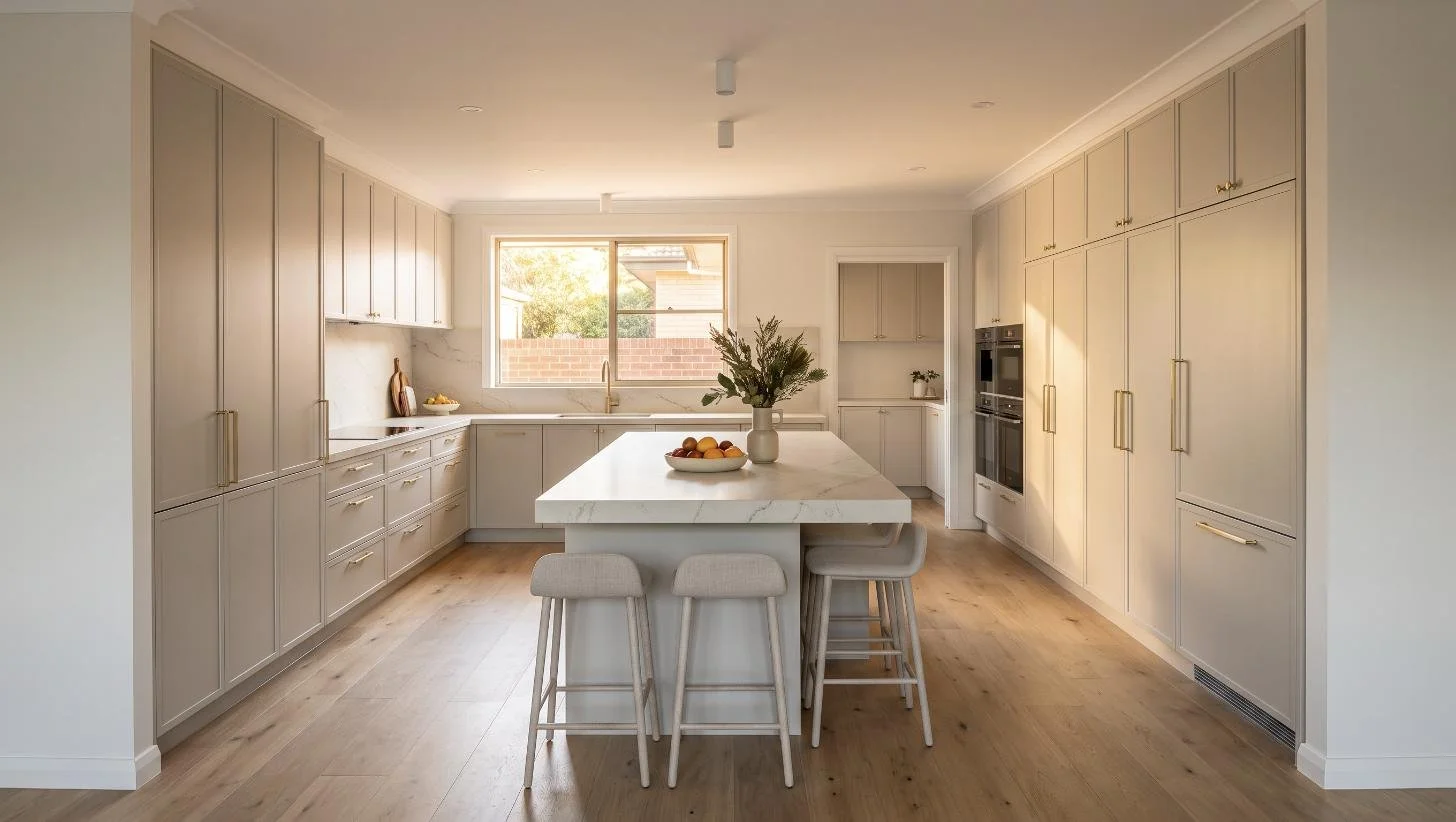
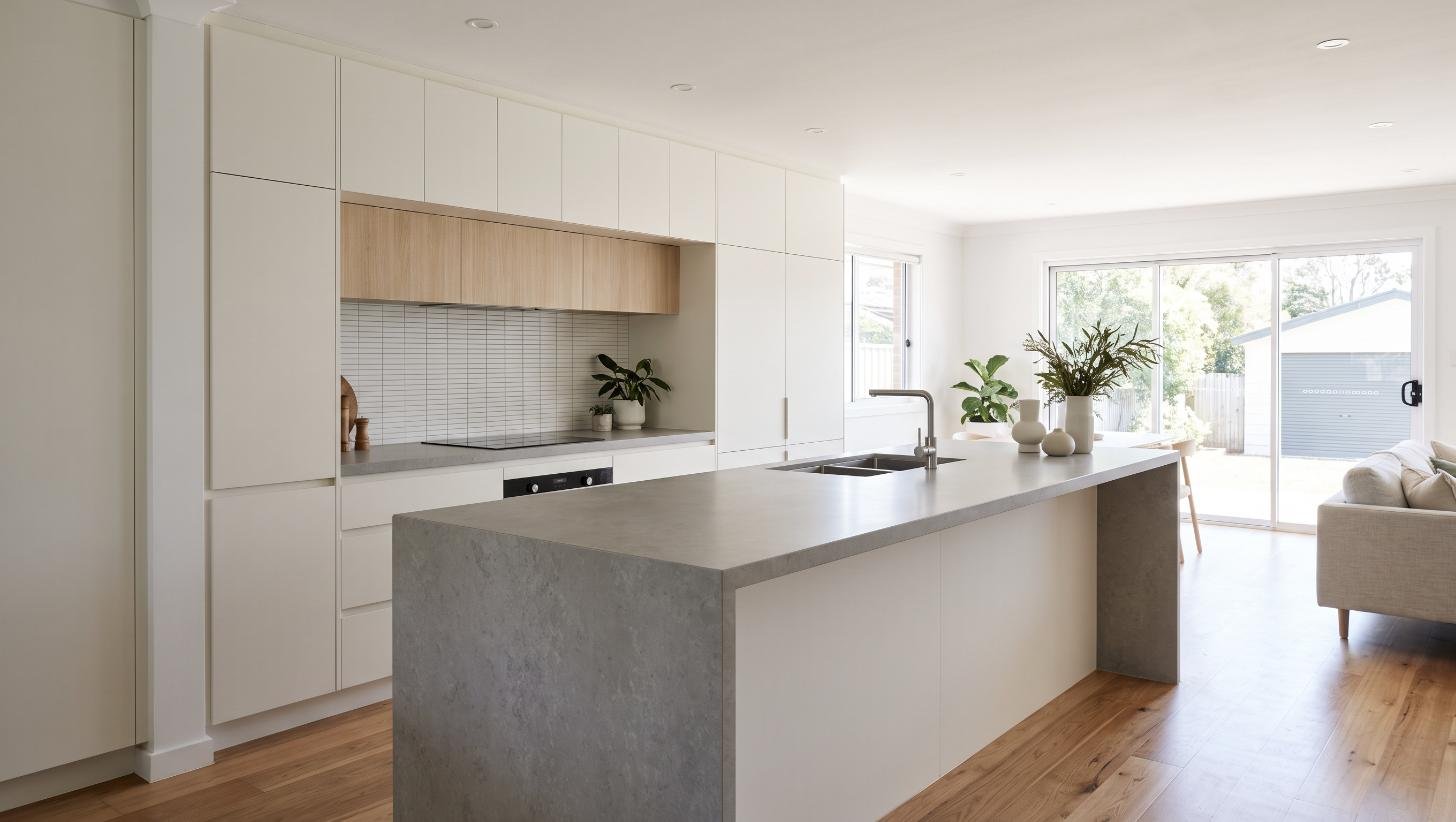
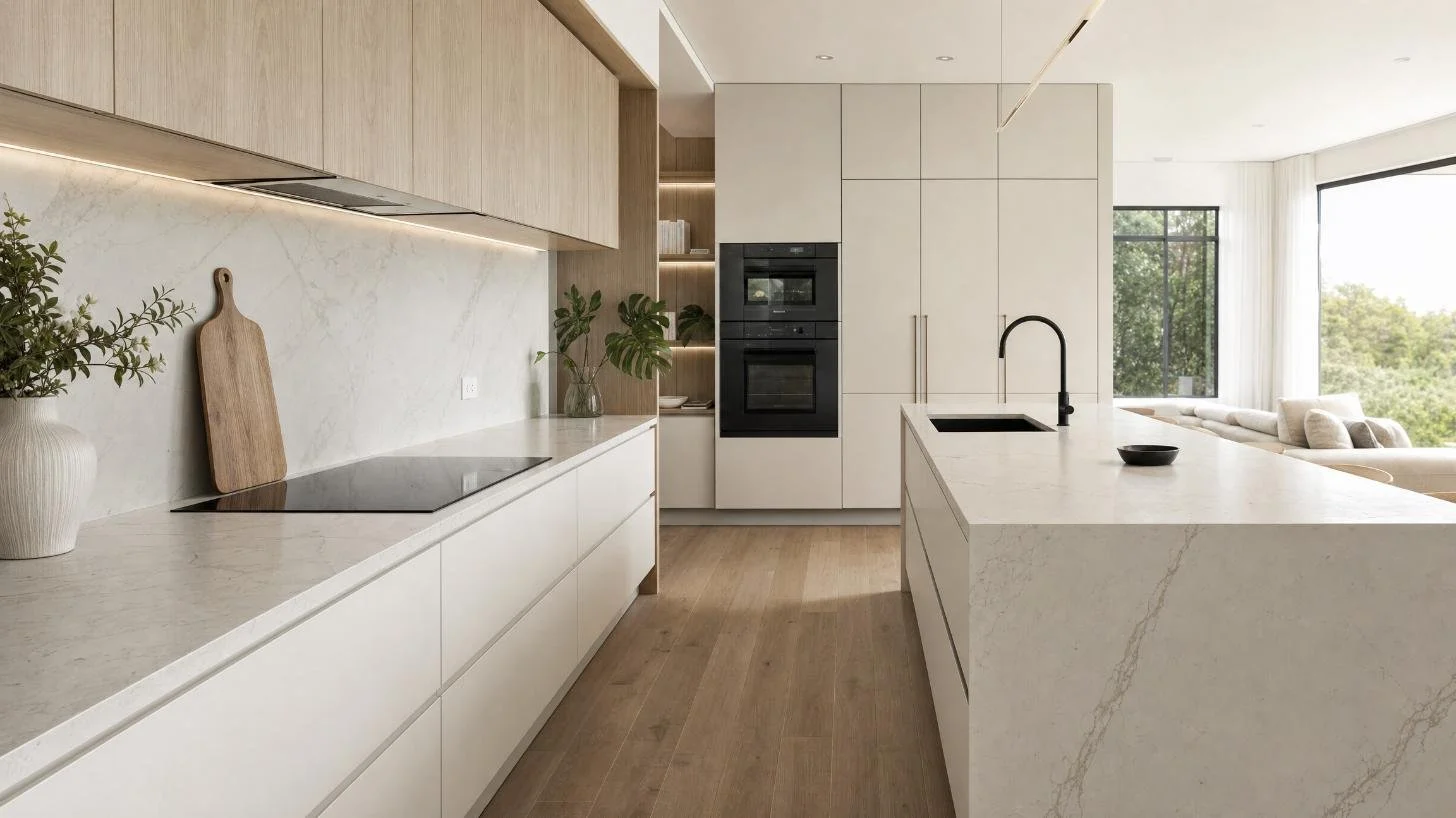
- Finish coordination. Running a common cabinetry finish, hardware family and benchtop material across both rooms makes a home feel resolved, and it means one design conversation rather than two.
- Cabinetry lead times align. Manufacturing both rooms in one production run removes a second lead time and a second installation visit, which is where the real efficiency sits for us. Savings on trades and mobilisation are a question for your builder.
- Contract thresholds. A combined project will almost certainly exceed $20,000, so a full home building contract and Home Building Compensation cover apply.
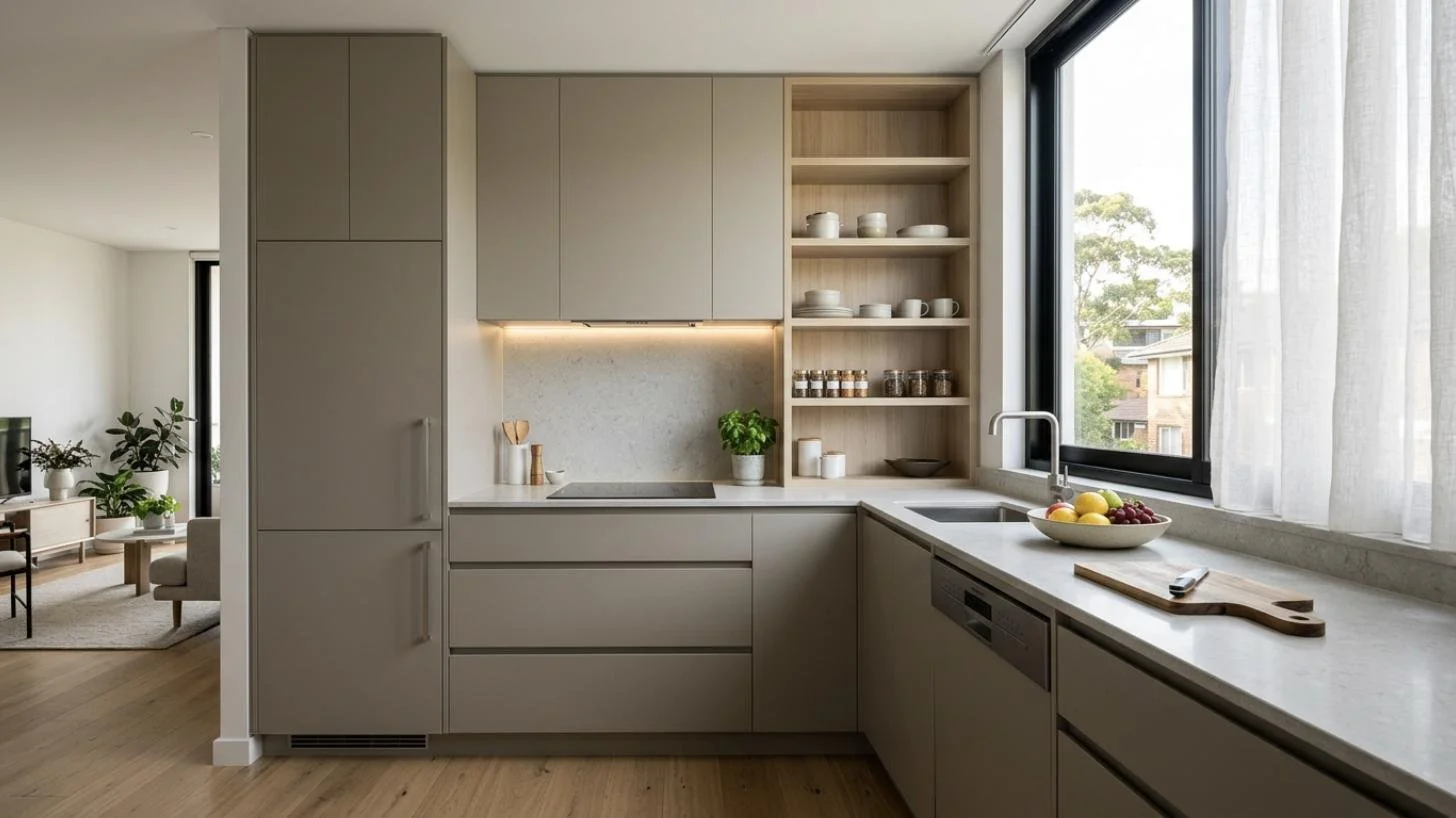
Our whole-home cabinetry page covers how we approach multi-room projects, and the kitchen renovation cost guide gives the kitchen side of the numbers.
Why the Smart Quote is the best first step
Bathroom quotes are notoriously hard to compare because the scope hides inside them. One quote includes waterproofing, one assumes your builder is arranging it. One includes the benchtop, one prices the cabinet only. One assumes the vanity is wall-hung, which changes the plumbing.
The Smart Quote separates the cabinetry line so you can see it clearly. Send us a quick 360 degree video of your bathroom by text or WhatsApp, and we come back with an itemised estimate covering the vanity, mirror or shaving cabinet, any tower or linen storage, the benchtop and the hardware, as separate lines. No home visit, no appointment, no obligation. If the number needs to come down, we can move the specification rather than quietly reduce the quality.
Transform Your Space with Eco Squared
Embrace the elegance and functionality of European design with Eco Squared. Our Oppolia partnership provides access to premium materials and cutting-edge manufacturing, tailored for the way Sydney lives.
Get a Free SMART QUOTE
Film a quick 360° video and Text/WhatsApp 0466 119 712 (no home visit required).
Prefer email? info@eco2.com.au
How much does a custom bathroom vanity cost in the Sutherland Shire?
From our own projects, indicatively $2,200 to $5,500 for a 900mm to 1,200mm custom vanity supplied and installed, and $4,000 to $9,000 for a 1,500mm to 1,800mm double vanity. The benchtop is usually priced separately and depends on the material you choose.
Is a custom vanity worth it compared with an off-the-shelf one?
It depends on your room. If your bathroom is a standard size and a stock vanity fits without wasted space, an off-the-shelf unit is good value. Custom earns its money where the room is an awkward width, where you want drawers routed around the plumbing, or where you want the cabinetry to match the rest of the house.
Do I need a licensed waterproofer in NSW?
Yes. Waterproofing is licensed trade work in NSW. Anyone contracting for waterproofing valued over $5,000 must hold a contractor licence endorsed for waterproofing, and the person applying the membrane must hold that licence or work under a qualified supervisor. Ask for the licence number and check it on the NSW register.
What is AS 3740 and does it apply to my renovation?
AS 3740:2021 is the Australian Standard for waterproofing domestic wet areas. It is referenced by the National Construction Code and sets minimum requirements for materials, design and installation. It applies to new and substantially renovated wet areas regardless of whether a certifier is involved in your particular job.
Should I get a waterproofing certificate?
Yes, and you should keep it. It confirms the work complies with AS 3740, it establishes accountability if a leak appears later, and it is commonly requested at resale.
Do I need council approval for a bathroom renovation?
A like-for-like internal bathroom renovation usually does not require council approval. Approval is generally needed for structural change, relocating the room, altering external openings or work in a heritage-affected property. Confirm your situation with Sutherland Shire Council or a private certifier.
What material should bathroom cabinetry be made from?
Moisture-resistant board with fully sealed edges is the practical standard, with two-pack polyurethane or high-pressure laminate fronts. In coastal Shire homes, specify stainless or marine-grade hinges and runners, because standard hardware corrodes.
Can I renovate my kitchen and bathroom at the same time?
Yes, and it is often efficient. On our side, manufacturing both rooms in one production run removes a second lead time and a second installation visit. Plan for the bathroom to be completed first so you are never without one, and coordinate the wet trades through your builder.