Flat-Pack, Modular or Custom Cabinetry: How to Choose in 2026
Somewhere between the first Pinterest board and the first quote, almost every renovation runs into the same fork in the road. You can buy cabinetry in boxes and have it assembled, you can buy a modular system built from standard sizes, or you can have it made for your room. The price difference is real and it is large, and nobody selling you one option is especially motivated to explain the other two honestly.
At Eco2, we design, manufacture and install custom European styled kitchens, wardrobes and whole-home joinery from our workshop on Captain Cook Drive in Caringbah. We obviously have a side in this. So this guide does something slightly unusual: it sets out the cases where flat-pack is the correct decision, not just the cheap one, because a client who installs flat-pack in a rental and a client who installs it in their forever home end up in very different places five years later.
It covers what each option actually costs, where the price difference goes, how the three compare on fit, materials, hardware and lifespan, and the five questions that settle the choice in about ten minutes.
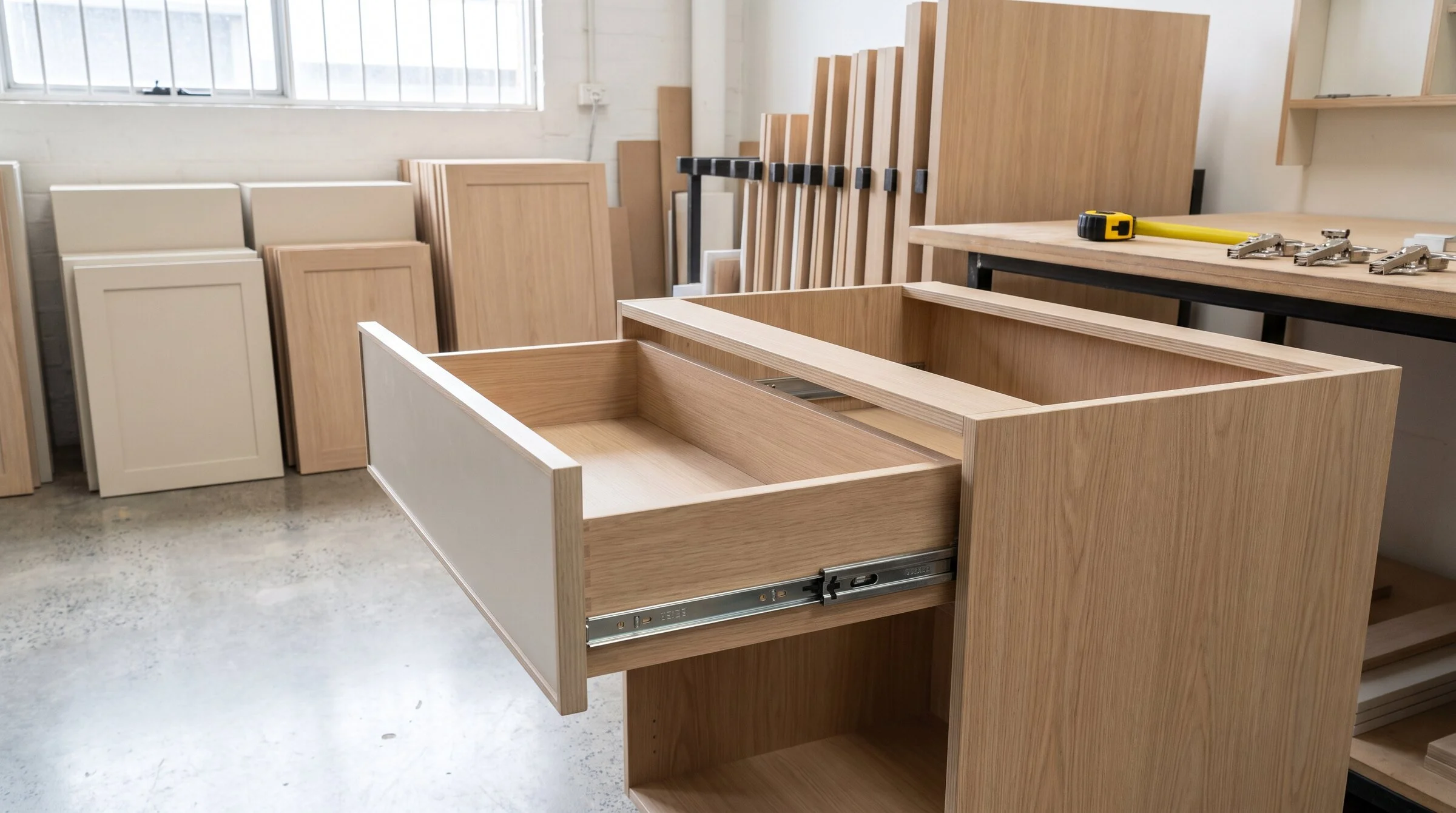
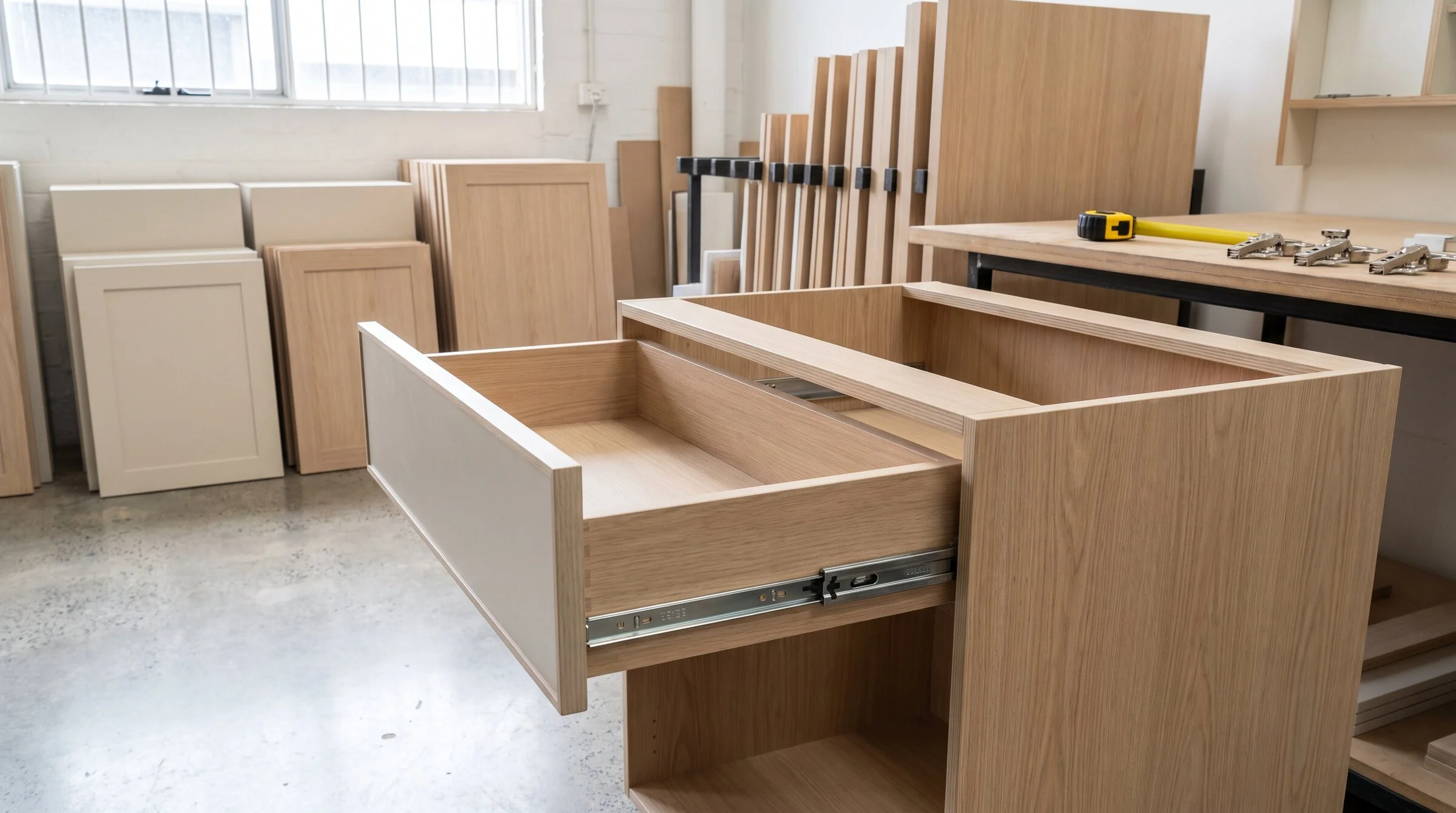
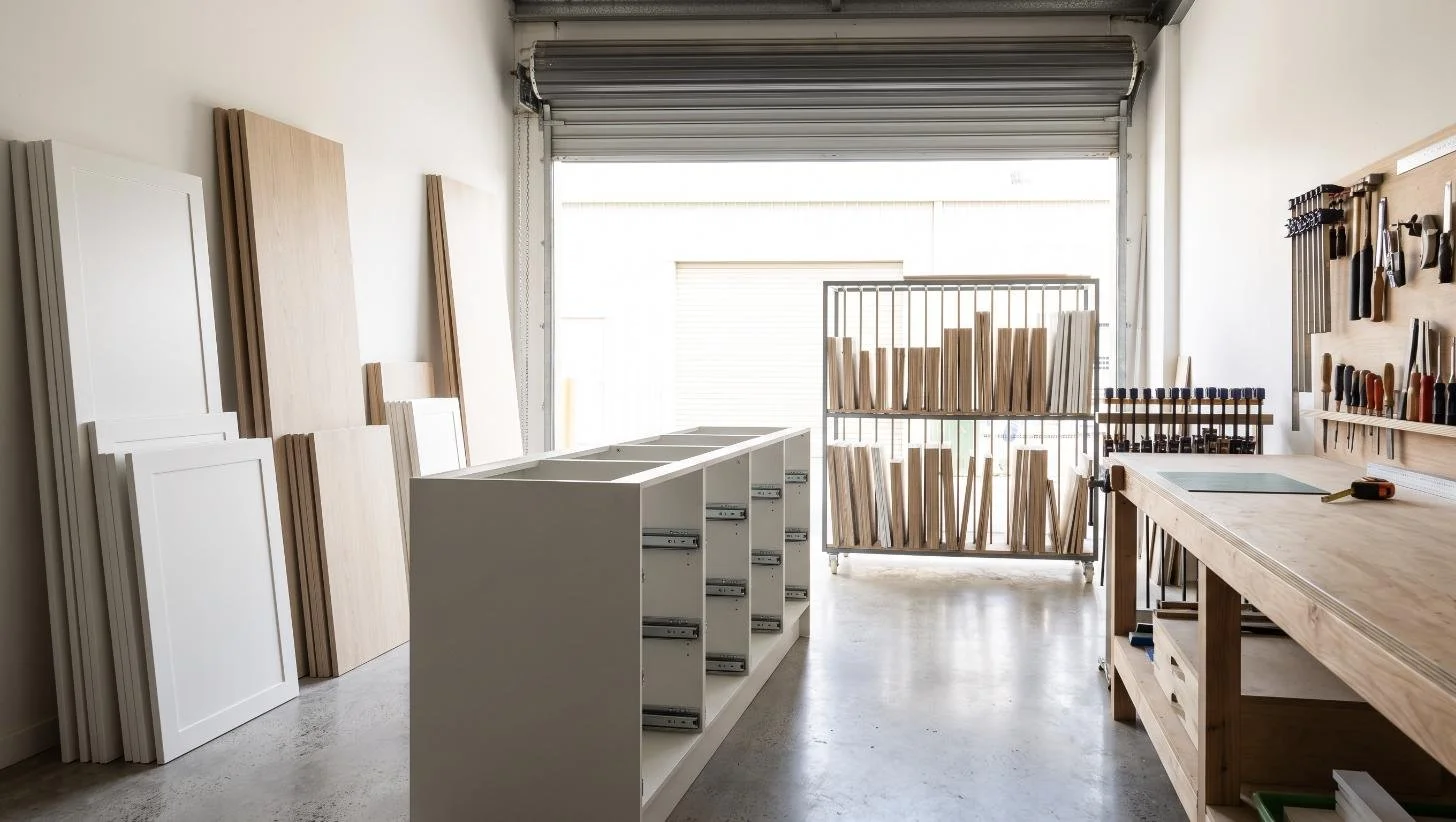
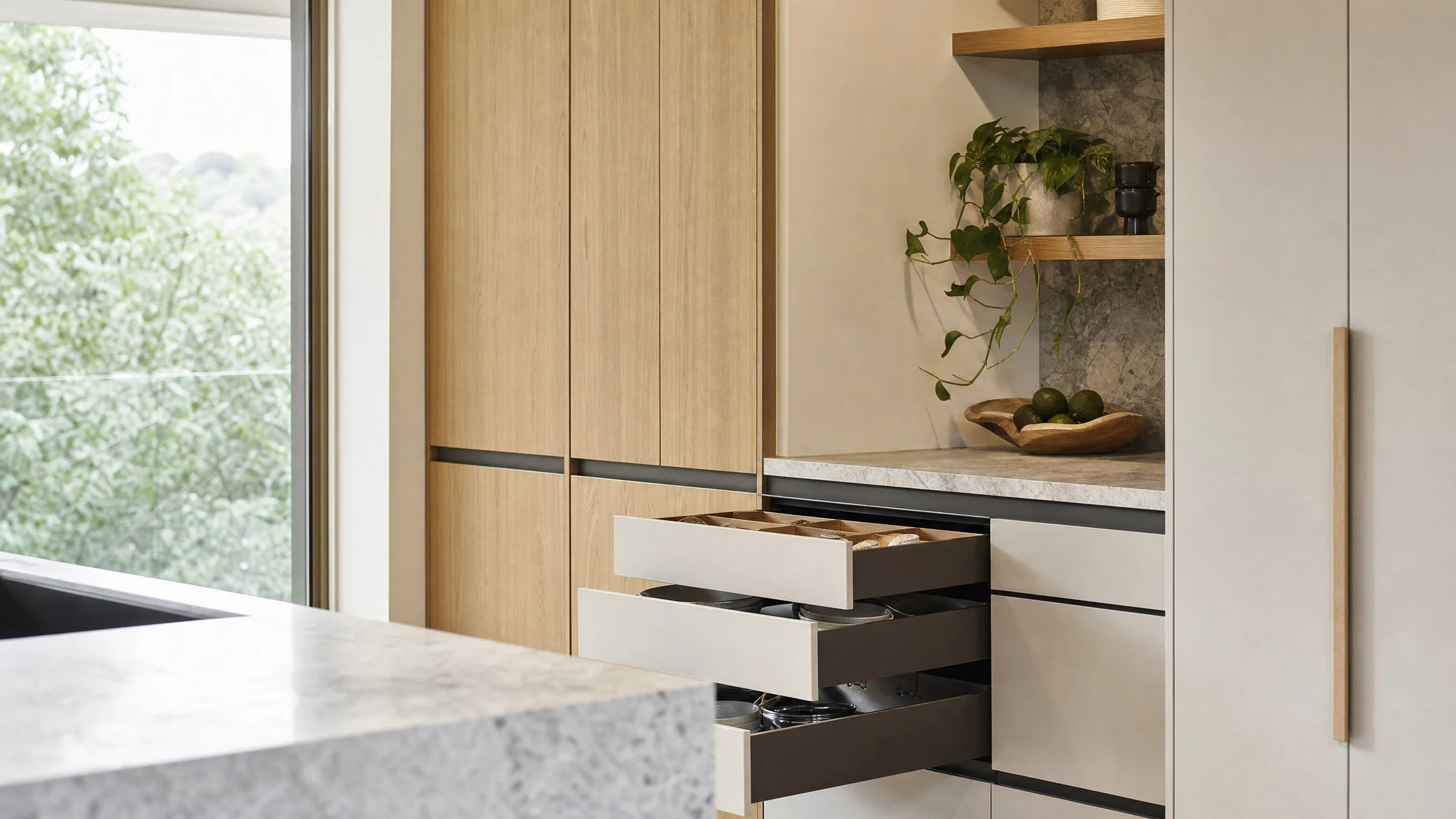
Custom cabinet carcass with full-extension soft-close drawer runners beside stacked finished doors in a Sutherland Shire workshop
Short answer: should I choose flat-pack, modular or custom?
As an indicative 2026 guide for a Sutherland Shire home:
Flat-pack, roughly $4,000 to $12,000 supplied for a standard kitchen, plus assembly and installation if you are not doing it yourself. Bought in boxes, assembled on site, built from fixed carcass sizes. Best for rentals, granny flats, garages, laundries, holiday houses and any room where budget outranks fit.
Modular, roughly $10,000 to $25,000 installed. A step up: pre-built cabinets in standard sizes with better hardware and a wider finish range, assembled in a factory and installed by a trade. Best where the room is reasonably square and reasonably standard.
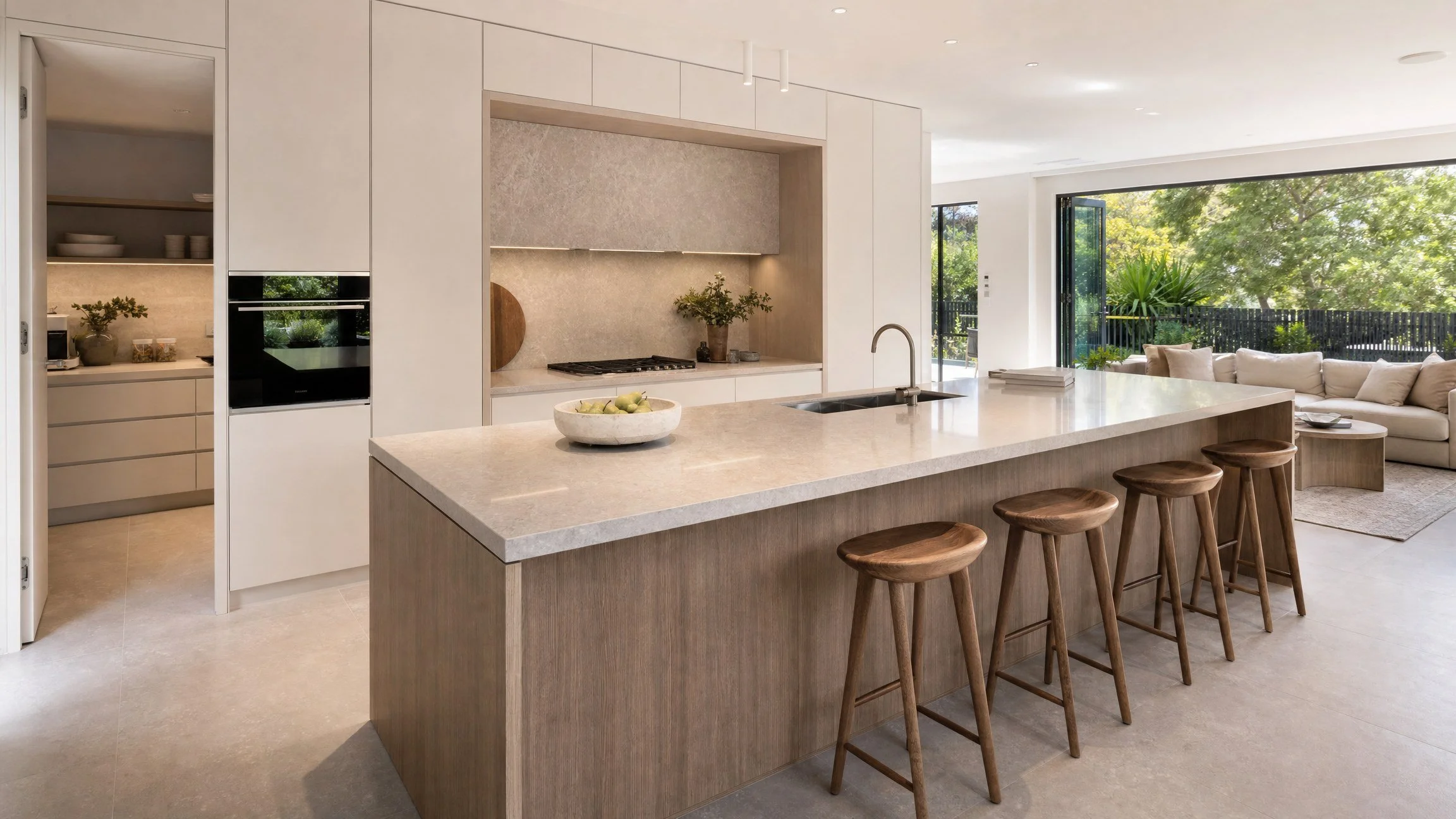
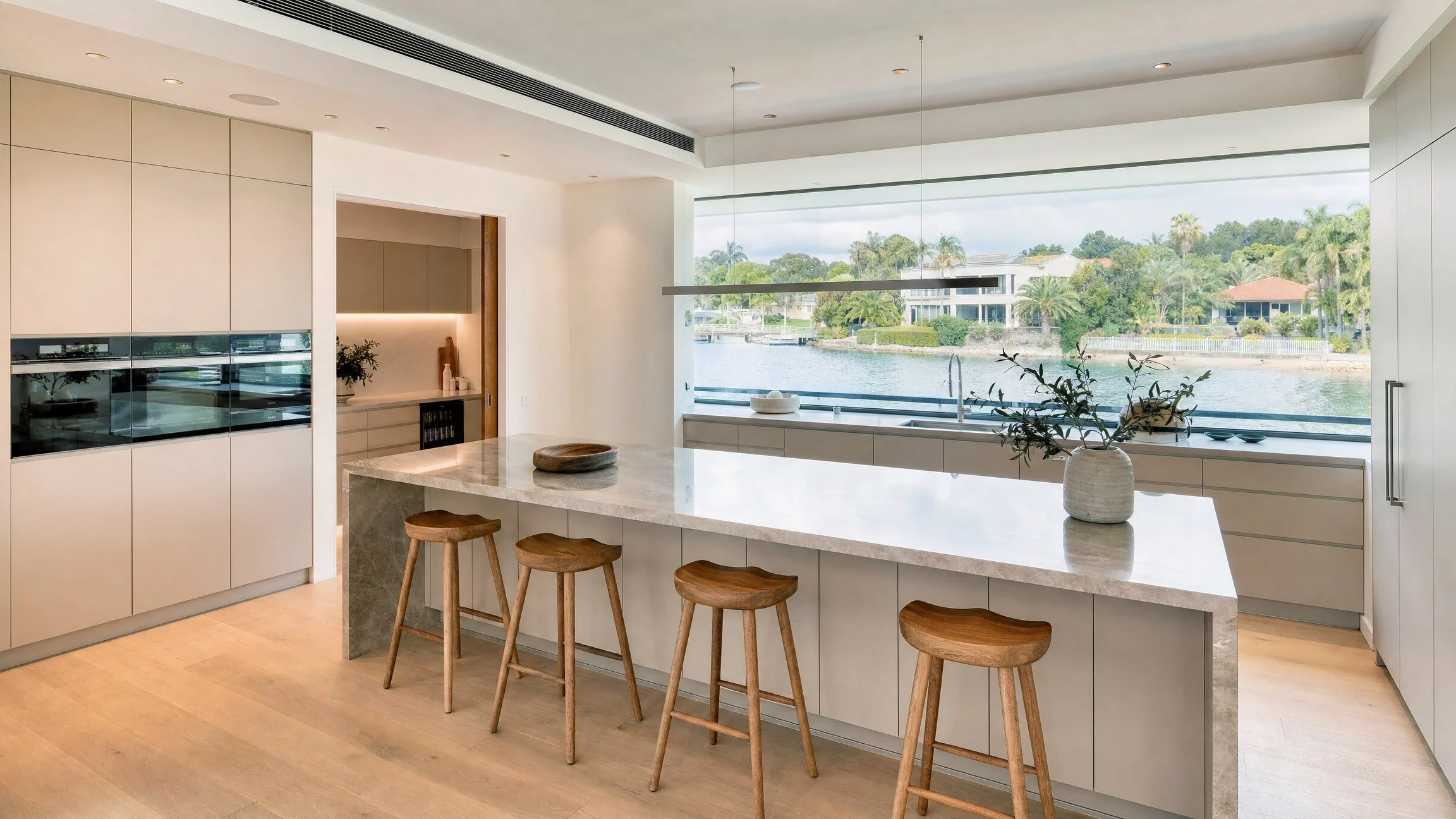
Custom, roughly $25,000 to $45,000 installed for a mid-range kitchen and $45,000 to $80,000 and above for premium joinery. Made to the millimetre for your room. Best wherever the room is not standard, the ceiling is not 2,400mm, there is a corner to solve, or you intend to still be living with it in fifteen years.
The honest rule of thumb: the less standard your room is, the more of your money flat-pack wastes. In a perfectly rectangular room with 2,400mm ceilings and no awkward returns, flat-pack gives you most of the storage for a third of the price. In a 1960s Shire kitchen with a servery hatch, a back door in the wrong place and a wall that is 40mm out of square across three metres, the fillers and scribes needed to make flat-pack fit will eat both the saving and the result.
Figures are indicative and current at October 2026, and vary with size, finish and site conditions.
Where the price difference actually goes
It is tempting to assume the gap is margin. Mostly it is not. Four things account for almost all of it.
1. The board and the edge. Flat-pack carcasses are commonly 16mm melamine-faced particleboard with a thin PVC edge. Custom carcasses are typically 18mm, often moisture-resistant in wet zones, with laser-applied or thick ABS edging. Two millimetres sounds trivial. Over a 900mm drawer carrying a full load of crockery, across twenty years of a family opening it four times a day, it is not.
2. The hardware. This is the single biggest invisible difference. Entry flat-pack ships with unbranded hinges and partial-extension runners. Custom work is specified with named-brand, full-extension, soft-close hardware rated to a stated load. Partial-extension runners hide the back third of every drawer, which is a third of the storage you paid for.
3. The fit. A custom maker measures your room, accounts for the fact that it is out of square, and builds to that. Flat-pack comes in 150mm increments, so the leftover becomes a filler panel. One 80mm filler is fine. Four of them, plus a 300mm dust shelf above the overheads because the standard carcass stops at 2,100mm, is a different room.
4. The labour. Custom cabinetry is cut, edged, drilled and assembled in a workshop with a beam saw and an edgebander, then installed in a day or two. Flat-pack is assembled on site or in your garage. You are not paying for that labour, which is exactly why it is cheaper, and exactly why it takes you three weekends.
Comparing the three properly
Fit and layout
Flat-pack. Fixed widths, usually in 150mm steps. Fixed carcass heights. Corners handled with a blind corner unit that wastes most of the corner. Full-height cabinetry to a 2,400mm ceiling is generally not available, so you get an overhead and a gap.
Modular. Same fixed sizes, but a wider range of them, and most suppliers will add a custom filler or an end panel properly. Corners are better solved. Still no help with an out-of-square wall.
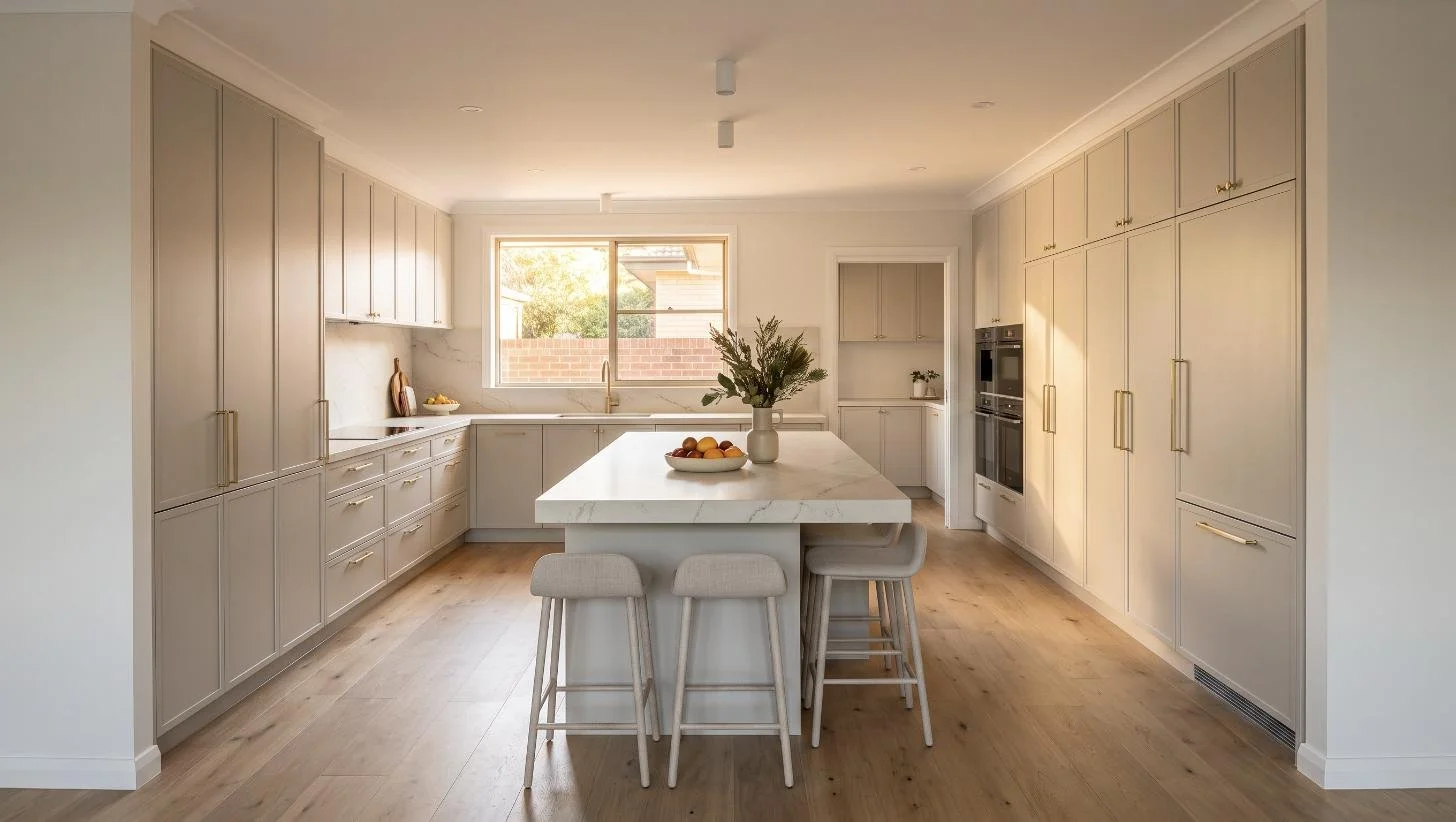
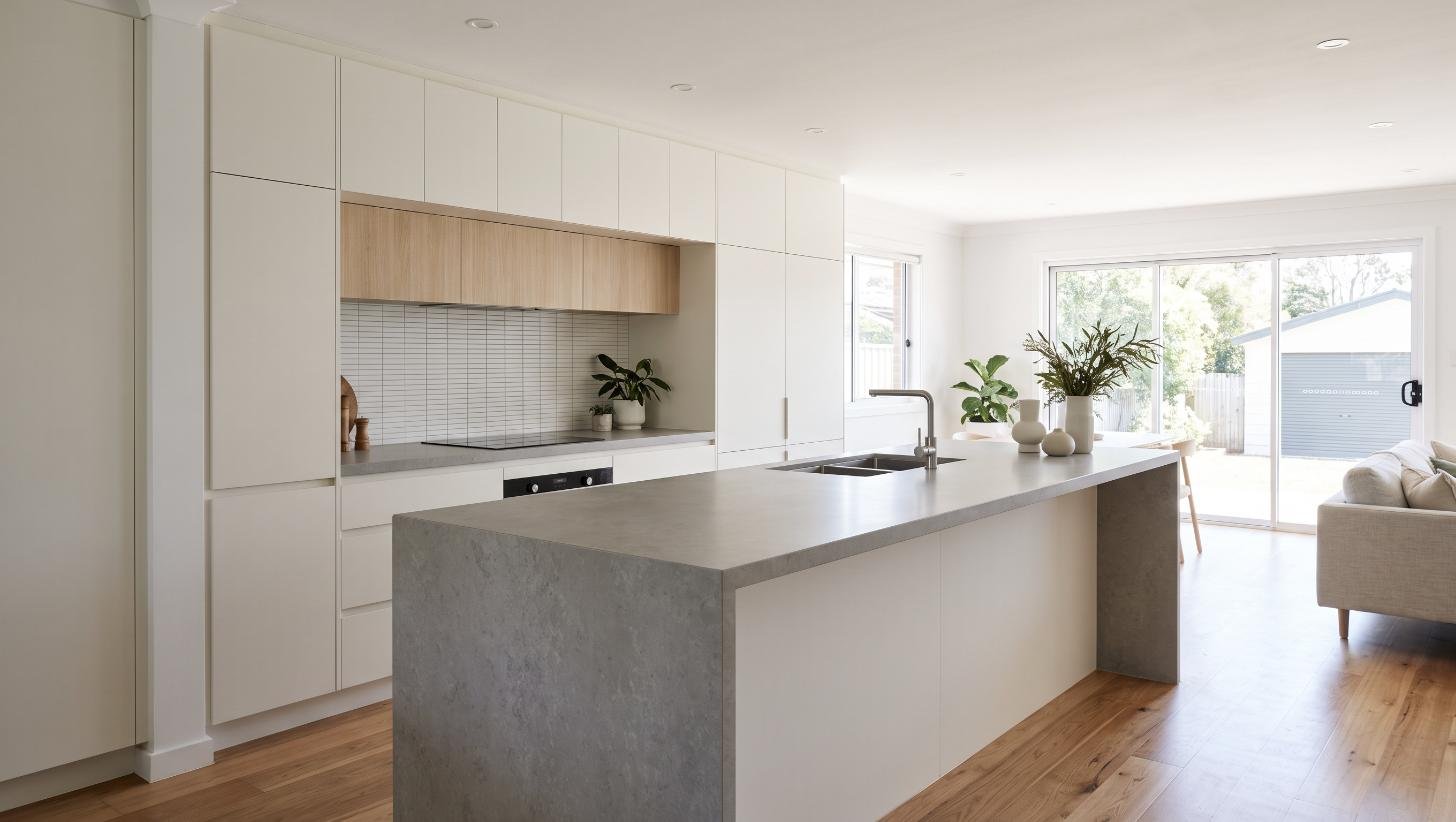
Custom. Built to the room. The corner becomes a proper pull-out, the run goes to the ceiling, the fridge cavity is the size of your fridge rather than the size of a standard cavity, and the wall being 40mm out across its length is absorbed by the scribe rather than by a visible taper.
In Sutherland Shire housing stock this matters more than it would elsewhere. Post-war and 1960s brick homes across Caringbah, Gymea, Kirrawee, Sylvania and Woolooware are rarely square, usually have 2,400mm ceilings with original 720mm overheads, and almost always have at least one awkward interruption. Our guide to choosing a cabinet maker covers how to get these differences written into a quote so you can compare them.
Materials and finish
Flat-pack. Melamine doors in a limited palette. Some ranges offer a thermolaminated door. Colours are fixed and tend to date, because they follow the trend that was current when the range was tooled.
Modular. Melamine, thermolaminated and sometimes two-pack doors. Wider colour range, usually with a premium tier.
Custom. Two-pack polyurethane, real timber veneer, thermolaminate, laminate, or any combination, in any colour you can specify. Which also means you can match an existing floor, or deliberately avoid a colour that will look like 2026 in 2034.
One rule applies to all three. Since the prohibition on engineered stone took effect on 1 July 2024, new engineered stone benchtops cannot be manufactured, supplied or installed in Australia. Porcelain, sintered stone, low-silica engineered ranges, granite, marble and timber are all still available. If a flat-pack range or a quote still lists an engineered stone top, the information is out of date. Our benchtop guide covers the alternatives and their costs.
Lifespan and what fails first
This is where the comparison stops being about money.
Hinges and runners fail first in cheap cabinetry, usually in years three to seven. They are replaceable, but you have to want to do it.
Edges lift next, particularly under a dishwasher or around a sink, where steam and water get into a thin PVC edge on a 16mm board.
Doors sag where a long door is carried on two light hinges rather than three rated ones.
Carcass bases swell if an unsealed particleboard base gets wet and is not moisture-resistant.
A well-specified custom kitchen in a Shire family home should be functionally sound at twenty years and cosmetically tired rather than failing. A flat-pack kitchen in the same house is typically a seven to twelve year product. Neither of those is a scandal. They are just different purchases, and the right one depends on how long you are staying.
Time and disruption
Flat-pack: supply in days to two weeks, then your own labour, realistically two to four weekends for a kitchen if you are capable and have help. Modular: two to six weeks lead time, one to three days installation. Custom: two to four weeks design and quoting, six to ten weeks manufacture, one to three weeks on site. Benchtops are templated after cabinets are installed and add roughly one to two weeks.
If you need a laundry working by Friday, custom is the wrong answer regardless of budget.
When flat-pack is genuinely the right choice
We mean this. There are rooms where we would tell you to buy flat-pack.
Investment properties and rentals. The tenant will not thank you for soft-close, and the depreciation maths rarely supports custom.
Granny flats and studios. Small, standard, usually square, and usually budget-driven by definition.
Garages, sheds and utility rooms. Storage is storage.
A house you are selling within twelve months, where a presentable kitchen beats an excellent one that you will not recover.
A holiday house used eight weekends a year, where wear is a fraction of a family home's.
A genuine stopgap. Buying five years while you save for the real renovation is a completely legitimate plan, provided you go in knowing that is what you are doing.
When flat-pack will cost you more than it saves
The room is not square or not standard, which describes most original Shire housing stock.
The ceiling is 2,400mm or higher and you want the storage above 2,100mm, which is a full 300mm band per run.
There is a corner, and you want to use it rather than lose it.
It is your long-term home. Replacing a failed kitchen at year eight costs more in total than building once at year zero.
You are opening a wall or changing the layout. Once a builder, a sparky and a plumber are on site, cabinetry is the smallest variable in the job and the worst place to save.
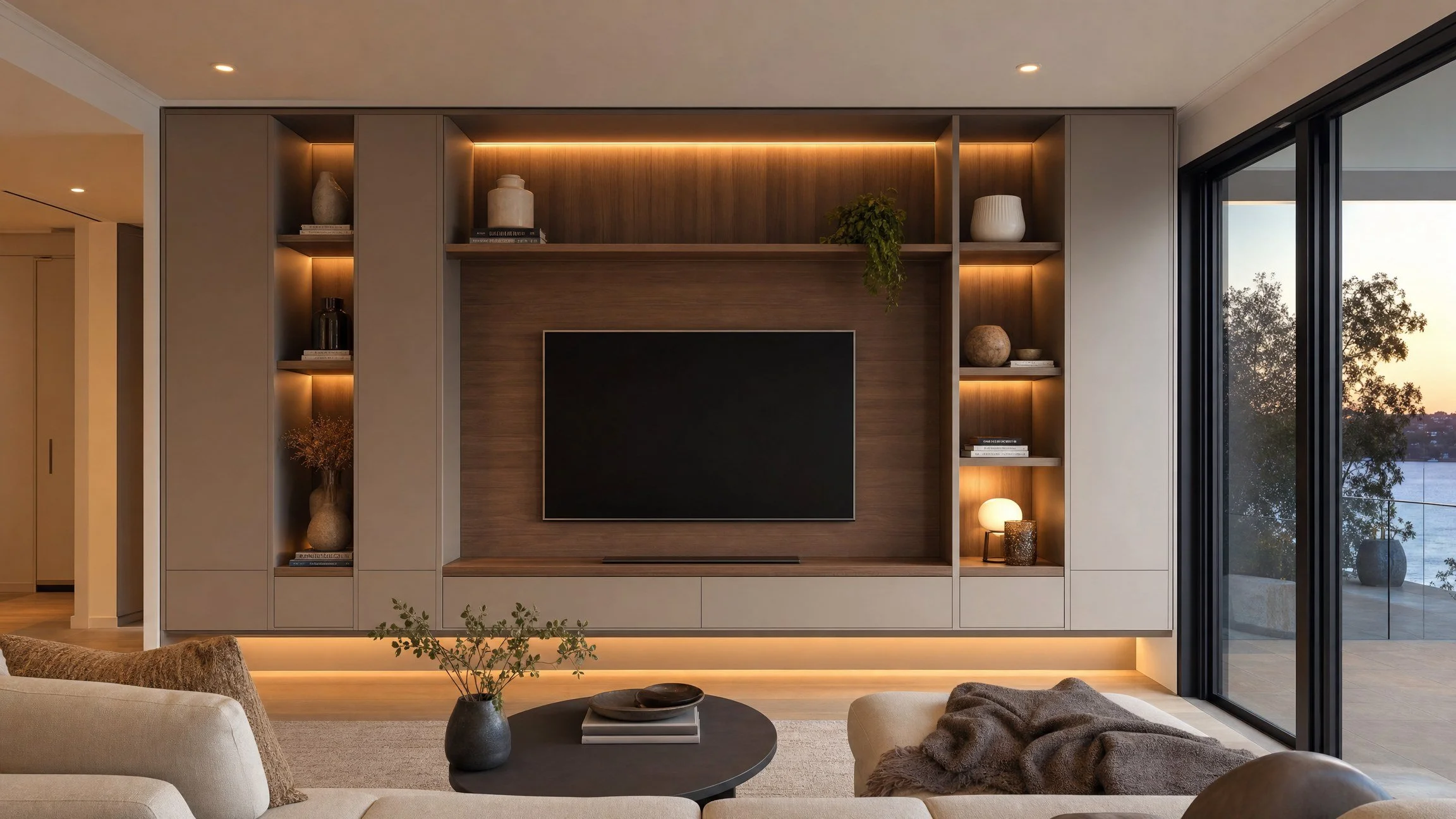
The joinery is a feature. An entertainment unit on a main living wall, a walk-in wardrobe, a butler's pantry: these are seen daily and judged closely. Our entertainment unit guide covers why built-in beats modular on a TV wall specifically.
The five questions that settle it
Answer these honestly and the decision usually makes itself.
How long will you live with it? Under five years, flat-pack is defensible. Over ten, it is not.
Is the room square, standard and 2,400mm or lower? If yes, flat-pack loses less. If no, every non-standard dimension is money you spend on fillers instead of storage.
Who is installing it? If the honest answer is a tradesperson, the labour saving disappears and the gap narrows considerably.
Is there a corner, a bulkhead, a servery hatch or a doorway in the wrong place? Each one is a problem flat-pack cannot solve and custom solves for free.
Will you see it every day from your sofa? Kitchens, wardrobe fronts and entertainment units are judged on fit and finish. Laundries and garages are judged on whether the door shuts.
A middle path most people do not consider
You do not have to pick one for the whole house.
The most cost-effective renovations we see in the Shire are mixed. Custom where it is seen and used hardest, flat-pack or modular where it is not. A custom kitchen and a flat-pack garage wall. Custom wardrobe internals behind existing doors. A custom island and pantry wall with modular base units along the back run where everything is standard anyway.
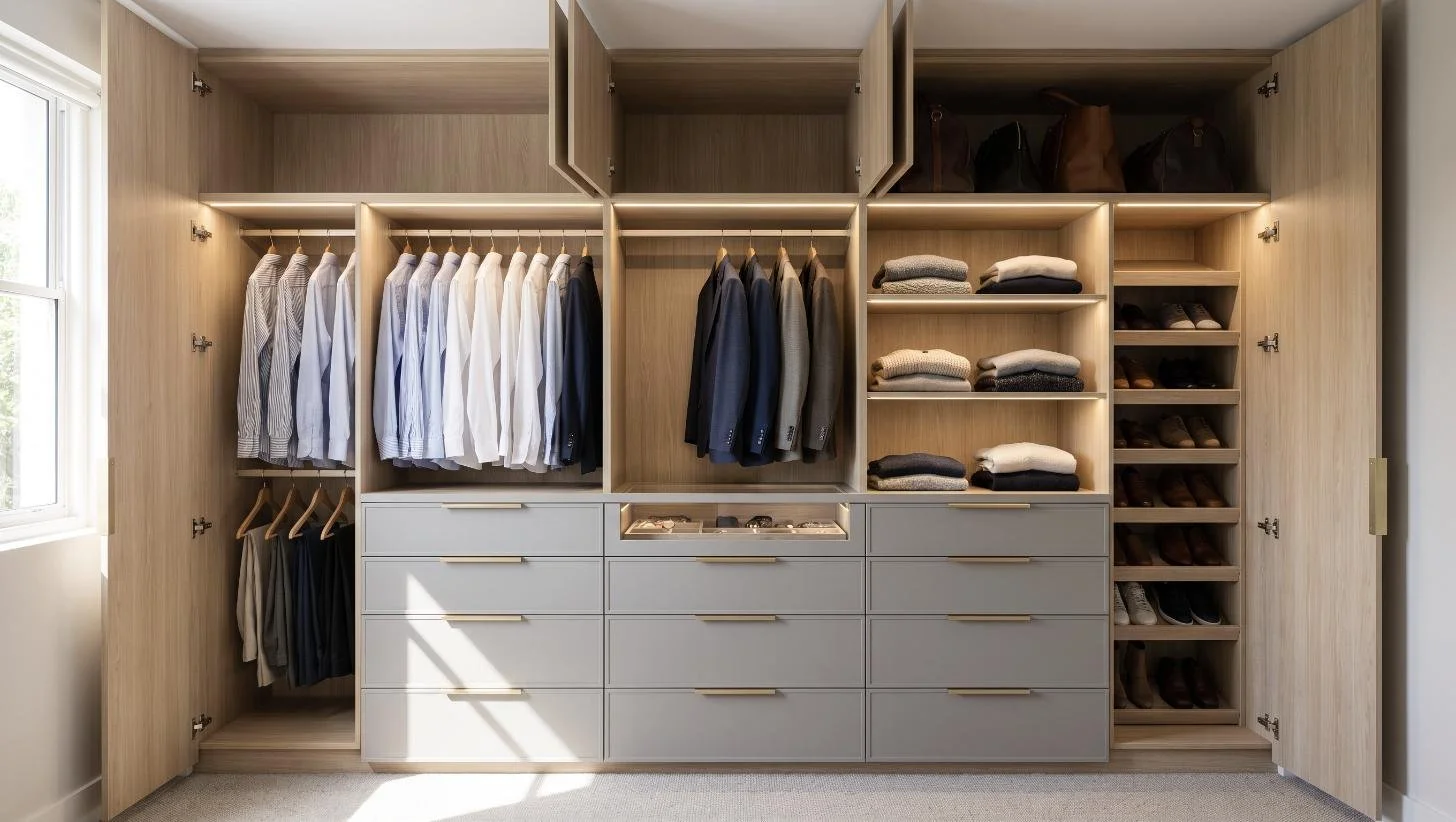
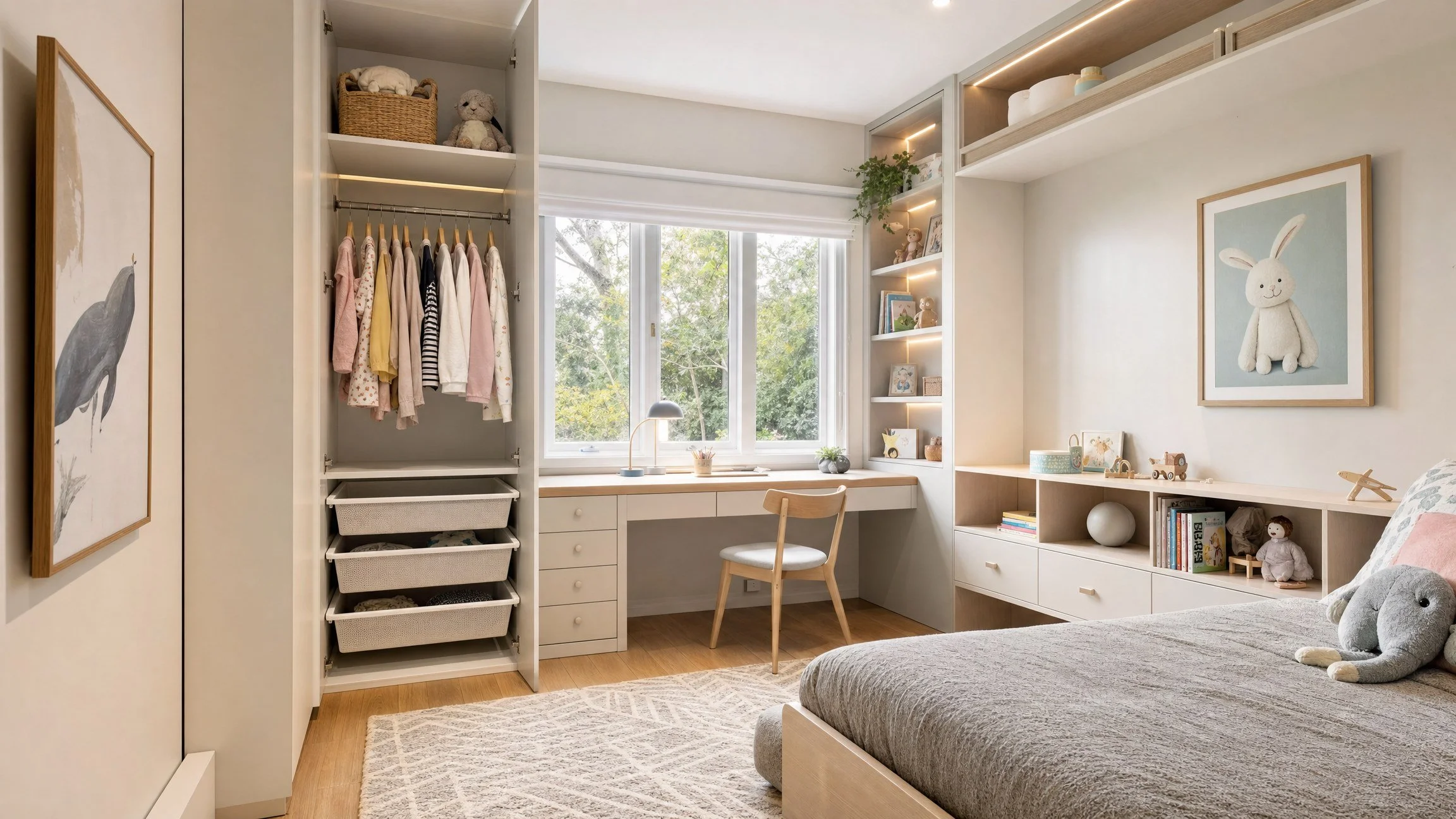
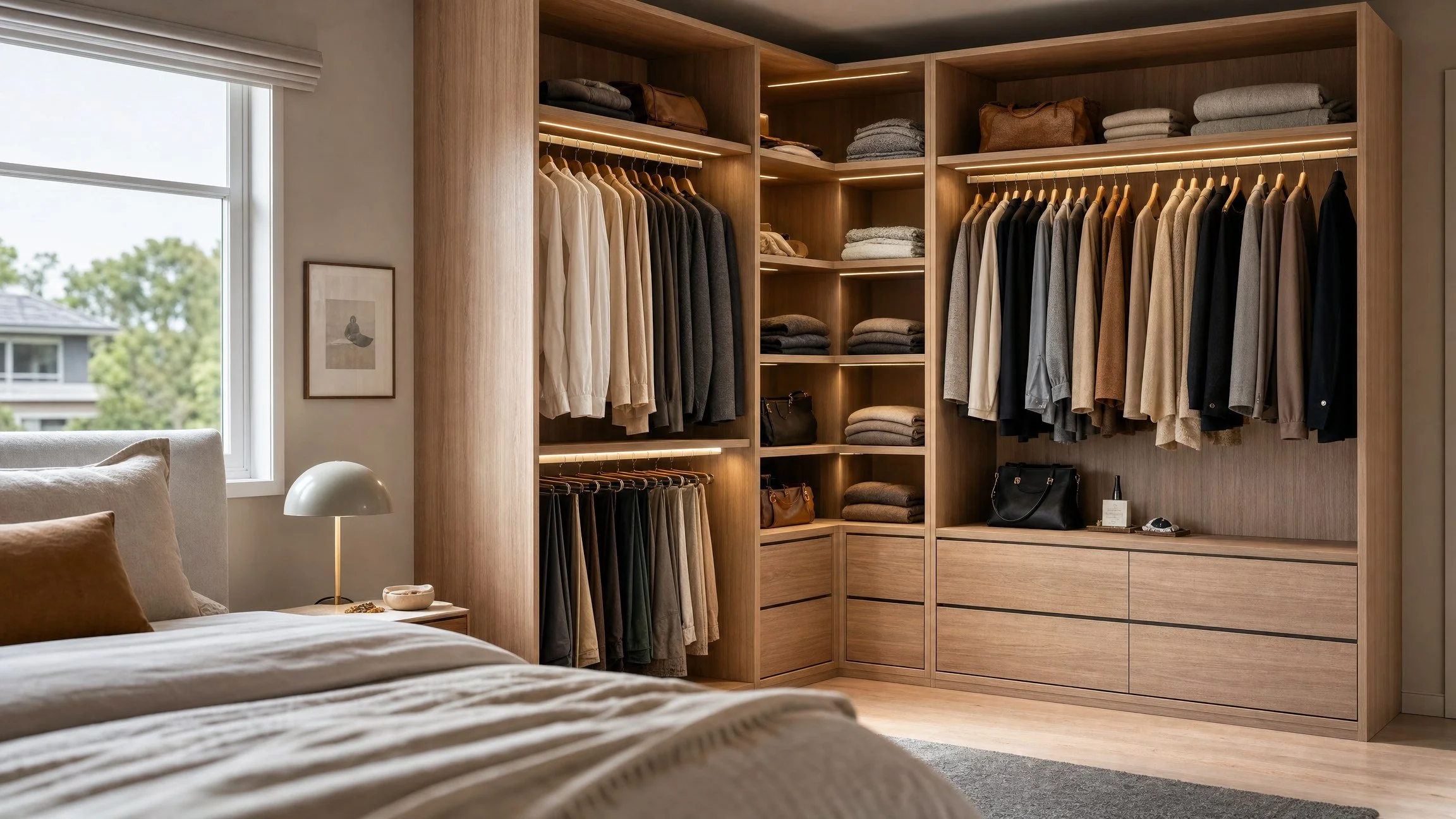
Upgrading wardrobe internals while keeping serviceable doors is the clearest example, and often the best-value joinery decision in a house. Our wardrobe internals guide sets out what good internals cost and which dimensions cannot be fixed later.
Why the Smart Quote is the best first step
The reason this decision is hard is that you are comparing a shelf price against an installed price, which are not the same number. A flat-pack range quoted at $6,000 and a custom kitchen quoted at $32,000 look four or five times apart. Once you add assembly, installation, a benchtop, the appliances, the splashback and the trades, the real gap is usually closer to two.
The Smart Quote exists to put a real number in front of you before you decide. You text or WhatsApp us a quick 360 degree video walking through the space. We assess the room, the constraints and the obvious opportunities, and we come back with an itemised estimate that separates cabinetry, benchtop, appliances and trades, so you can hold it against a flat-pack total that includes everything rather than against a shelf price that does not.
If the honest answer for your room is flat-pack, we will tell you. We would rather be the people you call for the kitchen in four years than the people who sold you cabinetry you did not need today.
Transform Your Space with Eco Squared
Embrace the elegance and functionality of European design with Eco Squared. Our Oppolia partnership provides access to premium materials and cutting-edge manufacturing, tailored for the way Sydney lives.
Get a Free SMART QUOTE
Film a quick 360° video and Text/WhatsApp 0466 119 712 (no home visit required).
Prefer email? info@eco2.com.au
FAQs
Is flat-pack cheaper than custom cabinetry?
Yes, substantially, but the gap is smaller than the shelf price suggests. Flat-pack for a standard kitchen is indicatively $4,000 to $12,000 supplied, against $25,000 to $45,000 installed for a mid-range custom kitchen. Once you add assembly, installation, benchtop and trades to the flat-pack figure, the real difference is usually about half what the headline numbers imply.
How long does a flat-pack kitchen last?
Typically seven to twelve years in a family home before hardware failure, lifting edges or a swollen carcass base make replacement sensible. A well-specified custom kitchen should still be structurally sound at twenty years. Lifespan depends far more on hardware quality and board thickness than on who made it.
What is the difference between flat-pack and modular cabinetry?
Flat-pack arrives in boxes and is assembled on site, usually by you. Modular arrives pre-assembled in standard sizes and is installed by a trade, generally with better hardware and a wider finish range. Both work from fixed sizes. Only custom is built to your room's actual dimensions.
Can flat-pack cabinetry go to the ceiling?
Rarely. Most flat-pack ranges stop at around 2,100mm, which leaves a 300mm dust shelf under a standard 2,400mm ceiling. Some ranges offer a separate top box, but the join is usually visible. Running cabinetry to the ceiling in one piece is a custom feature, and in older Shire homes it is worth a full band of usable storage per run.
Is it worth getting custom cabinetry in an investment property?
Usually not. The tenant does not pay for soft-close hardware and the depreciation rarely supports the difference. Flat-pack or entry modular is the sensible choice in a rental, and we will say so if you ask us.
Do I need a licensed contractor to install flat-pack cabinetry?
It depends on the value of the work, not the type of cabinetry. In NSW, residential building work valued at more than $5,000 in labour and materials including GST requires an appropriately licensed contractor and a written contract. Installing flat-pack yourself in your own home is generally fine; paying someone to do it above that threshold is not, unless they are licensed.
Can I mix custom and flat-pack in the same house?
Yes, and it is often the smartest budget decision available. Custom where the joinery is seen and used hardest, flat-pack or modular in the garage, the laundry or a secondary bedroom. We design mixed projects regularly and will tell you where the money is best spent.
Can I upgrade the internals of an existing wardrobe without replacing the doors?
Often, yes, and it is one of the best-value renovations in a house. If the carcass depth is at least 600mm and the openings are square, the internals can usually be replaced independently of the doors and frames. Send us a video and we will tell you honestly whether it is worth doing.
What is a Smart Quote and does it cost anything?
It is free and there is no obligation. You send a quick 360 degree video of your space by text or WhatsApp to 0466 119 712, we assess it, and we return an itemised estimate. No home visit and no sales appointment required.
Written by Eco2. We design, manufacture and install custom European styled kitchens, wardrobes and whole-home joinery from our Caringbah workshop, across the Sutherland Shire and surrounds. Cost figures in this guide are indicative and current at October 2026. Licensing and contract information is general in nature and is not legal advice. Confirm your own situation with NSW Fair Trading or a qualified adviser.